Travel Value Finder

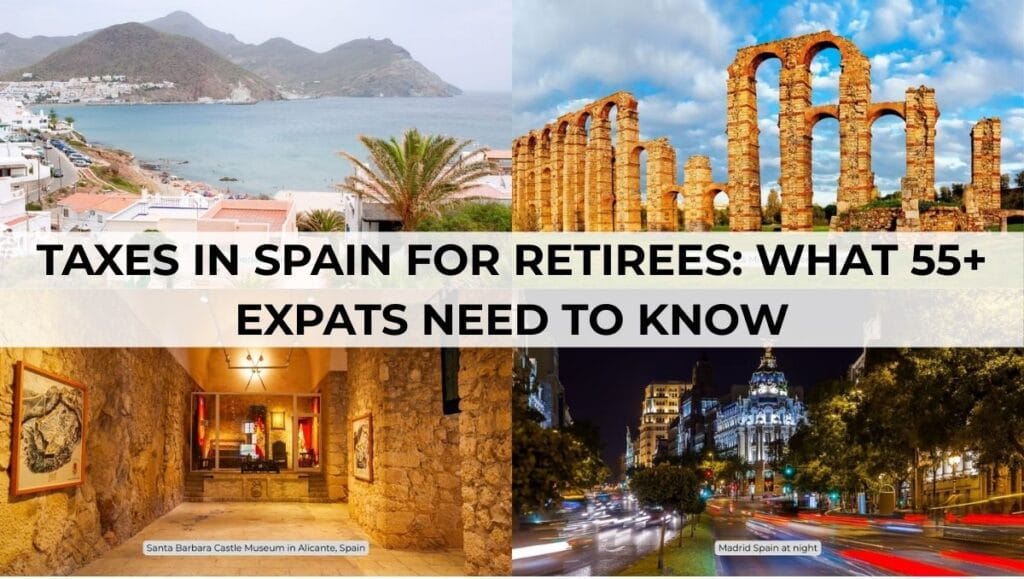
Taxes in Spain for retirees can be complex, but understanding the key details is essential for a smooth transition to retirement in Spain. For expats aged 55 and older, there are specific tax considerations related to pension income, savings, and property ownership. Spain offers a relatively favorable tax environment for retirees, but knowing how to navigate the tax system will help you avoid surprises. In this guide, I’ll walk you through the most important tax rules and exemptions that apply to retirees, ensuring you’re well-prepared to manage your finances while living in Spain.
Leslie Nics, TravelValueFinder.com | Last updated: April 2026 | Based on first-hand research having spent seasonal living in Spain.
Table of Contents
Taxes in Spain for Retirees: What I Wish I Had Understood Earlier
Why Taxes in Spain Matter for Retirees
When I first considered retiring in Spain, I focused on lifestyle, healthcare, and cost of living. Taxes felt like something I could “figure out later.” That was a mistake. Taxes in Spain for retirees are not necessarily high, but they are different, and misunderstanding them can lead to unpleasant surprises. Spain taxes residents on worldwide income, and how your pensions, savings, and investments are treated depends on your situation.
Once I took the time to understand the system, I realized that good planning can prevent stress and unnecessary costs.
This guide is written for people over 55 who are researching travel, long-term stays, or retirement abroad. I share real-world planning insights, official sources, and practical examples to help you understand what life in Spain is actually like – not just the highlights.
This content is educational, not legal or financial advice. Rules change, and personal situations differ, so I always recommend confirming details with official or professional sources before making decisions. Refer to the Trust & Transparency page for more information.
Tax Residency: The Most Important Rule to Understand
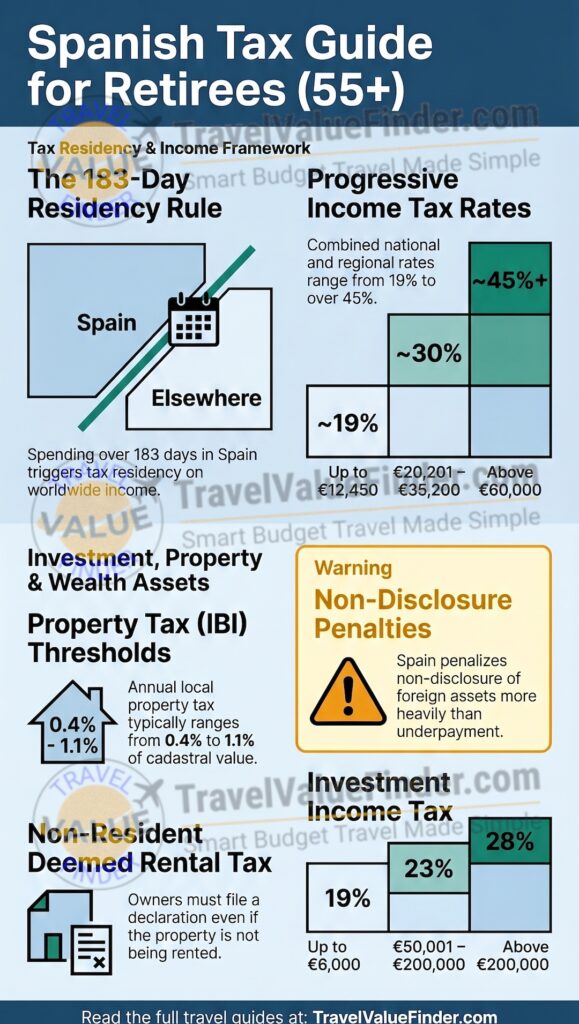
The foundation of taxes in Spain for retirees is tax residency. You are considered a Spanish tax resident if any of the following apply:
- You spend more than 183 days per year in Spain
- Spain is your primary center of economic interests
- Your spouse or dependent children live in Spain
Once you become a tax resident, Spain taxes you on worldwide income, not just Spanish income.
Example:
A retiree who spends 7 months in Spain and 5 months back home automatically becomes a Spanish tax resident-even if their income comes entirely from abroad.
Tip:
If you plan seasonal living, track your days carefully. Staying under 183 days can significantly change your tax obligations.
Income Tax in Spain for Retirees
Spain uses a progressive income tax system, meaning higher income is taxed at higher rates. National and regional taxes combine, so rates vary slightly by region.
Approximate Income Tax Brackets
| Annual Income (EUR) | Approximate Tax Rate |
| Up to €12,450 | ~19% |
| €12,451 – €20,200 | ~24% |
| €20,201 – €35,200 | ~30% |
| €35,201 – €60,000 | ~37% |
| Above €60,000 | ~45%+ |
Example:
A retiree earning €30,000 annually from pensions and investments would pay a blended rate, not the highest rate on the entire amount.
Tip:
Spain taxes progressively – only income above each threshold is taxed at the higher rate.
How Pensions Are Taxed in Spain
This is where many retirees get confused.
Government Pensions
Government pensions (such as US federal or military pensions) are often taxed only in the source country, depending on tax treaties.
Example:
A US government pension may remain taxable in the US, not Spain, even if you live in Spain.
Private Pensions and Social Security
Private pensions and Social Security are typically taxed in Spain once you are a tax resident.
Example:
A retiree receiving US Social Security and a private pension must declare both in Spain, but may receive credits to avoid double taxation.
Tip:
Always check the Spain – US tax treaty (or your home country treaty) before assuming where a pension is taxed.
Investment Income and Savings
Taxes in Spain for retirees also apply to:
- Dividends
- Interest income
- Capital gains from investments
Investment income is taxed separately from employment income, usually at 19% – 28%, depending on amount.
| Investment Income | Approximate Tax Rate |
| Up to €6,000 | 19% |
| €6,001 – €50,000 | 21% |
| €50,001 – €200,000 | 23% |
| Above €200,000 | 28% |
Example:
A retiree selling shares with a €10,000 gain would pay a blended rate, not 28% on the full amount.
Tip:
Timing asset sales before becoming a Spanish tax resident can reduce tax exposure.
Property Taxes in Spain
If you own property in Spain, there are additional taxes to consider.
Annual Property Tax (IBI)
IBI is a local property tax paid yearly.
- Usually 0.4% – 1.1% of the cadastral value
- Lower than property taxes in many US cities
Example:
A retiree owning an apartment with a cadastral value of €100,000 might pay €400 – €800 per year.
Non-Resident Property Tax
If you own Spanish property but are not a resident, Spain still taxes a deemed rental value.
Tip:
Even if you don’t rent out your property, you must file a declaration.
Wealth Tax: Do Retirees Need to Worry?
Spain has a wealth tax, but most retirees are not affected.
- Applies only above generous exemptions
- Primary residence often has additional allowance
- Rates and exemptions vary by region
Example:
A retiree with modest savings and one home typically pays no wealth tax.
Tip:
This tax mostly impacts high-net-worth individuals. Don’t panic-but do verify with an accountant or lawyer in Spain.
Double Taxation and Tax Treaties
Spain has tax treaties with many countries to prevent double taxation.
What this means for retirees:
- You usually won’t pay tax twice on the same income
- Foreign taxes paid may be credited against Spanish taxes
Example:
A retiree paying tax on investment income abroad may offset part of their Spanish tax bill.
Tip:
Keep detailed records of taxes paid in other countries.
Common Tax Mistakes Retirees Make
I’ve seen the same errors repeated:
- Assuming income isn’t taxable because it comes from abroad
- Missing filing deadlines
- Not declaring small foreign accounts
- Ignoring regional tax differences
- Not seeking advice before becoming tax resident
Example:
One retiree failed to declare a small overseas investment account. The fine exceeded the tax owed.
Tip:
Transparency is critical. Spain penalizes non-disclosure more than underpayment.
Practical Tax Planning Tips for Retirees
- Plan before arrival – timing matters
- Track days in Spain carefully
- Understand your pension types
- Use a Spain-experienced tax advisor, especially in year one
- Coordinate taxes with visa planning
Example:
A retiree delayed selling investments until after restructuring residency, saving thousands in taxes.
Related post: Spain Retirement Checklist
Understanding Taxes in Spain for Retirees
Understanding taxes in Spain for retirees isn’t about fear – it’s about clarity. Once I understood how residency, income types, and treaties worked together, tax planning became manageable.
Spain can be a tax-efficient retirement destination if you plan ahead, understand your obligations, and avoid common mistakes. With the right preparation, taxes become just another predictable part of a comfortable retirement. Find out more to Retire in Spain on $2,500 a Month: The Honest 2026 Cost Guide
Ready to compare cities now?
- Use our Free Retirement Cost of Living Calculator — get your personalized report in 30 seconds – Free PDF download.
- How to Use a Retirement Cost of Living Calculator – to Compare Cities Worldwide
Frequently Asked Questions: Taxes in Spain for Retirees
1. Do retirees pay higher taxes in Spain?
Not necessarily. Many pay similar or lower effective rates than at home.
2. Is Social Security taxed in Spain?
Yes, in most cases, but treaties may reduce or offset double taxation. Check with a financial advisor or lawyer in Spain.
3. Do I have to file a tax return every year?
Yes, if you are a tax resident.
4. Are taxes different by region?
Yes. Regions add their own rates, which can slightly change totals.
5. Can seasonal living avoid Spanish taxes?
Yes, if you stay under 183 days and don’t establish residency.
Pages That Support This Guide
To help with deeper planning, this page connects to detailed guides such as:
- Retire in Spain (A Warm, Practical Guide for People Over 55)
- Cost of Living in Spain for Retirees (City-by-City)
- Spain Non-Lucrative Visa Explained for US and EU Citizens Over 55
- Healthcare in Spain: A Retiree’s Perspective
- Best Places to Live in Spain After 55
- Renting vs Buying Property in Spain
- Common Mistakes When Moving to Spain
- Seasonal Living in Spain: 3 – 6 Month Planning
- Spain Retirement Scorecards for Retirees
- Spain Retirement Checklist for Retirees