Travel Value Finder

TravelValueFinder.com, reported by Leslie Nics. Refreshed September 2026 from travel through Paris, Nice, and Lyon.
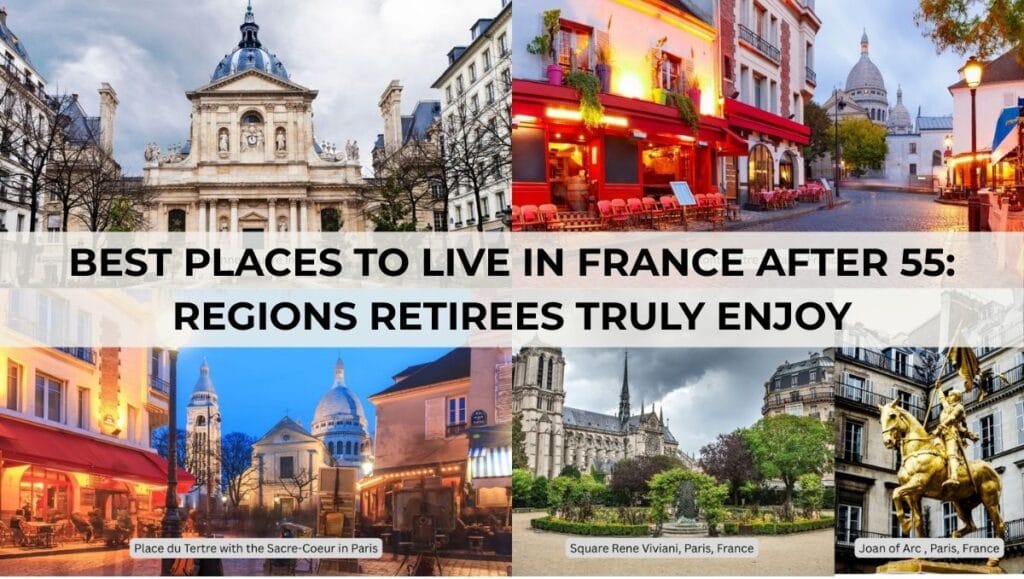
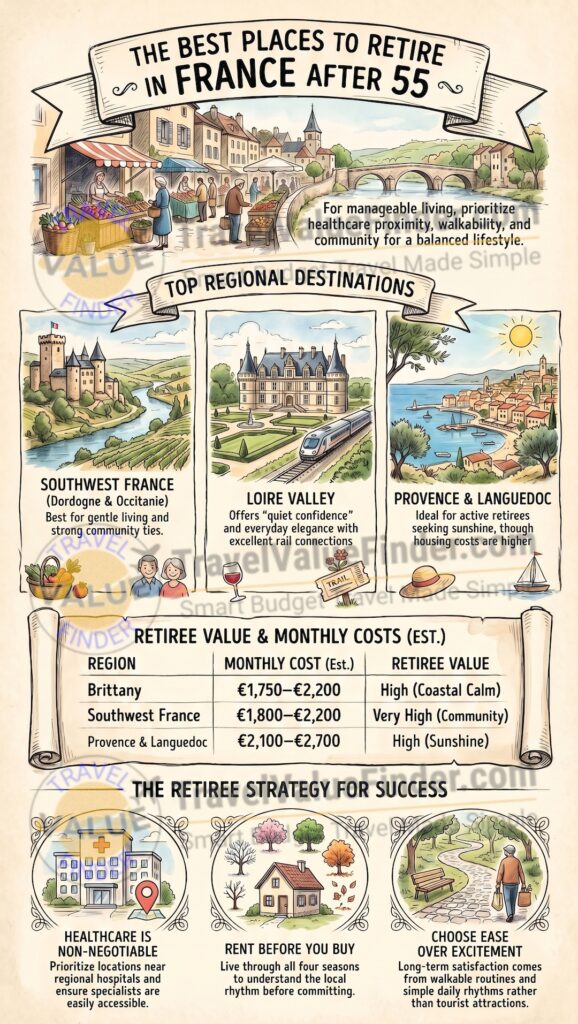
The best regions in France for retirement travel range from quiet coastal villages to lively southern towns. Brittany and the Loire Valley suit travelers chasing quiet, Provence and the south suit those who want energy and sunshine, and Paris works best as a short seasonal base rather than a full time one.
Geography drives most of this variation. The south sits closer to the Mediterranean climate of Spain and Italy, while the north shares more with the cooler, wetter weather of the UK and Belgium. Picking a region often comes down to which of those two climates actually suits you better.
This guide orders every region from calmest to liveliest, so you can match the pace to how you actually like to travel.
Table of Contents
The Spectrum: Quiet to Lively
Every French region sits somewhere on a line between total quiet and constant energy. Knowing where you land on that line matters more than any single ranking.
This is a more useful way to compare France than a simple north versus south split. Two regions at similar latitudes, like Brittany and Paris, can feel worlds apart in pace, while two very different landscapes can share a surprisingly similar rhythm.
| Region | Pace | Character |
| Brittany | Quietest | Coastal, cool, small town, tide driven |
| Loire Valley | Calm | Elegant, walkable, historic, easy trains |
| Southwest France | Relaxed | Rural, village markets, strong community feel |
| Provence | Lively | Sunny, colorful, busy in season |
| Paris | Most lively | Cultural, walkable, best in short stretches |
Brittany: The Quiet End
Brittany trades heat for dramatic coastline and cooler summers. Small towns keep a genuine local feel, with weekly markets and walkable centers. It suits travelers who want calm over company.
The Breton coastline is dotted with small fishing ports that still function as working harbors rather than tourist attractions. Towns like Concarneau and Vannes offer that authenticity alongside enough amenities to make a season comfortable.
The Loire Valley: Calm With Structure
Historic towns, reliable trains, and a gentle pace define the Loire Valley. It offers enough culture and convenience to never feel isolated, without Provence’s summer crowds.
The region’s famous chateaux give it a steady stream of day trip options without ever feeling overrun, since most visitors come for a single castle tour rather than an extended stay the way Loire Valley long stayers do.
The Loire Valley was the first region that made me stop comparing every town to Paris.” Leslie Nics, TravelValueFinder.com
What makes the Loire Valley work so well for a longer stay is how evenly it is served by rail.
Towns like Tours, Amboise, and Blois all sit within a short train ride of each other, which turns a single base into a launching point for dozens of smaller day trips.
Southwest France: Relaxed and Rural
The Dordogne and Occitanie reward travelers willing to slow down. Morning markets replace grocery runs, and neighbors tend to know your name within a season.
This region takes a little longer to settle into than the coast. Most travelers who give it a full season end up extending their stay.
Toulouse anchors the region with a genuine city option for those who want a break from village life, while smaller towns like Sarlat keep the rural character intact with well preserved medieval centers.
Provence: Sunshine and Energy
Lavender fields, hilltop villages, and a lively food scene draw travelers who want more stimulation than quiet. Summer brings real crowds, so many long stayers prefer spring or fall instead.
Towns just inland from the busiest coastal spots keep the sunshine without the peak season noise. A short scouting trip before committing to a full season helps here more than almost anywhere else.
The region’s weekly markets, from Aix en Provence to smaller village squares, are worth planning a season around on their own, with a rotating schedule that gives long stayers a reason to explore beyond their home base.
Paris: Best in Short Stretches
Paris offers unmatched culture and walkability, but full time city life wears on some travelers over months. Many retirees keep Paris as a seasonal add on rather than a home base.
Pairing a few weeks in Paris with a longer stretch somewhere quieter tends to work better than choosing one or the other. For a first visit, see our budget hotels in Paris roundup.
The cost and pace of Paris also shift noticeably by arrondissement.
Central neighborhoods stay busy and expensive year round, while quieter residential areas on the eastern and southern edges of the city offer a calmer, more local version of the same access to museums and transit.
How I Would Choose
If someone asked me directly, I would say test the extremes first. Spend a few weeks somewhere quiet like Brittany, then a few weeks somewhere lively like Provence.
Most travelers land somewhere in the middle once they have felt both ends, and the Loire Valley or Southwest France tend to be where people settle after that comparison.
Along the way, most people underestimate how different Provence feels in August compared to October, how quiet Brittany gets outside the summer months, and how tiring constant city stimulation becomes after a few months in Paris.
Language ability matters more in some regions than others too. Brittany and Southwest France see fewer English speakers than Paris or the Cote d’Azur, so a season there rewards even basic French more than a stay in the bigger tourist centers.
FAQs Best Regions in France for Retirement Travel
Is rural France too isolated for a long stay?
Not usually. Most rural regions stay well connected through local markets, shops, and regional trains.
Do these regions get crowded with tourists?
Provence and coastal towns do in summer. Brittany, the Loire Valley, and inland Southwest France stay calmer year round.
Is a car necessary in most regions?
Cities and larger towns manage fine without one. Rural stretches of the Southwest and Dordogne benefit from a car.
How does this compare to a shorter seasonal stay?
See our guide to France for retirees for how a repeating season actually unfolds.
Which region is best for a first time visitor testing the waters?
The Loire Valley offers an easy middle ground, close enough to Paris for convenience without the capital’s pace or price.
Do these regions vary much in cost?
Paris and the Cote d’Azur run higher than the rest of the country. Brittany and Southwest France tend to be more affordable overall.
Weather Across the Spectrum
Climate tracks the same quiet to lively line in its own way. Brittany stays cool and often overcast, closer to the UK than to the Mediterranean. The Loire Valley sits in between, with four distinct seasons and moderate rainfall spread through the year.
Provence and the Cote d’Azur run drier and hotter, with summer temperatures that regularly exceed anything Brittany sees even in August. Packing for a season that spans more than one of these regions means packing for genuinely different climates, not just different scenery.
Sourcing Notes
- US Department of State, France Country Information (travel.state.gov)
- Atout France, official French national tourism board (atout-france.fr)
- Meteo France, official French national weather service (meteofrance.com)
- SNCF, official French national rail operator (sncf.com)