Travel Value Finder

The Spain Non-Lucrative Visa allows retirees to live in Spain without working, provided they can demonstrate sufficient income or savings to support themselves. This visa requires proof of financial stability, health insurance coverage, and a clean criminal record. Understanding the application process, documentation requirements, and timelines helps retirees secure a smooth, stress-free long-term stay in Spain.
Leslie Nics, TravelValueFinder.com | Last updated: April 2026 | Based on first-hand research having spent seasonal living in Spain.
Table of Contents
Why the Spain Non-Lucrative Visa Matters for Retirees
When I first looked into long-term living options in Spain, one thing became clear very quickly: everything starts with the visa. For retirees, the Spain Non-Lucrative Visa is the most common and realistic path to legal residency.
Despite the name, this visa is not just for wealthy individuals. It’s designed for people who can support themselves without working in Spain-making it especially relevant for retirees with pensions, Social Security, investment income, or savings.
Understanding how the Spain Non-Lucrative Visa actually works helps remove a lot of fear and confusion early in the planning process to retire in Spain.
This guide is written for people over 55 who are researching travel, long-term stays, or retirement abroad. I share real-world planning insights, official sources, and practical examples to help you understand what life in Spain is actually like – not just the highlights.
This content is educational, not legal or financial advice. Rules change, and personal situations differ, so I always recommend confirming details with official or professional sources before making decisions. Refer to the Trust & Transparency page for more information.
What Is the Spain Non-Lucrative Visa?
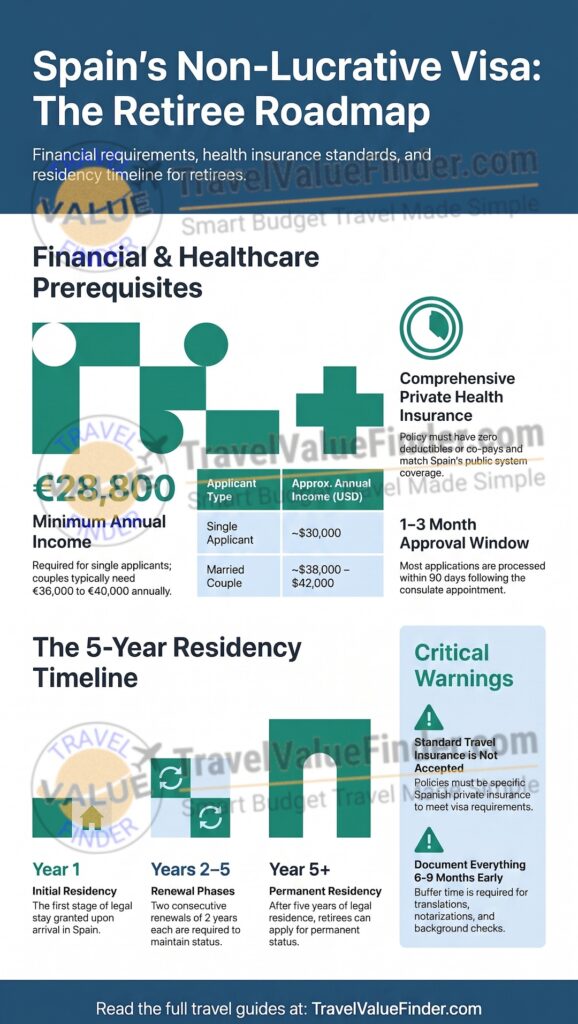
The Spain Non-Lucrative Visa (NLV) allows non-EU citizens to reside in Spain for extended periods without employment. The visa works in stages:
- Initial approval: 1 year
- First renewal: 2 years
- Second renewal: 2 years
- Permanent residency: After 5 years
This structure allows retirees to plan their lifestyle, housing, healthcare, and social integration step by step.
Example:
I spoke with a retiree couple who used the NLV to move to Valencia. They secured the 1-year visa, rented a small apartment, and used that time to learn Spanish and get familiar with local healthcare and transport before committing long-term.
For retirees, this timeline fits well with long-term planning and does not require employment, business activity, or local sponsorship.
How to Apply for a Spain Non-Lucrative Visa as a Retiree
Who Should Consider the Spain Non-Lucrative Visa
- Have stable passive income like pensions or investments
- Do not intend to work in Spain
- Want long-term residency, not just tourist stays
- Can navigate documentation with patience
- Are ready to plan 6 – 12 months ahead
Tip:
If you’re someone who prefers an instant, casual move or working on arrival, this visa may feel bureaucratic. It works best when approached as part of a thoughtful retirement plan.
If you’re looking for a quick or casual solution, this visa may feel overwhelming. But if your goal is to retire in Spain properly, it’s one of the strongest residency options available.
Income Requirements: How Much Do You Really Need?
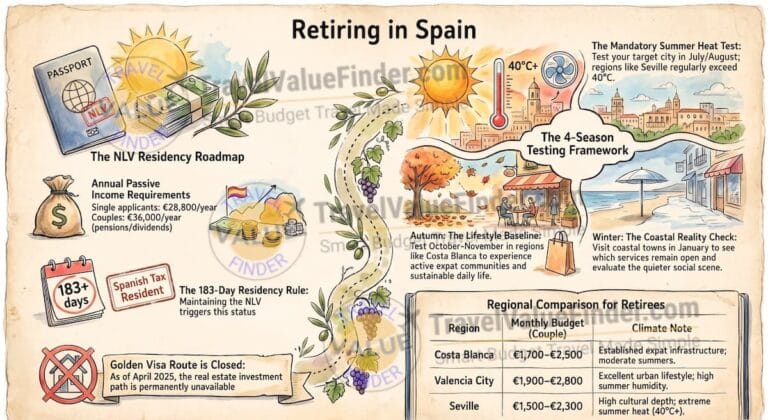
Spain requires applicants to show sufficient financial means, usually tied to the IPREM index. Approximate guidelines:
- Single applicant: €28,800 per year (~$30,000)
- Married couple: €36,000 – €40,000 per year (~$38,000 – $42,000)
- Additional dependents: extra income required
Acceptable sources of income include:
- Social Security or pensions
- Investment income or dividends
- Rental income
- Savings (in some cases)
Example:
One retiree used a combination of a US pension and rental income from a property back home. Total annual income met the requirement and was easily documented.
Tip:
Document every income source carefully-Spanish authorities want proof that funds are stable and continuous. The key is consistency and documentation. Spain wants to see that your income is reliable and sustainable.
Healthcare Requirements: Your Safety Net
Healthcare is a critical component of the NLV. Spain requires private health insurance that:
- Meets the coverage of Spain’s public system
- Has no deductibles or co-pays
- Is valid across all of Spain
Example:
A 62-year-old retiree purchased private coverage for $140/month, which covered routine doctor visits and specialist care. This satisfied visa requirements and gave peace of mind.
Tip:
Select insurance that explicitly covers visa requirements, even if a slightly more expensive policy is needed. From what I’ve seen, costs typically range between $80 and $200 per month, depending on age and coverage. This insurance is also what most retirees continue using even after residency, due to convenience and speed. Related: Healthcare in Spain: What Retirees Actually Experience
The Spain Non-Lucrative Visa Application Process: What to Expect
The NLV is document-heavy, but entirely manageable with preparation. Steps I recommend:
- Gather all documents (passport, income, background checks, medical certificate)
- Obtain private health insurance
- Submit your application at your local Spanish consulate
- Attend in-person appointment
- Wait 1 – 3 months for approval
Example:
A retiree I spoke with submitted documents in January, attended a February appointment, and received approval in March. The timeline allowed them to plan their move for the summer.
Tip:
Start 6 – 9 months ahead of your intended move. This buffer accommodates document translations, notarizations, and consulate schedules. Once approved, you enter Spain and complete residency registration locally.
Common Challenges and Mistakes
Some retirees stumble because they:
- Apply without sufficient documented income
- Purchase non-compliant insurance
- Underestimate processing time
- Provide inconsistent financial records
Example:
One retiree bought a standard travel insurance policy. It didn’t meet NLV requirements, causing a 2-month delay in approval.
Tip:
Use checklists and, if needed, consult a specialist familiar with Spanish retirement visas. This is where many retirees feel overwhelmed. I’ve found that creating a checklist early reduces stress significantly. Related: Common Mistakes When Moving to Spain
Renewals and Long-Term Outlook
The Spain Non-Lucrative Visa (NLV) is renewable and designed to lead to permanent residency:
- Year 1: Initial visa
- Year 2 – 3: First renewal
- Year 4 – 5: Second renewal
- After 5 years: Apply for permanent residency
Example:
A retiree couple renewed successfully twice, eventually moving into permanent residency status. This allowed them to plan healthcare, housing, and social integration with confidence.
Tip:
Mark renewal deadlines clearly in your calendar-missing deadlines can create complications. This stability makes Spain attractive for retirees who want predictability rather than temporary stays.
Real-Life Example: Combining NLV With Lifestyle Planning
One retiree I know combined the NLV with a seasonal living approach:
- Spent 3 months in Spain initially, using the NLV as a temporary residence
- Tested several cities before choosing Valencia for the long term
- Coordinated income, healthcare, and rental decisions while still abroad
This approach minimized risk and gave peace of mind.
Tip:
The NLV can serve as a stepping stone-you don’t have to commit fully until you’re ready. Find out more on Retiring in Spain: Why I Tested Four Seasons Before Applying for the NLV
Understanding Spain Non-Lucrative Visa
From everything I’ve reviewed, the Spain Non-Lucrative Visa is not complicated. For retirees over 55, the Spain Non-Lucrative Visa is more than a visa-it’s the foundation of your retirement plan. It requires organization, patience, and intentional planning, but it also provides stability, healthcare access, and legal residency in one of Europe’s most welcoming countries. For retirees who want stability, healthcare access, and a long-term life in Spain, it remains one of the strongest residency options available.
By understanding the requirements, avoiding common mistakes, and planning your lifestyle in parallel, you can transition into a comfortable, fulfilling retirement in Spain. Find out more to Retire in Spain on $2,500 a Month: The Honest 2026 Cost Guide
Ready to compare cities now?
- Use our Free Retirement Cost of Living Calculator — get your personalized report in 30 seconds – Free PDF download.
- How to Use a Retirement Cost of Living Calculator – to Compare Cities Worldwide
Frequently Asked Questions About the Spain Non-Lucrative Visa
1. Can I work on the Spain Non-Lucrative Visa?
No. It’s strictly for people who can support themselves without local employment.
2. How long does approval take?
Typically 1 – 3 months after application submission.
3. Can savings count instead of income?
Yes, but authorities prefer stable, predictable income.
4. Do I have to buy property to apply?
No. Renting is perfectly acceptable, and many retirees start this way.
5. Is the Spain Non-Lucrative Visa good for retirees?
Yes. It is one of the most commonly used residency options for retirees who want to live in Spain long term without working.
Pages That Support This Guide
To help with deeper planning, this page connects to detailed guides such as:
- Retire in Spain (A Warm, Practical Guide for People Over 55)
- Cost of Living in Spain for Retirees (City-by-City)
- Healthcare in Spain: A Retiree’s Perspective
- Best Places to Live in Spain After 55
- Renting vs Buying Property in Spain
- Taxes in Spain for Retirees
- Common Mistakes When Moving to Spain
- Seasonal Living in Spain: 3 – 6 Month Planning
- Spain Retirement Scorecards for Retirees
- Spain Retirement Checklist for Retirees