Travel Value Finder


Choosing the best places to live in Spain after 55 depends on your lifestyle, budget, and climate preferences. Coastal cities like Málaga and Alicante offer sunny weather and vibrant expat communities, while cities like Madrid and Barcelona provide cultural attractions and modern amenities. Smaller towns and inland regions offer a quieter pace and lower living costs, making it easier for retirees to enjoy a comfortable and fulfilling life in Spain.
Leslie Nics, TravelValueFinder.com | Last updated: April 2026 | Based on first-hand research having spent seasonal living in Spain.
Table of Contents
Top Cities and Regions for Retirees in Spain
When I started researching the best places to live in Spain after 55, I quickly realized something important: there is no single “best” place that works for everyone.
Spain is incredibly diverse. Climate, cost of living, healthcare access, and social life can feel completely different from one region to another. What works beautifully for one retiree can feel isolating or overwhelming to another.
That’s why I focus on matching places to lifestyles, not rankings or hype.
This guide is written for people over 55 who are researching travel, long-term stays, or retirement abroad. I share real-world planning insights, official sources, and practical examples to help you understand what life in Spain is actually like – not just the highlights.
This content is educational, not legal or financial advice. Rules change, and personal situations differ, so I always recommend confirming details with official or professional sources before making decisions. Refer to the Trust & Transparency page for more information.
What I Look For When Comparing Retirement Locations
When evaluating the best places to live in Spain after 55, I consistently look at:
- Healthcare access and quality
- Cost of living stability
- Walkability and transportation
- Climate comfort
- Social and cultural opportunities
- Availability of long-term rentals
These factors matter far more than postcard views.
Valencia: A City That Feels Designed for Daily Living
When I look at cities in Spain through a retiree’s lens, Valencia consistently stands out because it feels livable rather than overwhelming. It’s a large city, but it doesn’t behave like one in daily life. Neighborhoods are walkable, public transportation is reliable, and daily errands don’t feel rushed or stressful.
What really makes Valencia appealing for people over 55 is balance. You have excellent hospitals, a strong public healthcare network, and plenty of private clinics-without the constant crowds and high housing costs found in Madrid or Barcelona. The city also has beaches, green spaces like the Turia park, and a slower rhythm that suits retirement well.
Example:
A retired couple I reviewed chose Valencia after spending time in Barcelona. They found Valencia less hectic, easier to navigate, and about $400 – $600 cheaper per month in rent, while still offering top-tier healthcare.
Why Valencia Works Well
- Strong public and private healthcare
- Lower housing costs than Madrid or Barcelona
- Walkable neighborhoods and good transit
- Beach access without resort pricing
Planning Tip:
If you want value, look just outside the historic center. You’ll still be close to transit and healthcare but avoid premium tourist pricing areas.
Barcelona: Culture-Rich, Dynamic, and Not for Everyone
Barcelona is often one of the first cities people think about when considering retirement in Spain. And for good reason-it offers world-class healthcare, outstanding culture, and an international atmosphere that feels familiar to many retirees. That said, Barcelona requires honest self-assessment. It’s busy, tourism-heavy in many areas, and noticeably more expensive than most other Spanish cities. Some retirees thrive in that energy. Others find it tiring after the novelty wears off.
Healthcare is excellent here, especially for those who need specialist care. Transportation is efficient, and the city is extremely walkable. But housing costs are high, and competition for good rentals can be intense.
Example:
One retiree I studied chose Barcelona specifically because of access to a specialized hospital and cultural life. They accepted higher rent as a trade-off for medical peace of mind and intellectual stimulation.
Pros
- Excellent hospitals and specialists
- International connectivity
- Rich cultural life
Cons
- Higher rents
- Crowded tourist areas
Planning Tip:
If Barcelona appeals to you, avoid living near major tourist corridors. Residential neighborhoods slightly outside the core offer a more livable experience.
Madrid: Ideal for Retirees Who Want Big-City Infrastructure
Madrid doesn’t get the same “retirement buzz” as coastal areas, but it shouldn’t be overlooked-especially for retirees who enjoy city life and want the best healthcare access possible. Madrid is Spain’s healthcare hub. Many of the country’s top hospitals and specialists are based here, which matters greatly for people managing chronic conditions or planning long-term care. Public transport is excellent, and you can live comfortably without a car.
The trade-off is cost. Rent is higher than most regions, and Madrid feels more urban than relaxed. However, for retirees who enjoy museums, concerts, and year-round activity, Madrid can be deeply satisfying.
Example:
A single retiree chose Madrid primarily for medical access. While rent was higher, they eliminated car ownership entirely, which helped balance overall costs.
Why Madrid Appeals
- Top-tier hospitals
- Excellent public transport
- Year-round cultural activities
Planning Tip:
Look at outer neighborhoods connected by metro. You’ll get quieter living and significantly lower housing costs without losing access to services.
Costa Blanca: Coastal Living Without Coastal Prices
The Costa Blanca is one of the most established retirement regions in Spain, and it remains popular for practical reasons-not hype. This region offers warm, dry weather, good healthcare coverage, and some of the lowest coastal living costs in the country. Towns near Alicante combine affordability with access to hospitals and airports, making life easier for retirees.
It’s also a region where English is widely spoken, which helps during the transition period. However, integration improves significantly with some Spanish language effort.
Example:
A single retiree living near Alicante manages comfortably on $1,800 per month, including private health insurance and regular dining out.
Why It Works
- Lower cost of living
- Strong healthcare access
- Warm, dry climate
Planning Tip:
Avoid towns that feel empty outside tourist season. Look for year-round communities with hospitals and public transport nearby.
Costa del Sol: Social, Supportive, and Well-Established
The Costa del Sol attracts retirees who value community and social connection. The expat infrastructure here is strong-English-speaking doctors, social groups, and services are widely available. This makes the region easier for retirees who want a softer landing in Spain. However, this convenience often comes with higher housing costs, particularly in popular areas.
Example:
A retired couple chose the Costa del Sol because they wanted immediate social connections. While rent was higher, they felt more supported during their first year.
Pros
- English widely spoken
- Good hospitals
- Active social life
Cons
- Higher rents in popular areas
Planning Tip:
Look slightly inland. You’ll often find better value while staying within easy reach of the coast and healthcare facilities.
Northern Spain: Cooler, Greener, and Often Overlooked
Northern Spain appeals to retirees who don’t tolerate heat well and prefer a quieter, greener environment. Regions like Galicia and Asturias offer lower housing costs, strong public services, and beautiful landscapes.
However, life here is slower and more local. English is less common, and winters can be gray and rainy. For the right person, this feels peaceful. For others, it may feel isolating.
Example:
A couple moved north after struggling with southern Spain’s summer heat. They found lower rent and better year-round comfort, even though they had to adjust socially.
Why Consider It
- Lower temperatures
- Green landscapes
- Lower housing costs
Planning Tip:
Always visit during winter. If you enjoy the region then, you’ll likely enjoy it year-round.
Inland Cities: Quiet, Affordable, and Authentic
Inland cities like Zaragoza or Córdoba rarely appear on “best retirement” lists, but they offer something many retirees actually want: affordability, authenticity, and stability. These cities are less tourist-driven, which keeps costs lower and daily life more grounded. Healthcare access is solid, and community life tends to be stronger.
Example:
A retiree living inland reduced housing costs by nearly 40% compared to coastal living, freeing up budget for travel and healthcare.
Benefits
- Lower rent
- Strong local culture
- Less tourism pressure
Planning Tip:
Inland cities work best if you’re comfortable operating mostly in Spanish and enjoy local culture over expat environments.
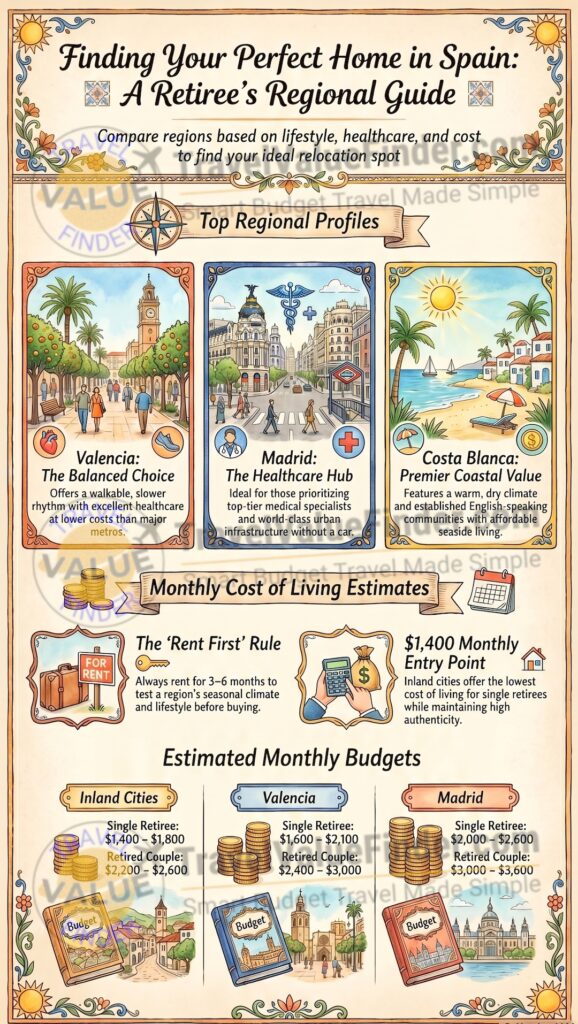
Cost of Living Comparison by Region (Monthly Estimates)
| Region | Single Retiree | Retired Couple | Notes |
|---|---|---|---|
| Valencia | $1,600 – $2,100 | $2,400 – $3,000 | Strong balance |
| Madrid | $2,000 – $2,600 | $3,000 – $3,600 | Higher rent |
| Barcelona | $2,100 – $2,700 | $3,200 – $3,800 | Premium lifestyle |
| Costa Blanca | $1,600 – $2,000 | $2,400 – $2,900 | Coastal value |
| Costa del Sol | $1,800 – $2,300 | $2,700 – $3,300 | Expat-friendly |
| Northern Spain | $1,500 – $1,900 | $2,300 – $2,700 | Cooler climate |
| Inland Cities | $1,400 – $1,800 | $2,200 – $2,600 | Best value |
Common Location Mistakes I See
- Choosing based on vacation experience
- Ignoring healthcare proximity
- Overpaying for short-term hype
- Skipping seasonal testing
Tip: Spend 3 – 6 months in your top choice before committing long-term. Explore seasonal living in Spain before committing to long-term move immediately.
How This Fits Into Retiring in Spain
Choosing the best places to live in Spain is one of the most important retirement decisions you’ll make. The best places to live in Spain after 55 are the ones that align with your health needs, budget, and daily lifestyle-not marketing rankings.
Related post: Retire in Spain: A Complete Guide for Over 55s
Considering the Best Places to Live in Spain
Spain offers something for nearly every retiree-but only if the choice is intentional. The best places to live in Spain after 55 reward planning, patience, and honest self-assessment. I hope this post has provided you with thorough information on choosing the best places to live in Spain. Find out how to Retire in Spain on $2,500 a Month: The Honest 2026 Cost Guide
Ready to compare cities now?
- Use our Free Retirement Cost of Living Calculator — get your personalized report in 30 seconds – Free PDF download.
- How to Use a Retirement Cost of Living Calculator – to Compare Cities Worldwide
Frequently Asked Questions – Best Places to Live in Spain
1. What is the best place to retire in Spain after 55?
The best places to live in Spain depends on budget, climate preference, and lifestyle priorities. Check on this post on which regions is most ideal for your personal lifestyle.
2. Is coastal living more expensive?
Often yes, but inland coastal towns offer better value.
3. Should I rent or buy first?
Rent first. Always. This is to test the ‘water’ so that you are adjusted based on your personal lifestyle and preferences.
Pages That Support This Guide
To help with deeper planning, this page connects to detailed guides such as:
- Retire in Spain (A Warm, Practical Guide for People Over 55)
- Cost of Living in Spain for Retirees (City-by-City)
- Spain Non-Lucrative Visa Explained for US and EU Citizens Over 55
- Healthcare in Spain: A Retiree’s Perspective
- Renting vs Buying Property in Spain
- Taxes in Spain for Retirees
- Common Mistakes When Moving to Spain
- Seasonal Living in Spain: 3 – 6 Month Planning
- Spain Retirement Scorecards for Retirees
- Spain Retirement Checklist for Retirees