Travel Value Finder


This Lisbon travel guide covers everything you need to plan your trip in 2026. This includes from must-see attractions, cheap things to do in Lisbon, and local Lisbon food to realistic budget tips and practical advice.
Leslie Nics, TravelValueFinder.com | Last updated: April 2026 | Based on first-hand research and on-the-ground travel across Lisbon, Porto, Cascais, and Lagos.
Table of Contents
Lisbon Travel Guide 2026: Best Places to Visit, Food & Travel Tips
Lisbon continues to be one of Europe’s most rewarding cities to visit in 2026. It’s historic without feeling frozen in time, lively without being overwhelming, and-most importantly-still possible to enjoy without blowing your budget.
Whether you’re visiting for the first time or returning to explore deeper, Lisbon offers a rare mix of culture, food, scenery, and affordability.
Is Lisbon Worth Visiting in 2026?
Yes, Lisbon is absolutely worth visiting in 2026. The city offers historic neighborhoods, affordable food, scenic viewpoints, and good value for money compared to other European capitals.
With improved transport, a growing food scene, and plenty of free attractions, Lisbon remains one of Europe’s best all-around destinations.
People Also Asked: Lisbon Travel Guide
| Question | Answer |
| Which Lisbon neighborhood has the cheapest hotels? | Arroios, Anjos, and Graça offer budget-friendly hotels while staying close to the city center. |
| What is the cheapest way to get from Lisbon airport to downtown? | The Metro (€1.80) or Aerobus (€4) are the most affordable ways. |
| How much does public transport cost in Lisbon? | Single ride €1.80, 24-hour pass €6.80, Viva Viagem card €0.50 recharge fee. |
| Are there free viewpoints in Lisbon? | Miradouro da Senhora do Monte, Miradouro de Santa Catarina, Miradouro da Graça are all free. |
| Where can I eat cheap in Lisbon? | Neighborhood tascas, bakeries, and lunch menus are the cheapest options. |
| How can I take Lisbon tours on a budget? | Walking tours, food tastings, and tip-based guided experiences cost around €5 – €10. |
| Which cultural sites in Lisbon are inexpensive? | Many churches, small museums, and historic streets cost €3 – €5, and some are free. |
| Which beaches can I visit cheaply from Lisbon? | Cascais, Costa da Caparica, Praia da Adraga – accessible by train or bus for €10 – €15 round trip. |
| How can I enjoy Lisbon nightlife without spending much? | Bairro Alto and Cais do Sodré bars often have low cover charges, happy hours, or live Fado at no cost. |
| Are there budget-friendly ways to see Lisbon by tram? | Use a Viva Viagem card for multiple rides; the historic Tram 28 is €3 per single trip or €6.80 day pass. |
Where Is Lisbon and Why Is It So Popular?
Where Is Lisbon Located?
- Lisbon is located in western Portugal, along the Tagus River near the Atlantic Ocean.
- It is the capital and largest city of Portugal and one of Europe’s oldest cities, known for its coastal setting and historic neighborhoods.
Lisbon is the capital city of Portugal, located on the western edge of Europe along the Tagus River, just a short distance from the Atlantic Ocean.
Its coastal location gives the city mild weather, fresh seafood, and scenic riverfront views that immediately set it apart from many other European capitals.
Geographically, Lisbon sits in southwestern Europe, making it one of the westernmost capital cities on the continent. This unique position has shaped its history as a major maritime power and gateway between Europe, Africa, and the Americas.
Why Is Lisbon So Popular with Travelers?
Lisbon’s popularity isn’t driven by a single attraction-it’s the result of several factors coming together in a way few cities manage.
1. A Rare Mix of History and Everyday Life
Lisbon is one of the oldest cities in Europe, older than Rome or Paris, yet it never feels like a museum. Historic neighborhoods like Alfama, Mouraria, and Baixa are still lived in, not staged. You’ll see locals hanging laundry from balconies, chatting in small squares, and going about their day alongside visitors.
This balance makes Lisbon feel authentic rather than overly touristic.
2. Affordable Compared to Other European Capitals
One of the biggest reasons Lisbon continues to attract travelers is value for money. While prices have risen, Lisbon remains more affordable than cities like:
- Paris
- London
- Amsterdam
- Rome
Why Do Tourists Love Lisbon?
- Tourists love Lisbon for its affordable prices, historic charm, scenic viewpoints, walkable neighborhoods, and relaxed atmosphere.
- It offers culture, food, and coastal scenery without the high costs of other European capitals.
3. Walkable Neighborhoods with Incredible Views
Lisbon is famously built on seven hills, which means almost every neighborhood offers panoramic viewpoints known as miradouros. These viewpoints are free and often become social gathering spots at sunset.
Popular areas like Alfama, Chiado, Bairro Alto, and Graça are close enough to explore on foot, making walking one of the best ways to experience the city.
For travelers searching for:
- “walkable European cities”
- “best city views in Europe”
- “Lisbon viewpoints”
Lisbon consistently delivers.
4. Food That Feels Accessible, Not Intimidating
Lisbon’s food scene is another major draw. Unlike cities where dining out feels expensive or formal, Lisbon’s food culture is relaxed and approachable. For many visitors, Lisbon is the rare capital where you can eat well every day without budgeting stress.
Travelers are drawn to:
- Traditional Portuguese cuisine
- Fresh seafood
- Affordable local restaurants (tascas)
- Famous pastries like pastel de nata
5. A Laid-Back, Welcoming Atmosphere
Lisbon doesn’t rush you. The pace of life is noticeably slower than in many major European cities, which appeals to travelers who want to explore without feeling overwhelmed. This relaxed atmosphere, combined with friendly locals and good English proficiency, makes Lisbon especially popular with:
- First-time Europe travelers
- Solo travelers
- Digital nomads
- Couples and retirees
6. Easy Access to Beaches and Day Trips
Another reason Lisbon stands out is how easy it is to escape the city. This makes Lisbon attractive for travelers searching for“cities with beaches nearby” or “European cities with easy day trips.” Within an hour, you can reach:
- Sandy Atlantic beaches
- Coastal towns like Cascais
- Historic destinations like Sintra
What Makes Lisbon Unique?
- Lisbon is unique for its coastal location, historic hilltop neighborhoods, affordable travel costs, scenic viewpoints, and relaxed lifestyle.
- It combines culture, food, and nature in a way few European capitals do.
Why Lisbon Continues to Grow in Popularity in 2026
As travelers increasingly look for destinations that offer authentic experiences, good value, and a slower pace, Lisbon continues to rise in popularity.
It appeals to people who want culture without crowds, food without inflated prices, and history that still feels alive. Lisbon isn’t just a place to visit-it’s a city that’s easy to enjoy.
Best Time to Visit Lisbon in 2026
Choosing the best time to visit Lisbon depends on what you value most: weather, fewer crowds, or lower prices.
The good news is that Lisbon is a year-round destination, thanks to its mild climate and relaxed travel pace.
What Is the Cheapest Time to Visit Lisbon?
The cheapest time to visit Lisbon is from November to February.
During winter, flights and hotels are more affordable, and crowds are minimal, while temperatures remain mild compared to most of Europe.
How to Choose the Best Time for Your Trip
- For sightseeing & walking: April – May, September – October
- For beaches & nightlife: June – September
- For budget travel: November – February
- For festivals & events: June
Lisbon adapts to different travel styles remarkably well, which is one of the reasons it continues to rank highly in European travel searches in 2026.
Here’s how each season compares in 2026.
Month-by-Month Snapshot (Quick Reference)
- January – February: Cheapest, quietest, mild winter weather
- March – April: Great value, fewer crowds, ideal sightseeing
- May: One of the best overall months
- June: Festivals, warm weather, rising prices
- July – August: Hottest, busiest, most expensive
- September: Excellent weather, fewer crowds
- October: Warm, relaxed, great value
- November – December: Low prices, slower pace, festive atmosphere
Spring in Lisbon (March to May)
Spring is one of the best seasons to visit Lisbon, especially for first-time visitors.
- Mild temperatures (15 – 22°C / 59 – 72°F)
- Fewer tourists than summer
- Ideal for walking and sightseeing
- Blooming gardens and outdoor cafés
March and April are especially attractive for travelers searching for:
- “Lisbon in spring”
- “Best time to visit Lisbon for sightseeing”
- “Lisbon shoulder season travel”
By May, the city starts to feel lively without being overwhelming, making it perfect for cultural exploration and food-focused trips.
Summer in Lisbon (June to August)
Summer is Lisbon’s busiest and most expensive season, but it also offers long sunny days and vibrant energy.
- Warm to hot temperatures (25 – 35°C / 77 – 95°F)
- Peak tourist season
- Higher accommodation prices
- Excellent beach weather
June is slightly calmer than July and August and includes local festivals that add atmosphere to the city. July and August are best for travelers combining Lisbon with beach destinations nearby.
Fall in Lisbon (September to October)
Fall is another top-rated time to visit Lisbon, especially for travelers who want warm weather without peak crowds. This is a favorite season for repeat visitors and slow travelers.
- Pleasant temperatures (18 – 26°C / 64 – 79°F)
- Fewer tourists after summer
- Better hotel availability
- Excellent food and wine season
September and October are ideal for:
- “Lisbon travel in September”
- “Best time to visit Lisbon without crowds”
- “Lisbon autumn travel guide”
Winter in Lisbon (November to February)
Winter is Lisbon’s cheapest and quietest season, making it attractive for budget travelers. Travelers searching for “cheap time to visit Lisbon” often find winter offers the best value.
- Mild winters compared to Europe (10 – 18°C / 50 – 64°F)
- Fewer tourists
- Lower accommodation prices
- Occasional rain, but many sunny days
While it’s not beach weather, winter is perfect for:
- Museum visits
- Neighborhood exploration
- Long café breaks
- Budget-friendly city trips
Top Attractions in Lisbon (Lisbon Travel Guide 2026 Edition)
In Portugal, each region moves to its own gentle rhythm.” Leslie Nics, TravelValueFinder.com
Lisbon isn’t a city you rush through ticking boxes.
Many of its best attractions are about atmosphere-wandering through old neighborhoods, stopping at viewpoints, and letting history unfold naturally as you walk.
What Are the Top Attractions in Lisbon?
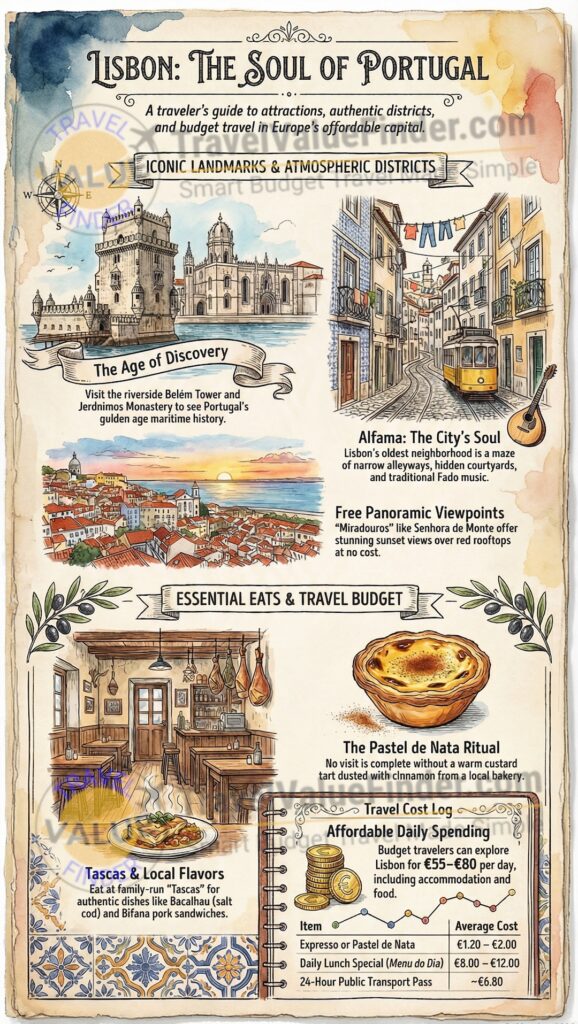
- The top attractions in Lisbon include Belém Tower, Jerónimos Monastery, Alfama, São Jorge Castle, Praça do Comércio, and Lisbon’s scenic viewpoints.
- These landmarks highlight the city’s history, architecture, and riverfront setting.
- See our cheap things to do in Lisbon for all top attractions in Lisbon.
Lisbon Food Guide: What to Eat & Where to Eat Cheap
Some of Portugal’s best flavors are found in the most unassuming places.” Leslie Nics, TravelValueFinder.com
What Food Is Lisbon Famous For?
- Lisbon is famous for seafood dishes, grilled sardines, bacalhau (salt cod), bifana sandwiches, and pastel de nata pastries.
- Traditional Portuguese food is simple, filling, and widely available at affordable prices.
See our Lisbon Food for a complete food experience in Lisbon.
How Expensive Is Lisbon in 2026? Daily Budget Breakdown (With Costs)
Lisbon is still one of the most affordable capital cities in Western Europe, even in 2026.
While prices have increased slightly in recent years, Lisbon remains noticeably cheaper than Paris, London, Amsterdam, or Rome-especially when it comes to food, transport, and everyday attractions.
Is Lisbon Expensive in 2026?
- Lisbon is moderately priced and cheaper than most Western European capitals.
- In 2026, travelers can expect to spend €55 – €80 per day on a budget, €90 – €130 mid-range, and €150+ for comfort travel.
Your daily cost in Lisbon depends on your travel style, but most visitors find it easy to control spending without sacrificing experiences.
Lisbon Daily Budget Breakdown (2026)
| Travel Style | Accommodation (per night) | Food (per day) | Transport (per day) | Attractions (per day) | Total Daily Cost |
| Budget Traveler | €50 – €80 (guesthouse / hostel) | €18 – €25 | €5 – €7 | €0 – €10 | €55 – €80 |
| Mid-Range Traveler | €90 – €130 (hotel / apartment) | €30 – €40 | €8 – €12 | €10 – €20 | €90 – €130 |
| Comfort Traveler | €150 – €220+ (boutique hotel) | €45 – €60 | €12 – €20 | €20 – €30 | €150 – €200+ |
Lisbon daily travel costs in 2026 range from €55 to €130 for most travelers, depending on accommodation choice, dining style, and attraction visits.
- Prices are subject to change based on seasonality and demand.
Typical Prices in Lisbon (Quick Reference)
| Expense | Average Cost (2026) |
| Coffee (espresso) | €1.20 – €1.80 |
| Pastel de nata | €1.20 – €2.00 |
| Bakery breakfast | €4 – €6 |
| Lunch menu (menu do dia) | €8 – €12 |
| Casual dinner | €10 – €15 |
| Metro / tram ticket | ~€1.80 |
| 24-hour transport pass | ~€6.80 |
| Major attraction entry | €5 – €15 |
Lisbon is cheaper than Paris, London, and Amsterdam, especially for food, transport, and attractions.
How to Use This Table
- Staying outside Baixa or Chiado usually shifts you one full budget tier lower
- Eating lunch menus instead of dinner saves €10 – €15 per day
- Walking + viewpoints can reduce attraction costs to nearly zero
Accommodation Costs in Lisbon (2026)
Accommodation is the largest expense for most travelers.
- Hostels: €20 – €35 per night (dorm bed)
- Budget guesthouses / hotels: €50 – €80 per night
- Mid-range hotels / apartments: €90 – €130 per night
- Boutique or upscale hotels: €150 – €220+ per night
Tip: See our Where to stay in Lisbon guide. Staying in areas like Arroios, Graça, or Anjos can reduce accommodation costs by 20 – 30%.
Budget Tips for Visiting Lisbon
Saving money in Lisbon doesn’t require sacrificing experiences. See our Lisbon on a Budget guide with more information.
- Walk whenever possible
- Visit museums on free days
- Enjoy viewpoints instead of paid observation decks
- Eat where locals eat
- Limit paid attractions to one per day
Lisbon rewards slow travel and curiosity more than spending.
How Many Days Do You Need in Lisbon?
Three to four days is ideal for Lisbon. This allows time to explore historic neighborhoods, visit key attractions, enjoy local food, and take a short day trip without rushing.
Free Trip Planner: Get a Personalized Day-by-Day Itinerary in Seconds
Is Lisbon Safe for Tourists in 2026?
- Yes, Lisbon is considered very safe for visitors. Violent crime is rare, and most issues involve pickpocketing in crowded areas.
- Basic precautions-like watching belongings on trams-are usually enough.
Why Lisbon Still Shines
In this Lisbon travel guide, we share detailed budget travel tips to help you enjoy Lisbon without overspending.
Known for its charm rather than extravagance, Lisbon captivates visitors with its authentic atmosphere, historic neighborhoods, and everyday beauty.
Spend your mornings exploring cobbled streets and iconic landmarks, your afternoons enjoying affordable local cuisine, and your evenings watching breathtaking sunsets from hilltop viewpoints.
With plenty of free and low-cost experiences, Lisbon proves that an unforgettable city break doesn’t have to come with a high price tag.
That’s what makes Lisbon special-and why it remains one of Europe’s best destinations in 2026.
Find out more on Lisbon vs Porto Cost Comparison: Which Portuguese City Is Cheaper to Visit?
FAQs: Lisbon Travel Guide
1. How much does it cost to visit Lisbon?
Lisbon is one of Western Europe’s most affordable capitals. Daily costs range from €55 – €130, depending on whether you choose budget accommodations, eat at local cafés, and stick to free attractions, or go for mid-range hotels and paid tours. Even a tight budget allows you to enjoy the city’s top sights.
2. What are the best neighborhoods to stay in Lisbon?
For first-timers, Baixa and Chiado are perfect for walking, shopping, and sightseeing. Alfama offers historic charm and Fado music, while Bairro Alto is lively at night. Budget travelers can save by staying in Arroios, Anjos, or Graça, which are still close to the center.
3. What are the must-try foods in Lisbon?
Lisbon is a paradise for food lovers. Don’t miss bacalhau dishes, grilled sardines, bifana sandwiches, pastel de nata pastries, and caldo verde soup. Eating at tascas, bakeries, and lunch menus keeps meals affordable without compromising flavor.
4. What are the best free or cheap things to do in Lisbon?
Many of Lisbon’s highlights are free or very affordable. Explore Alfama’s streets, viewpoints like Miradouro da Senhora do Monte, the riverfront, and neighborhood churches at no cost. Paid attractions like São Jorge Castle (€15) and Jerónimos Monastery (€10) are budget-friendly, with free entry on select days.
5. Can I explore Lisbon on foot?
Yes! Baixa, Chiado, Alfama, and Bairro Alto are all walkable. Lisbon is hilly, though, so wear comfortable shoes if you plan to explore neighborhoods like Alfama or Graça. Walking is also a great way to discover hidden viewpoints and local cafés.
6. Are there affordable day trips from Lisbon?
Yes! Sintra, Cascais, Belém, and Setúbal are reachable by train or bus for €10 – €15 round trip. These trips offer castles, beaches, historic streets, and palaces without spending much.
7. How can I save money on my Lisbon trip?
Walk as much as possible, eat at lunch menus or bakeries, stay in budget-friendly neighborhoods, and use public transport passes. Visiting free attractions or planning sightseeing on free entry days can save €10 – €20 per day.
8. Is Lisbon expensive compared to other European cities?
Lisbon is cheaper than Paris, London, and Amsterdam, especially for food, transportation, and daily sightseeing. Even with mid-range accommodation and paid attractions, Lisbon remains budget-friendly.
9. What is the best time to visit Lisbon?
April – May and September – October are ideal for pleasant weather, fewer crowds, and moderate hotel prices. Summer is warmer and busier, while winter is quieter and cheaper, though some attractions may close earlier.
Visit our Portugal Travel Guide for more information about Portugal.