Travel Value Finder

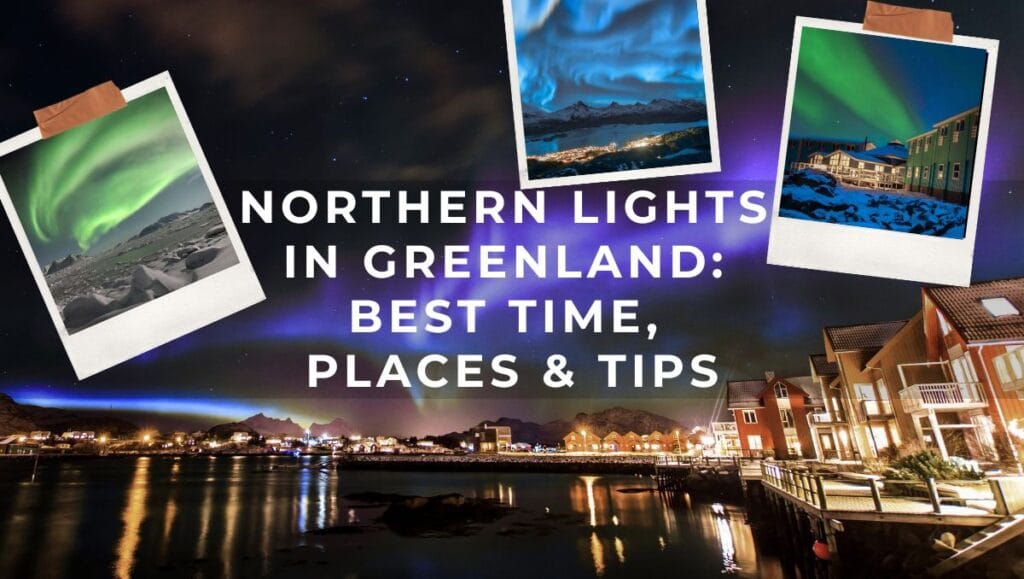
Leslie Nics, TravelValueFinder.com | Last updated: Septermber 2026
Can you see the aurora borealis in Greenland?
Yes, you can see the Northern Lights in Greenland from late September to early April. Greenland’s Arctic location, long winter nights, and low light pollution make it one of the best places in the world to see the northern lights.
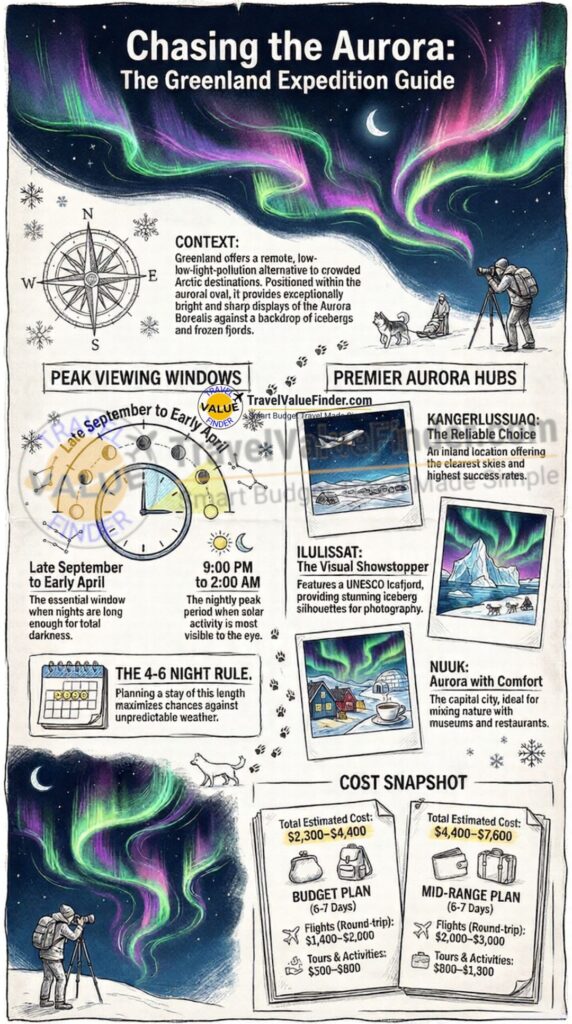
Table of Contents
Northern Lights in Greenland: Best Places, When to Go & Travel Tips (2026 Guide)
While destinations like Iceland and Norway attract large crowds, Greenland offers something rarer: true remoteness, dramatic landscapes, and darker skies.
This makes aurora sightings feel more powerful and personal. For travelers from the United States and Europe seeking a bucket-list adventure, Greenland delivers both natural wonder and cultural depth.
What Is the Northern Lights (Aurora Borealis)?
The northern lights, also known as the aurora borealis, is a natural light display caused by charged particles from the sun colliding with gases in Earth’s atmosphere. When these particles interact with oxygen and nitrogen, they release energy in the form of glowing light that appears as moving curtains, arcs, or waves across the night sky.
Green is the most common aurora color, but strong solar activity can also produce purple, red, blue, and pink hues. These displays occur year-round, but they are only visible in regions with long periods of darkness – which is why Arctic destinations like Greenland are ideal.
Much of Greenland lies directly beneath the auroral oval, the zone where aurora activity is most frequent. Combined with vast wilderness and extremely low levels of artificial light, this allows the northern lights in Greenland to appear brighter, sharper, and more dramatic than in many other destinations.
Rather than viewing the aurora above cities or highways, travelers in Greenland often witness it over icebergs, frozen tundra, and quiet coastal settlements – an experience that feels deeply immersive and uniquely Arctic.
When Is the Best Time to See the Northern Lights in Greenland?
Knowing when to see the northern lights in Greenland is essential, as timing strongly affects your chances of success.
Best Months to See the Aurora Borealis in Greenland
The aurora borealis is visible in Greenland from late September through early April, when nights are long enough for darkness.
- October to March: Best overall conditions for aurora viewing
- December to February: Longest nights and high aurora frequency, but colder temperatures
During summer, Greenland experiences the midnight sun, when the sun never fully sets – making aurora viewing impossible during that season.
Best Time of Night
Auroras are most commonly seen between 9:00 PM and 2:00 AM, though displays can occur earlier or later depending on solar activity.
Weather & Sky Conditions
Clear skies are critical. While solar storms create auroras, cloud cover determines visibility. Inland areas often experience clearer winter skies than coastal regions, improving viewing chances.
Cold Arctic air also tends to produce excellent visibility, enhancing the sharpness and brightness of the northern lights.
How Long Should You Stay?
To maximize your chances, plan for 4 – 6 nights in Greenland. This allows flexibility around weather conditions and significantly increases the likelihood of seeing the aurora at least once.
Best Places to See the Northern Lights in Greenland
One of the biggest advantages of traveling to Greenland for the northern lights is choice. Unlike smaller destinations, Greenland offers several excellent aurora locations – each appealing to different travel styles common among US and European visitors.
Ilulissat: Aurora Viewing Above Icebergs
Ilulissat is one of Greenland’s most visually dramatic destinations, and it’s especially appealing to travelers coming from Europe who want easy access plus iconic scenery. Located near the Ilulissat Icefjord (a UNESCO World Heritage Site), this town offers the rare opportunity to see the aurora borealis glowing above drifting icebergs.
Why it works well for aurora travelers:
- Extremely low light pollution once outside town
- Well-developed tourism infrastructure (hotels, guided tours)
- Ideal for photographers seeking foregrounds like ice, snow, and fjords
For first-time visitors to Greenland, Ilulissat offers a balance between comfort and wilderness that many US and European travelers appreciate.
Kangerlussuaq: One of Greenland’s Most Reliable Aurora Spots
Kangerlussuaq is often considered the most reliable place in Greenland to see the northern lights, particularly for travelers who prioritize success over scenery.
Unlike coastal towns, Kangerlussuaq sits inland, where the climate is drier and skies are often clearer – a major advantage during winter. Many flights from Europe arrive here, making it a practical choice for travelers with limited time.
Best for:
- Short trips (3 – 5 nights)
- Travelers flying from Europe via Copenhagen
- Visitors who want maximum aurora probability
This destination is especially popular with European travelers who plan winter trips around efficiency and weather reliability.
Nuuk: Aurora Viewing with Culture and Comfort
Nuuk, Greenland’s capital, appeals strongly to US travelers who want a mix of Arctic nature and cultural experiences. While it has more light than smaller towns, excellent aurora viewing is still possible just outside the city.
What makes Nuuk attractive:
- Best museums, restaurants, and cultural experiences in Greenland
- Easy excursions outside the city for aurora viewing
- Good option for travelers combining northern lights with urban comforts
Nuuk works well for travelers who want aurora viewing without a fully remote experience.
Tasiilaq (East Greenland): Remote, Wild, and Crowd-Free
For experienced travelers from Europe seeking something truly off the beaten path, Tasiilaq offers one of the most atmospheric aurora experiences in Greenland.
East Greenland is less visited, which means:
- Almost zero light pollution
- Dramatic mountain backdrops
- A strong sense of isolation and adventure
This destination is ideal for travelers who value authenticity and solitude over convenience.
Budget-Friendly Stays for Northern Lights Travelers in Greenland
Experiencing the aurora borealis in Greenland doesn’t have to break the bank. While Greenland is generally expensive, there are budget-conscious hotels and guesthouses that offer comfort, good location, and access to the northern lights.
Honest destination guides and hotel comparisons to help you travel smarter – at the best value.
Hotel listings powered by Booking.com. We may earn a commission at no extra cost to you.
1. Hotel Arctic, Ilulissat
- Location: Overlooking the Ilulissat Icefjord, a UNESCO World Heritage Site
- Why it’s good for budget travelers: Hotel Arctic offers smaller rooms at lower rates compared to Greenland’s luxury lodges, while still providing access to guided tours and excursions.
- Highlights:
- Direct booking for aurora tours
- Stunning fjord views from rooms
- Central town location with restaurants and small shops
- Ideal for: Travelers who want to combine aurora viewing, fjord excursions, and Icelandic-style winter landscapes without spending on premium lodges.
2. Kangerlussuaq Guesthouse, Kangerlussuaq
- Location: Inland town near Greenland’s main airport for easier US & European connections
- Why it’s good for budget travelers: Simple rooms with essential amenities, often cheaper than coastal hotels, with easy access to one of Greenland’s most reliable aurora viewing locations.
- Highlights:
- Less crowded and quieter than larger towns
- Access to local guides for aurora hunts
- Walking distance to hiking trails and frozen lakes
- Ideal for: Travelers flying from Europe via Copenhagen or the US via Iceland, who prioritize aurora reliability over scenic luxury.
3. Hotel Tasiilaq, East Greenland
- Location: The main town in Tasiilaq, East Greenland, surrounded by mountains and fjords
- Why it’s good for budget travelers: Offers simple accommodations at reasonable prices while still being close to remote northern lights spots. Perfect for travelers who want adventure and solitude without overspending.
- Highlights:
- Walking distance to small local shops and restaurants
- Opportunity to combine aurora viewing with cultural experiences with Inuit communities
- Fewer tourists, creating an authentic Greenlandic experience
- Ideal for: European travelers looking for remote, off-the-beaten-path northern lights adventures in a less touristic setting.
Tips for Booking Budget Stays in Greenland
- Book early: Peak aurora season (December – March) fills quickly.
- Look for packages: Many hotels combine lodging with aurora tours, dog sledding, or fjord trips for savings.
- Consider guesthouses: Smaller towns like Kangerlussuaq and Tasiilaq often have family-run guesthouses, which are cheaper than hotels.
- Check flight proximity: Choose hotels near main airports to minimize expensive domestic travel – especially relevant for US travelers with limited time.
Northern Lights Tours & Experiences in Greenland
Many US and European travelers choose guided tours when chasing the aurora borealis in Greenland – not because it’s required, but because it increases comfort, safety, and success in Arctic conditions.
Guided Aurora Hunts
These tours adapt to weather and cloud conditions, taking you away from light pollution and toward clearer skies. For visitors unfamiliar with Arctic travel, guided aurora hunts remove much of the guesswork.
They’re especially popular with:
- First-time Arctic travelers
- Winter visitors from the US
- Short-stay travelers with limited flexibility
Dog Sledding Under the Northern Lights
Few experiences are as uniquely Greenlandic as dog sledding beneath the aurora borealis. This activity resonates strongly with travelers looking for experiences they cannot replicate elsewhere.
What makes it special:
- Silent movement through frozen landscapes
- Deep cultural roots in Inuit tradition
- Unforgettable nighttime atmosphere
This is one of the most searched experiential add-ons among European adventure travelers.
Photography-Focused Aurora Tours
Greenland’s dark skies and dramatic foregrounds make it a dream destination for aurora photography. Specialized tours often include:
- Camera setup assistance
- Location scouting
- Guidance on long-exposure settings in extreme cold
These tours appeal to US travelers who plan trips specifically around photography and content
6-Day Greenland Winter Itinerary for Aurora & Adventure (Budget-Friendly)
This itinerary is designed for first-time US and European travelers who want to maximize their chances of seeing the aurora borealis, experience Greenland’s wilderness, and stay in budget-conscious accommodations.
Day 1: Arrival in Kangerlussuaq
- Flight: Arrive via Copenhagen (Europe) or Reykjavik (Iceland). Kangerlussuaq is the most accessible entry point for winter travelers.
- Accommodation: Kangerlussuaq Guesthouse
- Activities:
- Explore the small town and frozen lakes
- Prepare for aurora viewing; evening guided aurora hunt available
- Tip: Inland location = clear skies, high aurora probability
Day 2: Aurora & Winter Excursion
- Morning: Optional snowmobile or dog sledding tour
- Afternoon: Light sightseeing around town
- Evening: Guided aurora tour in Kangerlussuaq
- Highlight: Clear skies and remote location make Kangerlussuaq ideal for your first northern lights experience
Day 3: Travel to Ilulissat
- Flight: Short domestic flight to Ilulissat (coastal town with dramatic icefjords)
- Accommodation: Hotel Arctic (budget room)
- Activities:
- Visit Ilulissat Icefjord (UNESCO World Heritage Site)
- Evening aurora watching near the fjord
- Tip: Fjord offers perfect foregrounds for aurora photography
Day 4: Icefjord & Aurora Photography
- Morning: Guided glacier or iceberg tour
- Afternoon: Explore the town, local museum, or café
- Evening: Optional guided photography tour of the aurora
- Highlight: Combination of natural beauty and cultural experiences, perfect for European travelers seeking both adventure and comfort
Day 5: Travel to Tasiilaq (Optional East Greenland Adventure)
- Flight: Domestic flight to Tasiilaq for more remote aurora experiences
- Accommodation: Hotel Tasiilaq (budget-friendly)
- Activities:
- Hike nearby fjords or mountains
- Evening aurora viewing away from lights
- Tip: Ideal for travelers who want solitude and authentic Greenlandic culture
Note: If time or budget is limited, you can skip Tasiilaq and stay an extra night in Ilulissat or Kangerlussuaq.
Day 6: Departure
- Flight: Return via Kangerlussuaq – Copenhagen – US/Europe
- Tip: Plan for potential weather delays; Greenland winter travel can be unpredictable
Budget & Planning Tips for US & European Travelers
- Flights: Book early, especially during peak aurora season (Dec – Mar)
- Accommodation: Budget stays like Hotel Arctic, Kangerlussuaq Guesthouse, and Hotel Tasiilaq save money while remaining comfortable
- Tours: Look for packages combining lodging + aurora hunts + winter activities
- Clothing: Warm Arctic layers are essential; rentals or guide-provided clothing can reduce luggage weight
- Duration: 6 days gives a good balance of travel, aurora viewing, and sightseeing for US & European visitors
Estimated Costs for a Greenland Northern Lights Trip (Budget-Friendly)
Traveling to Greenland to see the aurora borealis is a dream for many US and European travelers, but it can also be one of the more expensive Arctic destinations. The good news is that with early planning, smart accommodation choices, and activity prioritization, a northern lights trip can fit a mid-range budget without compromising the experience. This guide breaks down typical costs for flights, accommodations, food, and tours, giving you a clear picture of what to expect.
Estimated Total Trip Costs (6 – 7 Days)
| Category | Budget Plan | Mid-Range Plan |
|---|---|---|
| Flights (International + Domestic) | $1,400 – $2,000 | $2,000 – $3,000 |
| Accommodation (6 nights) | $360 – $900 | $900 – $1,800 |
| Food & Drinks | $200 – $400 | $400 – $800 |
| Tours & Activities | $300 – $800 | $800 – $1,500 |
| Miscellaneous (transport, insurance) | $100 – $300 | $300 – $500 |
| Total Estimated Cost | $2,300 – $4,400 | $4,400 – $7,600 |
Note: These are approximate ranges for US and European travelers during peak aurora season. Actual costs may vary depending on flight deals, tour availability, and hotel bookings.
Flights
- From Europe: ~$1,000 – $2,500 round-trip
- From the US: ~$1,200 – $2,500+ round-trip
- Most travelers connect via Copenhagen or Reykjavik, which is the fastest and most convenient route.
Domestic Flights
- Short domestic flights within Greenland (e.g., Kangerlussuaq – Ilulissat) cost ~$150 – $400 one way.
- To save, consider staying longer in one region to reduce internal travel.
Accommodation (per night)
- Budget guesthouses: ~$60 – $150
- Mid-range hotels (e.g., Hotel Arctic, Hotel Tasiilaq): ~$150 – $300
- Booking early and combining nights with tours can lower costs.
Food & Drinks
- Budget meals: ~$30 – $60/day
- Mid-range restaurants: ~$50 – $100 per meal
- Self-catering or hotel breakfast options can help travelers on a tighter budget.
Tours & Activities
- Aurora tours: ~$100 – $150
- Dog sledding: ~$200 – $400
- Iceberg or glacier boat tours: ~$150 – $300
Budget Tips for US & European Travelers
- Book flights early: Especially during December – March, tickets sell out fast.
- Mix budget and mid-range accommodations: Split nights between guesthouses and hotels to stay comfortable without overspending.
- Choose combined packages: Many hotels offer lodging + aurora tours for a lower total price.
- Self-cater when possible: Local stores in towns like Kangerlussuaq or Tasiilaq offer groceries that can reduce daily meal costs.
- Prioritize experiences: Focus on one or two unique activities, like a dog sledding or aurora tour, rather than booking every excursion.
How Greenland Compares to Iceland or Norway for Northern Lights
Many travelers from the US and Europe ask whether Greenland is worth it compared to more accessible destinations. The short answer: it depends on what you want.
Greenland is best for travelers who:
- Want fewer crowds and darker skies
- Value wilderness over nightlife
- Are comfortable with slower travel and flexible plans
Iceland and Norway may offer easier logistics, but Greenland delivers rarity and scale – qualities that increasingly drive search behavior among experienced travelers.
Northern Lights in Greenland: Final Thoughts
Seeing the Norther Lights in Greenland is an unforgettable experience, thanks to its long Arctic nights, low light pollution, and dramatic landscapes. By visiting during the best season, choosing prime locations like Ilulissat or Kangerlussuaq, and planning ahead, you greatly improve your chances of witnessing the Northern Lights. For 2026, Greenland remains one of the world’s top destinations for authentic and awe-inspiring aurora viewing.
Interested in the best time to visit Iceland? Get to know the Iceland Trip I’d Book If I Only Had $150 a Day (Full Iceland Travel Budget + Best Time to Visit)
Frequently Asked Questions About the Northern Lights in Greenland
1. Can US and European travelers see the northern lights in Greenland?
Yes. US and European travelers can see the aurora borealis in Greenland from late September to early April. Greenland’s Arctic location, long winter nights, and low light pollution make it one of the most reliable places in the world to see the northern lights.
2. What is the best month to see the northern lights in Greenland?
The best months to see the northern lights in Greenland are October through March, when nights are longest and aurora activity is frequent. February and March are especially popular due to longer daylight hours combined with strong aurora visibility.
3. Is Greenland better than Iceland or Norway for northern lights?
Greenland is better than Iceland or Norway for travelers who want fewer crowds, darker skies, and a more remote experience. Iceland and Norway offer easier logistics, but Greenland provides stronger wilderness immersion and less light pollution, which often results in clearer aurora displays.
4. How many nights should I stay in Greenland to see the aurora?
Most travelers should plan to stay at least 4 to 6 nights in Greenland to increase the chances of seeing the aurora borealis. This allows flexibility around weather conditions and improves the likelihood of clear skies during peak viewing hours.
5. Do I need a guided tour to see the northern lights in Greenland?
No, a guided tour is not required, but it is recommended for first-time visitors. Guided aurora tours help travelers find clear skies, avoid light pollution, and stay safe in Arctic winter conditions, which is especially helpful for visitors from the US and Europe unfamiliar with Greenland’s climate.
6. Which part of Greenland has the best northern lights visibility?
Kangerlussuaq is considered one of the best places in Greenland to see the northern lights due to its inland location and consistently clear winter skies. Ilulissat and Tasiilaq are also excellent choices, especially for travelers seeking dramatic scenery.
7. Is Greenland expensive for northern lights travel?
Yes, Greenland is generally more expensive than other northern lights destinations due to limited infrastructure and remote logistics. However, many US and European travelers find the cost worthwhile for the unique landscapes, uncrowded viewing, and once-in-a-lifetime Arctic experience.
8. How much does a budget aurora trip cost for US/European travelers?
A 6 – 7 day budget-friendly trip ranges from $2,300 – $4,400, while mid-range plans can cost $4,400 – $7,600.
9. Can I see the aurora borealis in Greenland without extreme cold?
Yes. Temperatures vary by region and month. Coastal areas such as Nuuk and Ilulissat tend to be milder than inland locations. February and March often provide a balance of cold temperatures and manageable travel conditions for visitors.
10. How do travelers from the US and Europe usually get to Greenland?
Most European travelers fly to Greenland via Copenhagen, Denmark. Travelers from the US typically connect through Iceland or Denmark. Flights are limited, so booking early is recommended, especially during aurora season.
11. Is Greenland safe for winter travel?
Yes, Greenland is safe for winter travel when visitors follow local guidance and weather conditions. Infrastructure is reliable in main towns, and guided tours add an extra level of safety for outdoor and nighttime activities.
12. Can I combine northern lights viewing with other things to do in Greenland?
Yes. Many travelers combine aurora viewing with dog sledding, icefjord tours, cultural experiences, and winter hiking. Greenland offers a wide range of winter activities that fit naturally into a northern lights itinerary.
