Travel Value Finder


Understanding the Cost of Living in Portugal for Retirees
When I first started planning my retirement in Portugal, understanding the cost of living in Portugal was crucial. I wanted a realistic view of what I’d spend each month, how expenses varied by region, and what trade-offs I might have to make. In this guide, I’ll share my personal experience, examples, tables with actual costs, tips, and FAQs to help other retirees over 55 plan confidently.
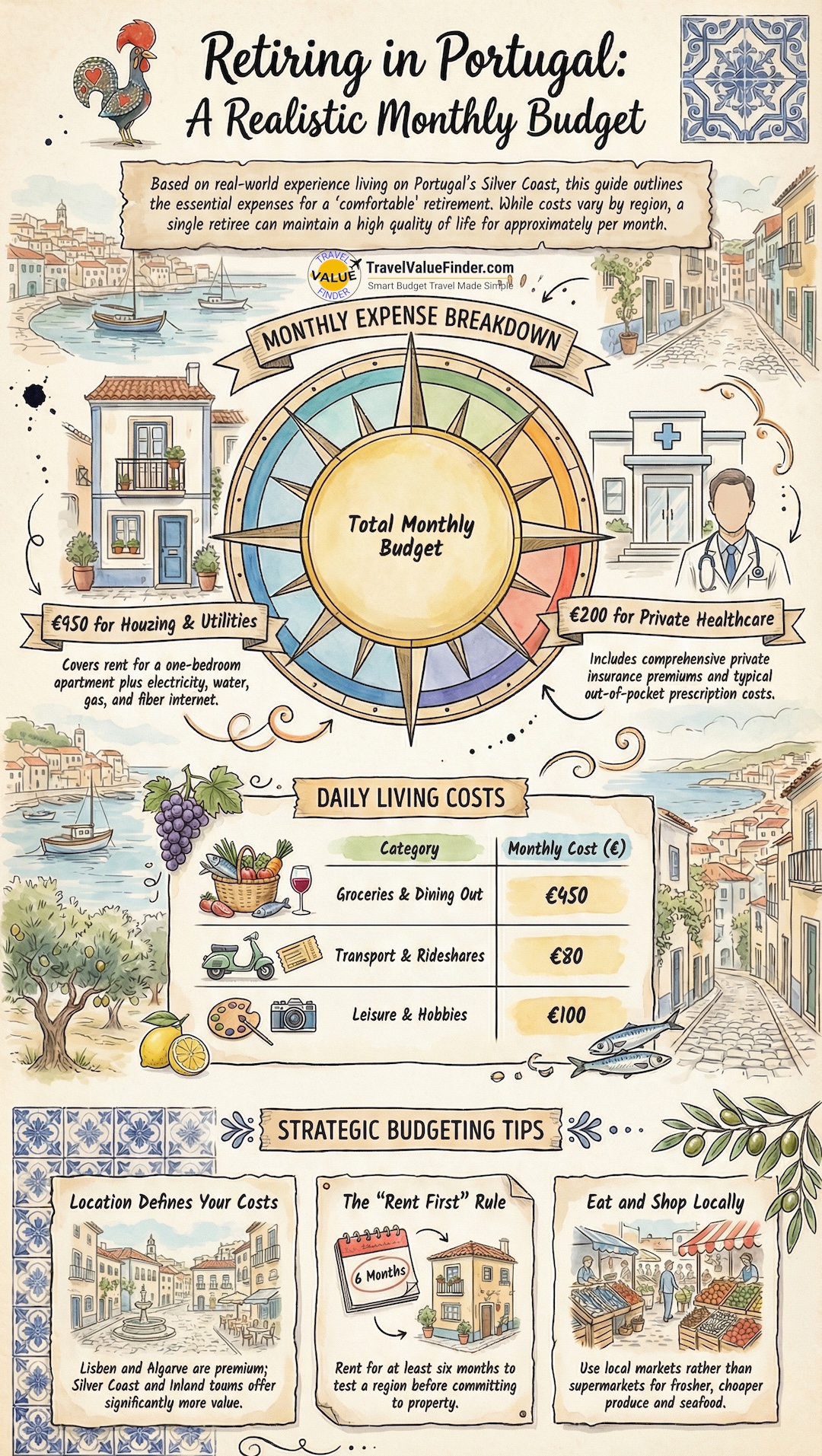
Explore our infographic below to discover the Cost of Living in Portugal for Retirees, along with tips on housing costs, utilities, transportation, healthcare, dining, and groceries. This is a guide to the average monthly budget, but the macro economy and lifestyle may change at any time. In any case, learn how to save money while still enjoying everything Portugal has to offer.
This guide is written for people over 55 who are researching travel, long-term stays, or retirement abroad. I share real-world planning insights, official sources, and practical examples to help you understand what life in Portugal is actually like — not just the highlights.
This content is educational, not legal or financial advice. Rules change, and personal situations differ, so I always recommend confirming details with official or professional sources before making decisions. Refer to the Trust & Transparency page for more information.
Table of Contents
Understanding Costs: My Approach
I quickly realized that the cost of living depends heavily on location, lifestyle, and personal choices. When I first arrived, I made a list of essential expenses and optional extras. This helped me figure out my minimum and comfortable budgets.
I focused on:
- Housing
- Utilities and internet
- Food and groceries
- Transportation
- Healthcare
- Leisure and social activities
By breaking it down, I could see where to save and where it’s worth spending for comfort.
My Monthly Budget: Real Numbers
I started by tracking my monthly expenses for six months to get a realistic picture. Here’s a breakdown:
| Category | Monthly Cost (€) | Notes |
| Rent | 800 | One-bedroom apartment on the Silver Coast |
| Utilities (electricity, water, gas) | 100 | Average usage |
| Internet & mobile | 50 | Fiber internet and mobile plan |
| Groceries | 300 | Shopping at local markets and supermarkets |
| Dining Out | 150 | Occasional meals at cafes and restaurants |
| Transportation | 80 | Public transport and occasional taxi/rideshare |
| Healthcare & Insurance | 200 | Private insurance + minor prescriptions |
| Leisure & Activities | 100 | Gym, hobbies, local events |
| Miscellaneous | 50 | Household items, unexpected costs |
| Total | 1,830 | Comfortable monthly lifestyle |
Tip: Cost of living in Portugal vary by region, so Lisbon and Algarve are more expensive, while inland towns or Silver Coast can be more affordable. However, cost of living depends on individual lifestyle.
Housing Costs: Renting vs Buying
I rented first to test the waters. Renting allowed flexibility:
- Rent: €700–€1,200/month for a one-bedroom apartment depending on location.
- Deposit: Usually 1–2 months’ rent.
Buying a property involves higher upfront costs but builds equity:
- Property prices: €1,500–€3,500/m² in popular coastal towns.
- Purchase fees: Notary, registration, and taxes add 6–8% to total cost.
Example: I rented a one-bedroom apartment for €800/month for six months before deciding to purchase a two-bedroom apartment for €210,000 in a quieter coastal town.
Utilities, Internet, and Mobile
Utilities are generally reasonable:
- Electricity & water: €80–€120/month for a small apartment.
- Gas: €20–€30/month if using a stove or heater.
- Internet & mobile: €40–€60/month for fiber internet and mobile plan.
Tip: Energy-saving practices, like using LED bulbs and adjusting heating, can lower bills.
Groceries and Dining
I cook most meals at home but enjoy local cafes and restaurants occasionally:
- Groceries: €250–€350/month. Markets often offer fresher and cheaper produce than supermarkets.
- Dining out: €10–€20 per casual meal; €30–€50 per restaurant dinner.
Example: I budget €150/month for dining out, which allows me to enjoy local seafood and pastries once or twice a week.
Transportation Costs
Transportation depends on lifestyle:
- Public transport: €40–€50/month for buses and trains.
- Taxi/rideshare: €30–€50/month for occasional trips.
- Car ownership: If you have a car, include fuel, insurance, road tax, and maintenance (€150–€250/month).
Tip: Many retirees live near town centers or public transport hubs to reduce the cost of living in Portugal and avoid driving daily.
Healthcare Costs
Healthcare is affordable, especially with public coverage (SNS) and optional private insurance:
- Public care: €5–€20 per visit
- Private visits: €60–€120 per specialist
- Insurance premium: €120/month for comprehensive coverage
- Medications: €3–€10 for generic prescriptions
I maintain both public and private access for flexibility and peace of mind.
Lifestyle and Entertainment
Retirement isn’t just about essentials; enjoying life matters:
- Gym memberships: €30–€50/month
- Hobbies & classes: €50–€100/month
- Travel & day trips: Variable
I plan about €100/month for leisure activities, which keeps my life social and active.
Actionable Tips for Budgeting
- Track all expenses for at least 3 months before committing to a move.
- Consider region differences: coastal areas are costlier than inland towns.
- Factor in healthcare, insurance, and occasional emergencies.
- Rent first to understand local pricing before buying.
- Use local markets and smaller shops to reduce grocery costs.
- Plan leisure spending to maintain a comfortable lifestyle without overspending.
Cost of Living in Portugal
Understanding the cost of living in Portugal was essential for my peace of mind. From my experience, tracking expenses, budgeting realistically, choosing the right region, and combining public and private healthcare ensures a comfortable retirement.
Living on the Silver Coast, I’ve found the perfect balance of affordability, lifestyle, and access to services, making my retirement both enjoyable and sustainable.
Frequently Asked Questions: Cost of Living in Portugal for Retirees
Q1: How much do I need to retire comfortably in Portugal?
Around €1,500–€2,000/month for a single retiree living moderately in a small town or Silver Coast.
Q2: Is Portugal expensive compared to the US or EU countries?
The cost of living in Portugal is generally cheaper than major cities in the US or Northern Europe, especially for housing and food.
Q3: Are there big differences in cost between regions?
Yes, Lisbon and Algarve are the most expensive; Silver Coast, Porto outskirts, and inland towns are more affordable.
Q4: Can I live on a pension only?
Yes, if your pension covers at least €1,500/month, you can live comfortably with careful budgeting and lifestyle choices.
Q5: What about unexpected expenses?
Budget an extra 10–15% for emergencies, home repairs, or healthcare.
Q6: Is it better to rent or buy immediately?
I would think that renting first is safer to test regions and costs; buying comes after confirming your preferences.
Q7: How do I save money on daily expenses?
Shop at local markets, cook at home, use public transport, and take advantage of local cultural events that are free or low-cost.
Pages That Support This Guide
To help with deeper planning, this page connects to detailed guides such as:
- Retire in Portugal (A Warm, Practical Guide for People Over 55)
- Cost of Living in Portugal for Retirees (City-by-City)
- Portugal D7 Visa Explained for US and EU Citizens Over 55
- Healthcare in Portugal: A Retiree’s Perspective
- Renting vs Buying Property in Portugal
- Taxes in Portugal for Retirees
- Common Mistakes When Moving to Portugal
- Seasonal Living in Portugal: 3–6 Month Planning
- Portugal Retirement Scorecards for Retirees
- Portugal Retirement Checklist for Retirees