Travel Value Finder

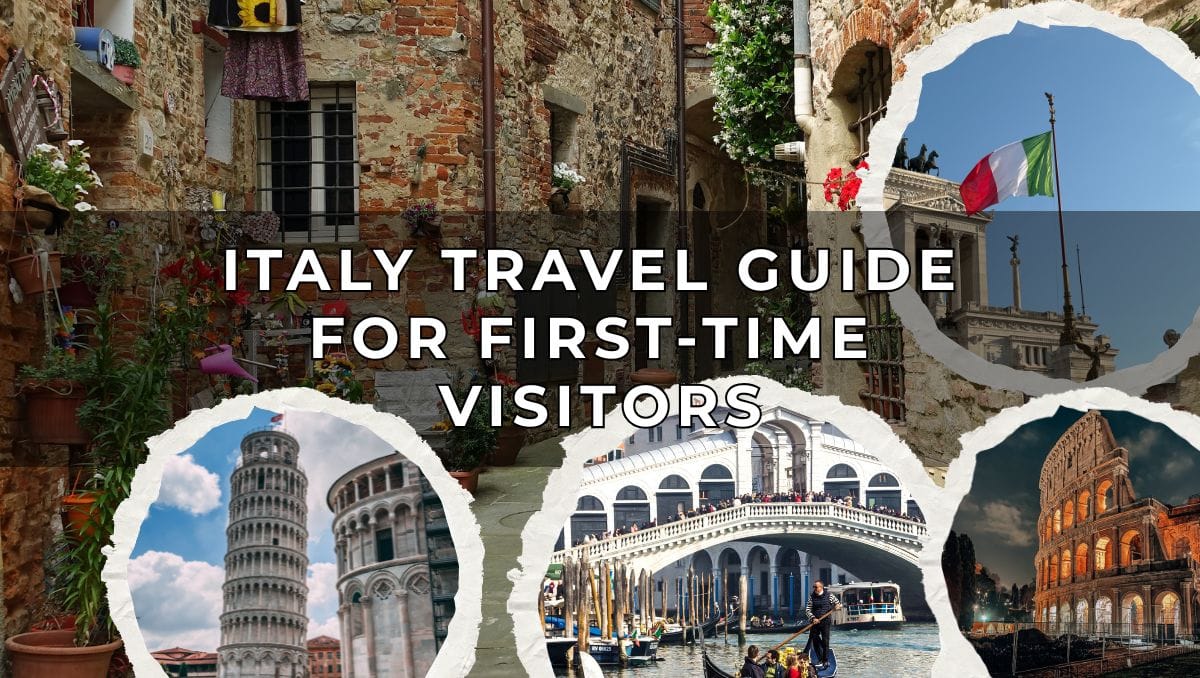
Italy Travel Guide 2026 | Best Places to Visit, Costs, Deals & Tips
This Italy Travel Guide is written specifically to walk first-time tourists through every major decision, step by step, so you can plan with clarity and confidence. Italy is one of the most rewarding countries in the world for first-time travelers—but it can also feel overwhelming. With so many regions, cities, and experiences, knowing where to start matters. From deciding when to visit Italy to understanding travel costs, choosing destinations, and finding Italy travel deals, this guide explains not just what to do—but why it matters.
Is Italy good for first-time travelers?
Yes. Italy is one of the best countries for first-time visitors thanks to excellent train connections, walkable historic cities, clear tourist infrastructure, and world-famous attractions.
How many days do you need in Italy?
First-time visitors should plan 7–10 days to see Italy’s highlights without rushing. Two weeks allows for a slower pace and regional exploration.
What is the best time to visit Italy?
The best time to visit Italy is April–May and September–October for good weather, fewer crowds, and better travel deals.
Our detailed infographic breaks down the top destinations, travel costs, insider tips, and the best deals to help you make the most of your trip to Italy. Whether you’re dreaming of exploring ancient ruins, indulging in authentic Italian cuisine, or relaxing along pristine coastlines, this comprehensive guide ensures you’re prepared to experience Italy like a local.
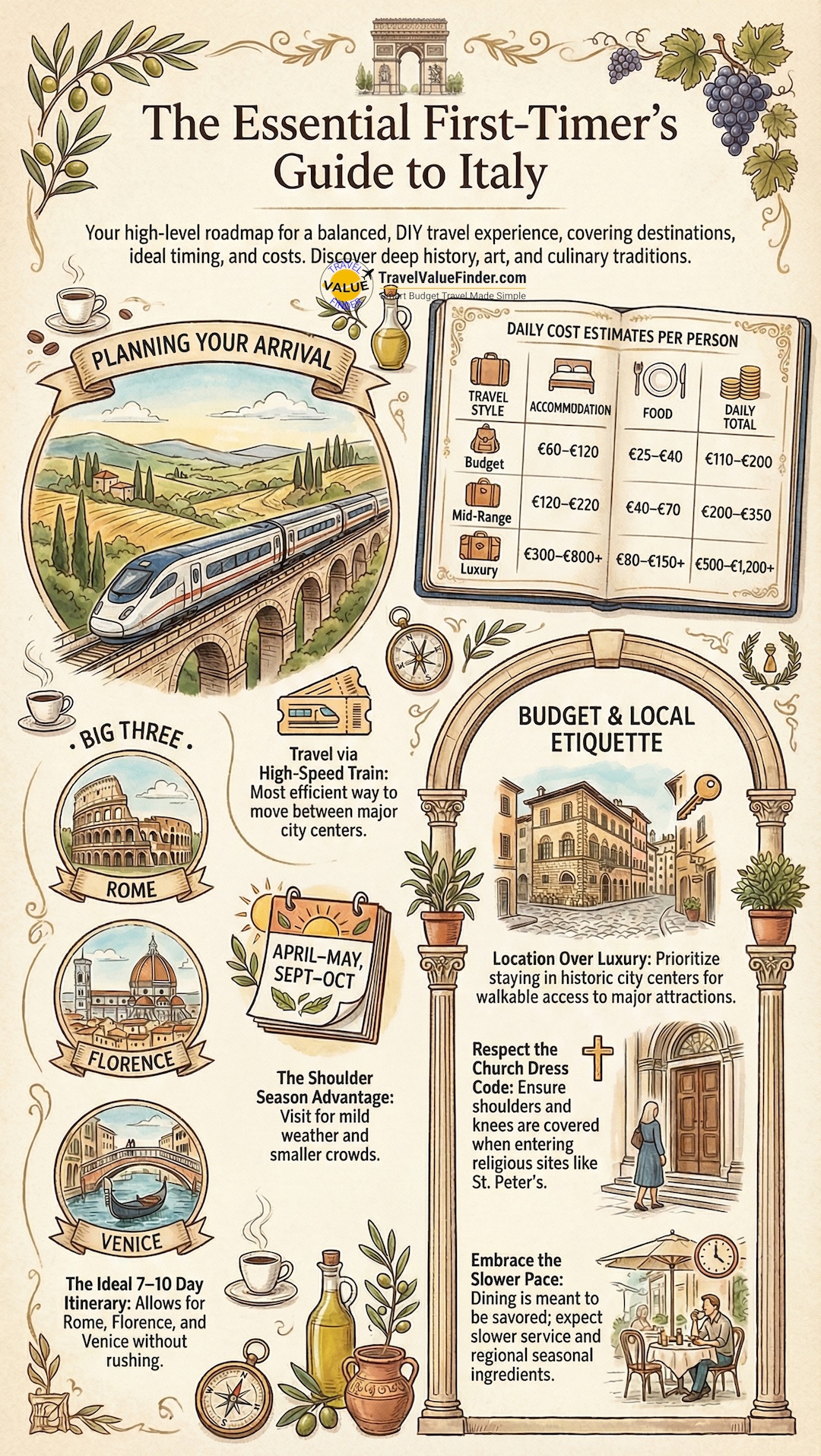
Table of Contents
Visit Italy: What Makes It So Special?
Italy is not just one destination—it’s many experiences wrapped into one country. Each region has its own culture, dialect, cuisine, and rhythm of life.
Why travelers love Italy:
- Unmatched history, from Ancient Rome to the Renaissance
- World-famous art, architecture, and UNESCO sites
- Diverse landscapes: beaches, mountains, countryside, and cities
- Regional food traditions that change every few hours of driving
- Easy train travel between major cities
Italy rewards slow travel, but it also works beautifully for first-time visitors following a classic route.
Italy doesn’t ask to be admired — it demands to be experienced. It lingers in espresso-scented mornings, echoes through ancient stone, and glows in twilight piazzas. You don’t just visit Italy — you absorb it.
Visit Italy: What First-Time Travelers Should Know
Visiting Italy for the first time is not like visiting a single destination—it’s like visiting several countries in one. Each region has its own personality, food traditions, pace of life, and even local customs.
For first-time visitors, Italy is best approached with balance:
- Combine iconic cities with slower, local experiences
- Don’t try to see everything in one trip
- Plan transportation in advance, especially trains
This Italy Travel Guide focuses on helping you avoid common first-timer mistakes, such as overpacking itineraries or underestimating travel time between destinations.
Best Time to Visit Italy
The best time to visit Italy depends on what you want from your trip. Spring and fall are ideal for comfortable weather, fewer crowds, and better prices, while summer is perfect for beach lovers and festival-goers despite the heat and busy cities. Winter offers a quieter, more peaceful experience, especially in cultural cities, with lower costs and fewer tourists. Planning around your priorities—whether sightseeing, food and wine, or coastal relaxation—will help you make the most of your Italian adventure.
April–May and September–October
These months provide mild weather, smaller crowds, and more affordable prices than the busy summer season, making it easier for first-time travelers to enjoy Italy at a relaxed pace. When planning your trip, the timing you choose can significantly impact everything from crowd levels and costs to your overall experience and comfort.
Peak Season (June–August)
This is Italy’s peak travel season, when schools are on break, Europeans hit the road, and coastal towns come alive. It’s the perfect time for beach destinations and lively festivals, but be prepared for crowds at major attractions and hot weather in cities like Rome and Florence. This period is ideal for beach lovers, festival-goers, and families traveling during school holidays.
Shoulder Season (April–May, September–October)
Often regarded as the best time to visit Italy, especially for first-time travelers, this period offers the perfect balance of pleasant weather and a more relaxed atmosphere. Temperatures are comfortable for exploring, crowds are thinner than in peak season, and you’ll generally find better availability for hotels and tours.
These conditions make it ideal for sightseeing, enjoying Italy’s renowned food and wine, and easily moving between cities without the stress of peak-season congestion.
Low Season (November–March)
Italy moves at a slower pace during this period, and that can actually be a big advantage for travelers. With lower demand, you’ll often find better prices on flights and hotels, along with fewer crowds at major landmarks, making it easier to enjoy popular sights without the usual rush. That said, some coastal towns may feel quieter, with limited activity compared to peak season—but this can add to the charm if you’re looking for a more relaxed experience.
This time is especially well-suited for budget travelers, museum lovers, and those returning to Italy who want to explore at a more leisurely pace.
Best Places to Visit in Italy for First-Time Tourists
For first-time travelers, the best places to visit in Italy include Rome, Florence, Venice, Tuscany, and the Amalfi Coast. These destinations offer a well-balanced mix of history, culture, easy transportation, and truly iconic experiences, making them especially ideal for beginners exploring Italy for the first time.
Italy has something for every type of traveler, but for your first trip, it’s best to focus on places that combine cultural depth, accessibility, and unforgettable highlights to create a smooth and rewarding experience.
Rome
Rome is often the first stop on an Italy itinerary—and for good reason. The city feels like an open-air museum, where layers of ancient history, art, and culture are woven into everyday life. Iconic landmarks such as the Colosseum, Roman Forum, and Pantheon showcase the grandeur of the Roman Empire, while nearby Vatican City and St. Peter’s Basilica offer a glimpse into the heart of the Catholic world and its artistic treasures.
With its rich heritage and unforgettable sights, Rome provides the perfect introduction to Italy’s history and sets the tone for the rest of your journey.
- Ancient landmarks like the Colosseum and Roman Forum
- Vatican City and St. Peter’s Basilica
- Perfect for history lovers and first-time visitors
Florence
Florence is a compact and հեշտ-to-navigate city, making it an ideal destination for first-time visitors to Italy. Its manageable size allows you to explore at a relaxed pace while still experiencing an incredible concentration of history and culture. Renowned as the birthplace of the Renaissance, Florence is filled with world-class art and stunning architecture, from grand cathedrals to iconic museums. The historic center is highly walkable, so you can easily move between major sights, charming streets, and local cafés without needing transportation.
It also serves as the perfect gateway to Tuscany, making it easy to venture out on day trips to rolling countryside, vineyards, and picturesque villages.
- Heart of Renaissance art and architecture
- Easy base for Tuscany day trips
- Ideal for culture, wine, and slower travel
Venice
Venice offers a truly one-of-a-kind experience unlike anywhere else in the world. Instead of roads, the city is woven together by a network of canals, where boats and gondolas take the place of cars, creating an atmosphere that feels both timeless and magical.
The city is at its most enchanting in the early mornings and evenings, when the crowds thin out and you can fully appreciate its quiet beauty and romantic charm. To make the most of your visit without feeling overwhelmed, one or two nights is usually the perfect amount of time to soak in the highlights and unique ambiance.
- Iconic canals and historic charm
- Best explored early mornings and evenings
- Unique experience unlike anywhere else
Milan
Milan is a modern, fast-paced city that perfectly blends style with substance. Known as one of the world’s leading fashion and design capitals, it’s a hub of creativity, innovation, and cutting-edge trends, where elegant boutiques and contemporary architecture define the city’s character. Beyond its stylish reputation, Milan is also rich in culture and history. It is home to Leonardo da Vinci’s iconic masterpiece, The Last Supper, making it a must-visit destination for art lovers.
Thanks to its major international airports and excellent transport connections, Milan also serves as a convenient entry or exit point for travelers exploring Italy, making it both a practical and inspiring place to begin or end your journey.
- Italy’s fashion and business capital
- Home to The Last Supper
- Great for shopping and modern Italy
Amalfi Coast
The Amalfi Coast is a breathtaking destination, famous for its dramatic cliffs, sparkling waters, and picturesque towns like Positano and Ravello. Renowned for its romantic charm, it can get quite busy during the summer months, so visiting outside peak season allows you to enjoy the scenery and atmosphere with more ease and tranquility.
- Dramatic coastal scenery
- Charming towns like Positano and Ravello
- Romantic but busy—best in shoulder season
Tuscany (Beyond Florence)
Tuscany is perfect for travelers looking to slow down and soak in the Italian countryside. Rolling hills, vineyards, and charming medieval towns create a serene and picturesque setting, ideal for relaxing stays.
Highlights include Siena, Pisa, and San Gimignano, where history, culture, and stunning landscapes come together beautifully. The region is best explored by car, making it perfect for road trips and immersive agriturismo experiences.
Northern Italy (Lake Como, Dolomites)
Northern Italy, including Lake Como and the Dolomites, offers stunning alpine lakes and breathtaking mountain scenery.
The region is perfect for outdoor adventures like hiking, skiing, and water sports, as well as luxury escapes in serene surroundings. Summers are cooler here compared to southern Italy, making it a refreshing choice for travelers seeking natural beauty and relaxation.
Southern Italy & Sicily
Southern Italy and Sicily are often overlooked by first-time travelers, yet they offer a wealth of authentic experiences. With fewer crowds and lower costs than the more popular northern destinations, these regions provide a chance to explore Italy’s rich traditions, vibrant culture, and bold, flavorful cuisine.
They are especially ideal for repeat visitors or those with extra time, offering slower-paced travel, charming towns, and unforgettable local experiences.
Getting Around Italy
The best way to get around Italy is by train. High-speed trains link major cities efficiently and affordably, offering a convenient and stress-free option for first-time visitors to travel between iconic destinations. Italy is one of the easiest European countries to travel without a car. For first-time visitors, trains are usually the simplest and least stressful choice.
- Trains: Best option for city-to-city travel
- High-speed trains: Rome, Florence, Milan, Venice
- Regional trains: Budget-friendly for shorter distances
- Car rentals: Best for Tuscany, Puglia, Sicily
Where to Stay in Italy (What First-Time Visitors Should Choose)
When choosing accommodations in Italy, location is far more important than the hotel’s star rating. Staying in the right area ensures easy access to major sights, restaurants, and transportation, making your trip smoother and more enjoyable. First-time tourists should prioritize location over luxury in major cities.
- Historic city centers: Walkable, close to attractions
- Residential neighborhoods: Better value and quieter
- Countryside stays (Agriturismo): Authentic and relaxing
- Budget Hotels in Italy or Luxury Hotels in Italy
Italy Travel Costs: Budget vs Luxury Travel Explained
Is Italy expensive to visit?
Italy can be affordable or expensive depending on your travel style, destinations, and season. Below are clear, comparison-style cost tables designed to help first-time travelers quickly understand what to expect.
Italy Daily Travel Costs (Per Person)
| Travel Style | Accommodation | Food | Transport | Attractions | Estimated Daily Total |
| Budget | €60–€120 | €25–€40 | €10–€25 | €10–€20 | €110–€200 |
| Mid-Range | €120–€220 | €40–€70 | €20–€40 | €20–€40 | €200–€350 |
| Luxury | €300–€800+ | €80–€150+ | €50–€150+ | €50–€200+ | €500–€1,200+ |
These estimates reflect average costs in popular destinations such as Rome, Florence, Venice, and the Amalfi Coast.
Italy Trip Cost by Length of Stay
| Trip Length | Budget Trip | Mid-Range Trip | Luxury Trip |
| 7 Days | €800–€1,400 | €1,500–€2,400 | €3,500–€8,000+ |
| 10 Days | €1,100–€2,000 | €2,000–€3,500 | €5,000–€12,000+ |
| 14 Days | €1,600–€2,800 | €2,800–€5,000 | €7,000–€16,000+ |
These figures exclude international flights but include lodging, meals, transportation, and attractions.
Italy Accommodation Costs by City (Per Night)
| City | Budget Hotel / Apartment | Mid-Range Hotel | Luxury Hotel |
| Rome | €80–€130 | €150–€250 | €400–€900+ |
| Florence | €70–€120 | €140–€220 | €350–€800+ |
| Venice | €90–€150 | €180–€280 | €450–€1,000+ |
| Milan | €80–€140 | €160–€260 | €400–€900+ |
| Southern Italy | €60–€100 | €120–€200 | €300–€600+ |
Southern Italy and Sicily generally offer better value than northern and heavily touristed cities.
Italy Food Costs (Typical Prices)
| Item | Average Cost |
| Coffee (espresso) | €1–€2 |
| Casual lunch | €10–€15 |
| Pizza or pasta dinner | €12–€18 |
| Mid-range restaurant | €25–€40 |
| Fine dining | €70–€150+ |
Eating well in Italy does not require a large budget—local trattorias often provide the best value.
Italy Travel Deals: How Visitors Can Save Money
Italy doesn’t have to be expensive if you plan strategically. Here are some highlights to planning your trip to Italy:
Flights
- Book international flights 2–4 months in advance
- Fly into major hubs like Rome (FCO) or Milan (MXP)
- Consider open-jaw tickets (into one city, out of another)
Accommodation
- Look beyond hotels to apartments and guesthouses
- Agriturismos offer excellent value in rural areas
- Book early for peak travel months
Transportation Deals
- High-speed trains save time between major cities
- Regional trains are budget-friendly for shorter trips
- City passes can reduce attraction costs
Attraction Savings
- Pre-book popular attractions to avoid lines
- Free museum days occur monthly in many cities
- Walkable cities reduce transport costs
Italy rewards travelers who plan ahead.
- Book flights 2–4 months in advance
- Use open-jaw flights (arrive one city, depart another)
- Book trains early for discounted fares
- Travel in shoulder season for the best value
Italy travel deals are easiest to find outside peak summer months.
Food in Italy: What First-Time Tourists Should Expect
Italian cuisine is deeply regional and based on seasonal ingredients, giving each area its own distinct flavors. Lunch is often the best-value meal, while it’s wise to avoid restaurants with aggressive street promoters. And remember, a cappuccino is traditionally enjoyed in the morning rather than after meals. Eating well in Italy doesn’t require expensive restaurants—just patronize restaurants like the locals do.
- Meals are regional—try local specialties
- Lunch is often the best value meal
- Avoid restaurants with aggressive street hawkers
- Coffee culture matters: cappuccino is a morning drink
Practical Italy Travel Tips for Beginners
Traveling in Italy is a wonderfully immersive experience, but a few practical tips can make your trip smoother. Some everyday habits and local customs may differ from what you’re used to, so planning ahead helps you enjoy Italy to the fullest.
- Carry cash: Small purchases, market stalls, and some cafés may not accept cards, so having cash on hand is essential.
- Dress modestly in churches: Many religious sites have dress codes, so bring a scarf or wear clothing that covers shoulders and knees.
- Expect slower service: Meals in Italy are meant to be savored, so don’t rush—take your time to enjoy the food and atmosphere.
- Learn basic Italian phrases: Simple greetings and polite expressions go a long way in connecting with locals and navigating daily interactions.
These tips help first-time travelers navigate Italy confidently while respecting local customs and fully enjoying the Italian way of life.
Sample First-Time Italy Itineraries
Planning your first trip to Italy can feel overwhelming with so many incredible destinations to choose from. To help, these sample itineraries provide a balanced mix of culture, history, cuisine, and scenic beauty, tailored to different trip lengths and travel styles. Whether you’re looking for a fast-paced introduction to Italy’s highlights or a more relaxed journey through iconic cities and charming regions, these itineraries make it easier to experience the best of Italy without missing the must-see sights.
7–10 Day Classic Italy Trip
This itinerary is ideal for first-time visitors who want to experience Italy’s most iconic cities in a compact timeframe.
Rome (3 days)
Spend a few days exploring Italy’s capital, an open-air museum filled with ancient landmarks like the Colosseum, Roman Forum, Pantheon, and the treasures of Vatican City. Enjoy walking through piazzas, sampling Roman cuisine, and soaking up the city’s lively atmosphere.
Florence & Tuscany (3 days)
Next, head to Florence, the heart of the Renaissance. Visit world-class art museums, marvel at the Duomo, and wander the walkable historic center. Use part of your time to explore nearby Tuscan towns such as Siena or San Gimignano, or take a short drive through rolling vineyards and scenic countryside.
Venice (2 days)
Finish your trip in Venice, a city unlike any other. Explore its winding canals, charming piazzas, and iconic landmarks like St. Mark’s Basilica and the Rialto Bridge. Early mornings and evenings are the best times to enjoy the city when it’s less crowded.
14-Day Relaxed Italy Trip
This longer itinerary allows for a more leisurely pace, perfect for travelers who want to immerse themselves in culture, landscapes, and Italian lifestyle.
Rome (3 days)
Start in Rome with enough time to see the Colosseum, Vatican City, and hidden gems, while also enjoying relaxed meals and neighborhood strolls.
Florence & Tuscany (4 days)
Spend extra time in Florence and Tuscany to fully appreciate Renaissance art, charming hill towns, and the picturesque countryside. This allows for immersive experiences like wine tastings, agriturismo stays, or day trips to Pisa and Siena.
Amalfi Coast (4 days)
Relax along the Amalfi Coast, with its dramatic cliffs, colorful towns like Positano and Ravello, and breathtaking coastal views. Visiting outside peak summer ensures a more tranquil experience. This portion is ideal for leisurely drives, beach days, and indulging in fresh seafood.
Venice or Milan (3 days)
End your trip in either Venice, to enjoy its unique canals and romantic charm, or Milan, if you prefer a modern, stylish city with world-class shopping, design, and access to nearby lakes and mountains.
Planning Your First Trip Using This Italy Travel Guide
This Italy Travel Guide is designed to remove uncertainty for first-time tourists. By understanding when to visit Italy, where to go, how much it costs, and how to travel efficiently, you can plan a trip that feels memorable—not rushed.
Whether you’re planning a classic sightseeing trip, searching for Italy travel deals, or deciding on the best places to visit in Italy, the key is to travel at a pace that lets you truly experience the country. Italy is best enjoyed at a slower pace. Choose fewer destinations, travel smart, and allow time to simply experience the country beyond the checklist.
Italy isn’t just a place you visit—it’s a place you feel, taste, and remember long after you leave.
People Also Ask: Italy Travel Guide FAQs
Is Italy safe for tourists right now?
Yes. Italy is considered very safe for tourists. Standard precautions against pickpocketing in crowded areas are recommended.
Do I need a visa to visit Italy?
Many travelers can enter Italy visa-free for short stays, depending on nationality.
Is Italy walkable for tourists?
Yes. Most historic city centers in Italy are compact and best explored on foot.
Frequently Asked Questions – Italy Travel Guide: About Visiting Italy
1. When is the best time to visit Italy for first-time travelers?
Spring (April–June) and fall (September–October) are ideal. The weather is comfortable, attractions are less crowded, and hotel and flight prices are more reasonable. Shoulder seasons allow first-time travelers to enjoy Italy’s historic cities, countryside, and coastal towns at a relaxed pace, making these months perfect for sightseeing and cultural experiences.
2. What are the must-visit cities in Italy for a first trip?
Rome, Florence, Venice, Tuscany, and the Amalfi Coast are the top destinations. Rome offers history, Florence showcases Renaissance art, Venice is unique with canals, Tuscany provides scenic countryside, and the Amalfi Coast offers coastal charm. A first-time Italy trip should focus on these iconic spots for the ultimate experience.
3. How many days should I spend in Italy on my first visit?
For a first-time Italy trip, 7–10 days covers major cities like Rome, Florence, and Venice, while 14 days allows a slower pace and additional regions like Tuscany or the Amalfi Coast. Planning the right duration ensures you experience culture, landmarks, and food without feeling rushed.
4. What is the best way to get around Italy?
Trains are the easiest option for first-time travelers, connecting major cities quickly and affordably. High-speed trains make Rome–Florence–Venice routes convenient, while buses or rental cars are ideal for exploring Tuscany or the Amalfi Coast. Combining trains and regional transport maximizes efficiency and comfort.
5. How much does a trip to Italy cost for a first-time visitor?
Italy costs vary by season and style, but a first-time visitor can budget €100–€200 per day for mid-range travel. Accommodation, meals, transportation, and entry fees to attractions are the main expenses. Booking early and traveling during shoulder seasons can help lower costs significantly.
6. What should I know about Italian food and dining customs?
Italian cuisine is regional and seasonal, with each city offering unique specialties. Lunch is often the best-value meal, and cappuccinos are meant for mornings. Avoid restaurants with aggressive street promoters, and remember that meals are meant to be enjoyed slowly, reflecting Italy’s relaxed dining culture.
7. Where should I stay in Italy as a first-time traveler?
Location matters more than hotel star ratings. Staying in city centers or near public transport ensures easy access to landmarks, restaurants, and museums. First-time visitors should prioritize convenience, safety, and walkable neighborhoods to make the most of their Italy experience.
8. Do I need to speak Italian to travel in Italy?
You don’t need to be fluent, but learning basic phrases helps with ordering, asking directions, and showing respect for locals. Simple greetings like “Buongiorno” or “Grazie” go a long way, enhancing your experience and making interactions smoother.
9. Are there any cultural or dress tips I should know in Italy?
When visiting churches or religious sites, dress modestly with covered shoulders and knees. Italians value politeness and respectful behavior. Understanding local etiquette, from greetings to tipping, will help first-time travelers navigate Italy more confidently and enjoy authentic experiences.
10. Which activities are best for first-time visitors in Italy?
Sightseeing iconic landmarks, exploring museums, enjoying regional cuisine, and taking short road trips or wine tours are perfect for beginners. A first-time Italy trip should balance history, culture, and relaxation, ensuring you see the highlights while leaving time to savor the local lifestyle.
Pages That Support This Guide
To help with deeper planning, this page connects to detailed guides such as: