Travel Value Finder

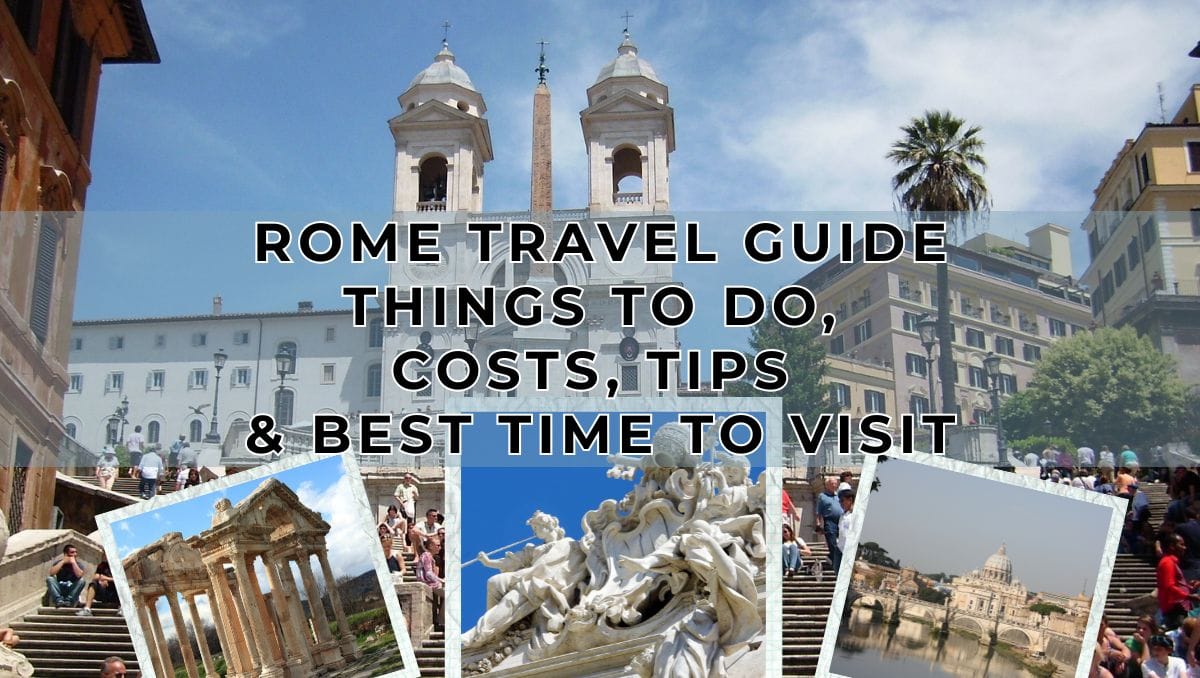
Rome Travel Guide: A First-Time Visitor’s Complete Guide
Planning your trip to the Eternal City? This Rome Travel Guide covers everything first-time visitors need to know, from must-see attractions and hidden gems to costs, travel tips, and the best time to visit. Whether you’re exploring ancient ruins, savoring local cuisine, or navigating the city’s transport, this guide helps you make the most of your Roman adventure.
Is Rome good for first-time visitors?
Yes. Rome is ideal for first-time visitors thanks to iconic landmarks, excellent public transportation, walkable historic neighborhoods, and a wide range of accommodations for every budget.
How many days do you need in Rome?
Most first-time visitors should plan 3–4 days in Rome to see the main highlights without rushing.
What is the best time to visit Rome?
The best time to visit Rome is April–May and September–October, when the weather is pleasant and crowds are more manageable.
Rome is one of the most captivating cities in the world—and for many travelers, it is their very first stop in Italy. With nearly 3,000 years of layered history, Rome can feel overwhelming at first glance. Ancient ruins, Renaissance art, lively piazzas, and everyday Roman life all exist side by side. This Rome Travel Guide is designed as a comprehensive pillar cluster supporting the Italy Travel Guide, helping first-time visitors understand what to expect, how to plan, and how to enjoy Rome without stress.
Explore the Eternal City with “Rome Travel Guide – Things to Do, Costs, Tips & Best Time to Visit.” This simple infographic shows the top attractions, must-see landmarks, and fun activities in Rome, along with easy tips on how much things cost and how to save money. It also includes advice on the best times to visit and practical tips to make your trip smooth and enjoyable, helping you plan a memorable visit without stress.
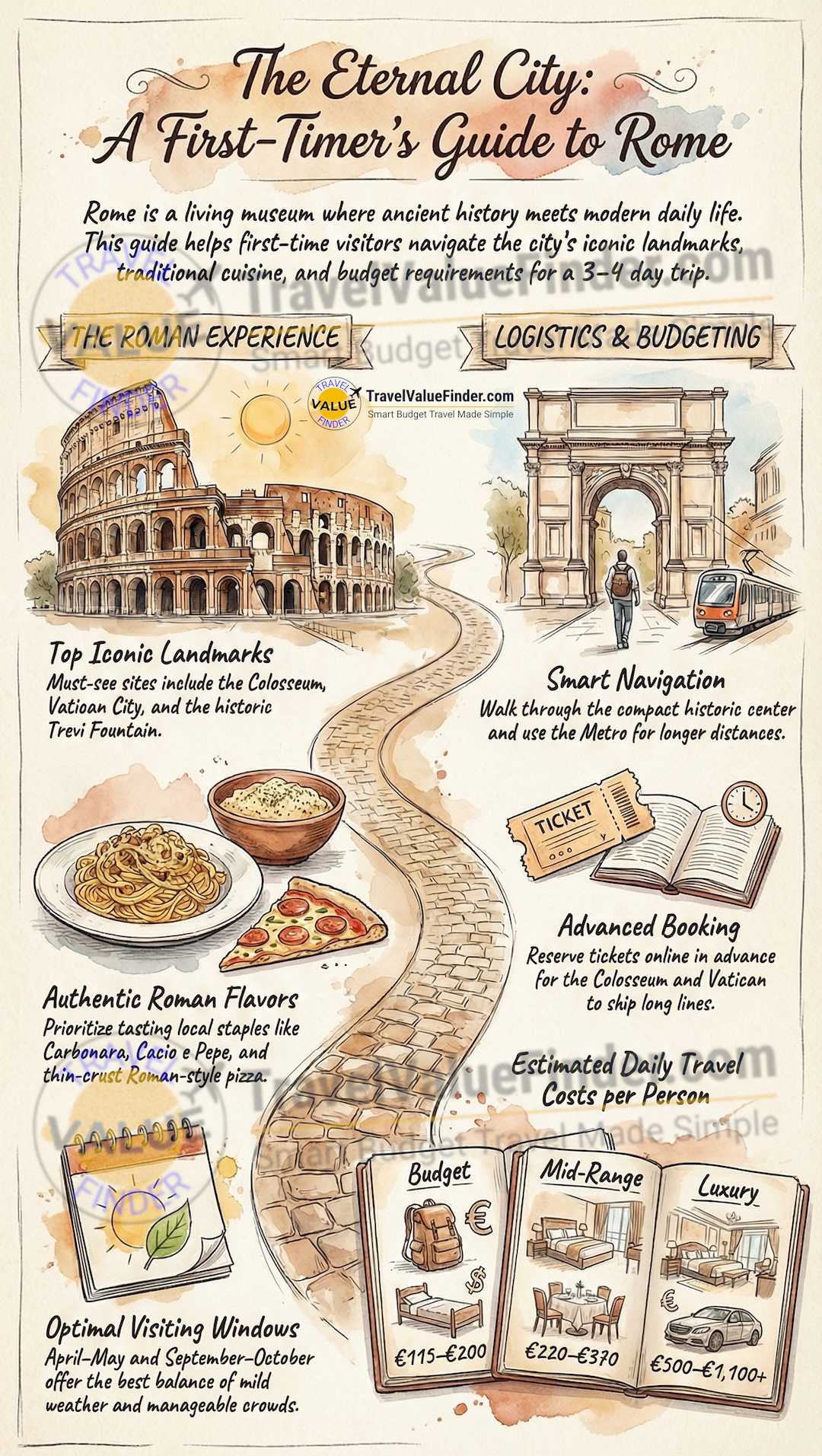
Rather than rushing through a checklist, Rome rewards travelers who slow down. This guide explains where to go, how long to stay, how much it costs, and how to experience Rome comfortably—even on your first visit.
Table of Contents
Visit Rome: What First-Time Travelers Should Expect
Rome is often described as an open-air museum—but it is also a living, breathing city. Ancient temples sit beside busy cafés, and locals go about daily life among some of the world’s most famous landmarks. Rome can feel chaotic at first, but once you settle into its pace, it becomes deeply rewarding. Planning your days with flexibility is key.
First-time visitors should expect:
- Major attractions spread across the historic center
- Crowds near iconic sites like the Colosseum and Vatican
- Slower-paced meals and a relaxed daily rhythm
Best Time to Visit Rome (Season-by-Season Guide)
Best time to visit Rome: April–May and September–October. Choosing the right season can dramatically affect your experience.
Spring (March–May)
- Mild temperatures and blooming gardens
- Increasing crowds closer to May
- One of the best seasons for first-time visitors
Summer (June–August)
- Hot weather, often above 30°C (86°F)
- Peak tourist crowds
- Best for evening sightseeing and early mornings
Fall (September–October)
- Comfortable weather
- Fewer crowds than summer
- Excellent time for food-focused travel
Winter (November–February)
- Fewer tourists and lower prices
- Cooler temperatures
- Great for museums and city walks
Best Things to Do in Rome for First-Time Visitors
Best things to do in Rome: Visit the Colosseum, explore Vatican City, walk through historic piazzas, and experience Roman food culture. Rome’s highlights are spread across the city, but many can be combined into walkable sightseeing days to The Colosseum, Roman Forum & Palatine Hill.
Rome’s most iconic ancient landmarks form a single archaeological area.
- Book tickets in advance so that you can skip-the-line waiting
- Allow 3–4 hours to truly enjoy each of Rome’s iconic places
- Must see iconic places for first-time visitors include:
Vatican City & St. Peter’s Basilica
- Home to the Sistine Chapel
- One of the most visited sites in the world
- Dress modestly and arrive early
Trevi Fountain, Pantheon & Historic Piazzas
- Easily explored on foot
- Ideal for unstructured wandering
Trastevere Neighborhood
- Traditional dining
- Lively evenings
- Local atmosphere
Getting Around Rome: Simple Transportation Guide
Best way to get around Rome: Walking and public transportation.
Rome’s historic center is compact, making walking the best option for most sightseeing. For longer distances, public transit is efficient and affordable. Avoid renting a car unless leaving the city.
- Walking: Best for historic areas
- Metro: Fastest for longer routes
- Buses & trams: Extensive but crowded
- Taxis: Useful late at night or with luggage
Where to Stay in Rome: Best Neighborhoods for First-Time Visitors
Choosing where to stay in Rome and the right neighborhood can greatly improve your experience.
Centro Storico (Historic Center)
- Walking distance to major attractions
- Higher prices but maximum convenience
Trastevere
- Lively nightlife and dining
- Charming streets
- Great for evening atmosphere
Prati / Vatican Area
- Quieter and more residential
- Good value hotels
- Excellent transport links
Rome Travel Costs: Budget vs Luxury
Is Rome expensive to visit?
Rome can be affordable or luxurious depending on your travel style, accommodation choices, and season. Budget travelers can find affordable stays with best budget hotels in Rome or for a 5 Star experience with the Luxury Hotels in Rome.
Rome Daily Travel Costs (Per Person)
| Travel Style | Accommodation | Food | Transport | Attractions | Estimated Daily Total |
| Budget | €70–€120 | €25–€40 | €10–€20 | €10–€20 | €115–€200 |
| Mid-Range | €130–€230 | €40–€70 | €15–€30 | €20–€40 | €220–€370 |
| Luxury | €300–€700+ | €80–€150+ | €40–€100+ | €50–€150+ | €500–€1,100+ |
These estimates reflect typical costs in central Rome.
What to Eat in Rome: Food First-Timers Should Try
Roman cuisine is simple, bold, and rooted in tradition. Lunch often offers the best value, while dinner is a slower, social experience. Must-Try Roman Dishes in Rome:
- Carbonara
- Cacio e Pepe
- Amatriciana
- Supplì
- Roman-style pizza (thin and crispy)
How Many Days in Rome? Suggested Itineraries
Itinerary: Rome in 3 Days
- Day 1: Colosseum, Forum, Palatine Hill
- Day 2: Vatican City & St. Peter’s Basilica
- Day 3: Historic center walking tour
Itinerary: Rome in 4 Days
- Add Trastevere and food-focused exploration
- Visit Borghese Gallery
Practical Rome Travel Tips for Beginners
- Book major attractions in advance
- Wear comfortable walking shoes
- Carry small bills for cafés
- Expect crowds near major landmarks
- Dress modestly for churches
Using This Rome Travel Guide
This Rome Travel Guide is your ultimate resource for exploring the Eternal City. Perfect for first-time visitors, it covers top attractions, costs, travel tips, and the best time to visit, helping you plan a stress-free and unforgettable trip.
Rome isn’t about checking off every landmark—it’s about soaking in history, culture, and the city’s everyday rhythm. Focus on key sights, wander through charming piazzas, and let the neighborhoods reveal their magic. Using this guide ensures you experience Rome like a local while making the most of your visit.
Frequently Asked Question – Rome Travel Guide
1. What are the top attractions to see in Rome?
Rome is full of must-see landmarks, including the Colosseum, Vatican City, Pantheon, Trevi Fountain, and Piazza Navona. First-time visitors should mix iconic sites with local neighborhoods for a complete experience.
2. When is the best time to visit Rome?
The ideal times are spring (April–June) and fall (September–October), when the weather is mild, crowds are smaller, and sightseeing is more comfortable.
3. How much does it cost to visit Rome?
Typical expenses include accommodation, meals, transportation, and attraction tickets. Budget travelers can save by visiting in winter or booking multi-day passes for public transport and museums.
4. How can I get around Rome efficiently?
Walking is ideal for exploring Rome’s neighborhoods and piazzas, while metro, buses, and taxis help cover longer distances between major attractions.
5. Which neighborhoods should I explore in Rome?
Trastevere, Monti, Campo de’ Fiori, and the historic center offer a mix of history, culture, and dining. These areas are perfect for wandering and discovering local life.
6. What local food should I try in Rome?
Classic Roman dishes include cacio e pepe, carbonara, supplì, pizza al taglio, and gelato. Street markets, trattorias, and cafes are perfect for tasting authentic cuisine.
7. How can I avoid long lines at popular sites?
Arrive early, book tickets online in advance, and visit lesser-known landmarks during peak seasons to make the most of your sightseeing time.
8. Are there seasonal tips for visiting Rome?
Spring and fall offer the best balance of weather and crowd size, while winter provides lower costs and quieter streets, ideal for a more relaxed visit.
9. Can I see all major attractions in one day?
It’s possible but challenging. Focus on key landmarks, plan an efficient route, and combine walking with public transportation to make the most of limited time.
10. What makes a visit to Rome memorable?
Beyond sightseeing, experiencing local culture, wandering historic streets, enjoying food, and exploring vibrant piazzas create a more authentic and unforgettable Roman experience.
Pages That Support This Guide
To help with deeper planning, this page connects to detailed guides such as: