Travel Value Finder

Spain Travel Guide: Everything You Need to Know Before You Go
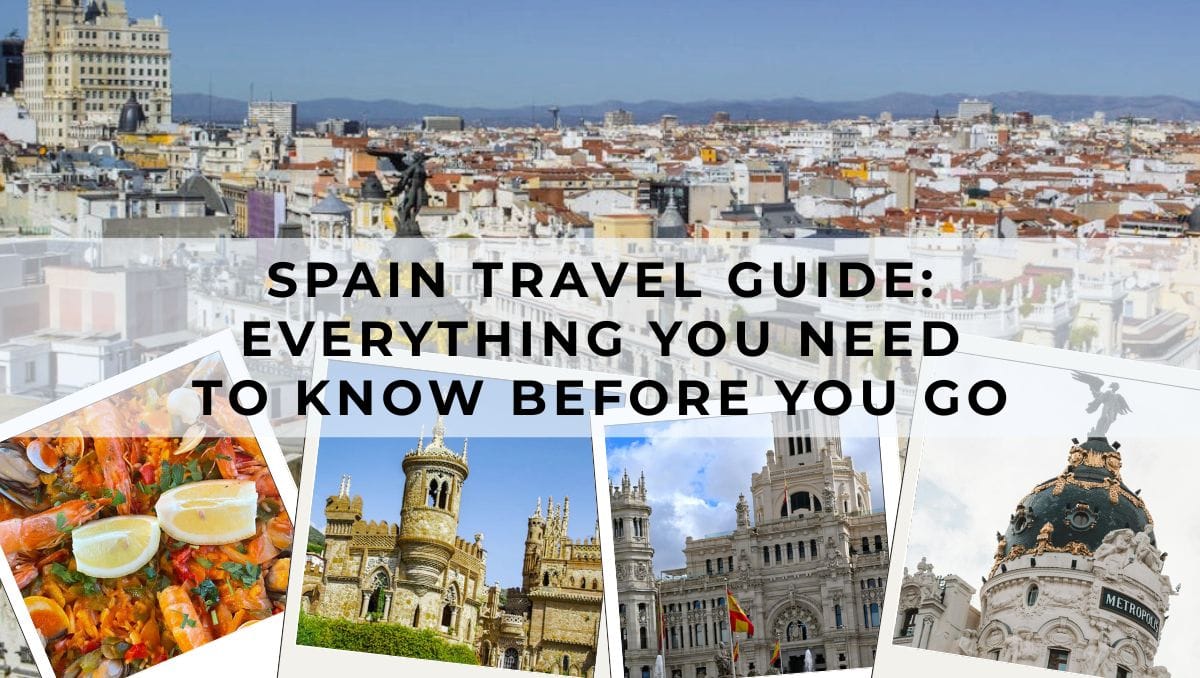
In this Spain Travel Guide, explore the country’s top destinations—from vibrant cities like Madrid and Barcelona to charming towns, historic landmarks, and stunning beaches, there’s something for every traveler.
Is Spain a good country to visit?
Yes. Spain offers affordable travel costs, excellent transport, diverse cities, beaches, rich history, world-class food, and year-round sunshine—making it one of Europe’s best travel destinations.
Our detailed infographic provides insider tips on top attractions, travel costs, local customs, and must-see destinations across Spain. Whether you’re looking for the best tapas, exploring ancient landmarks, or enjoying the Mediterranean sun, this comprehensive guide ensures you’re fully prepared for an unforgettable experience in Spain.
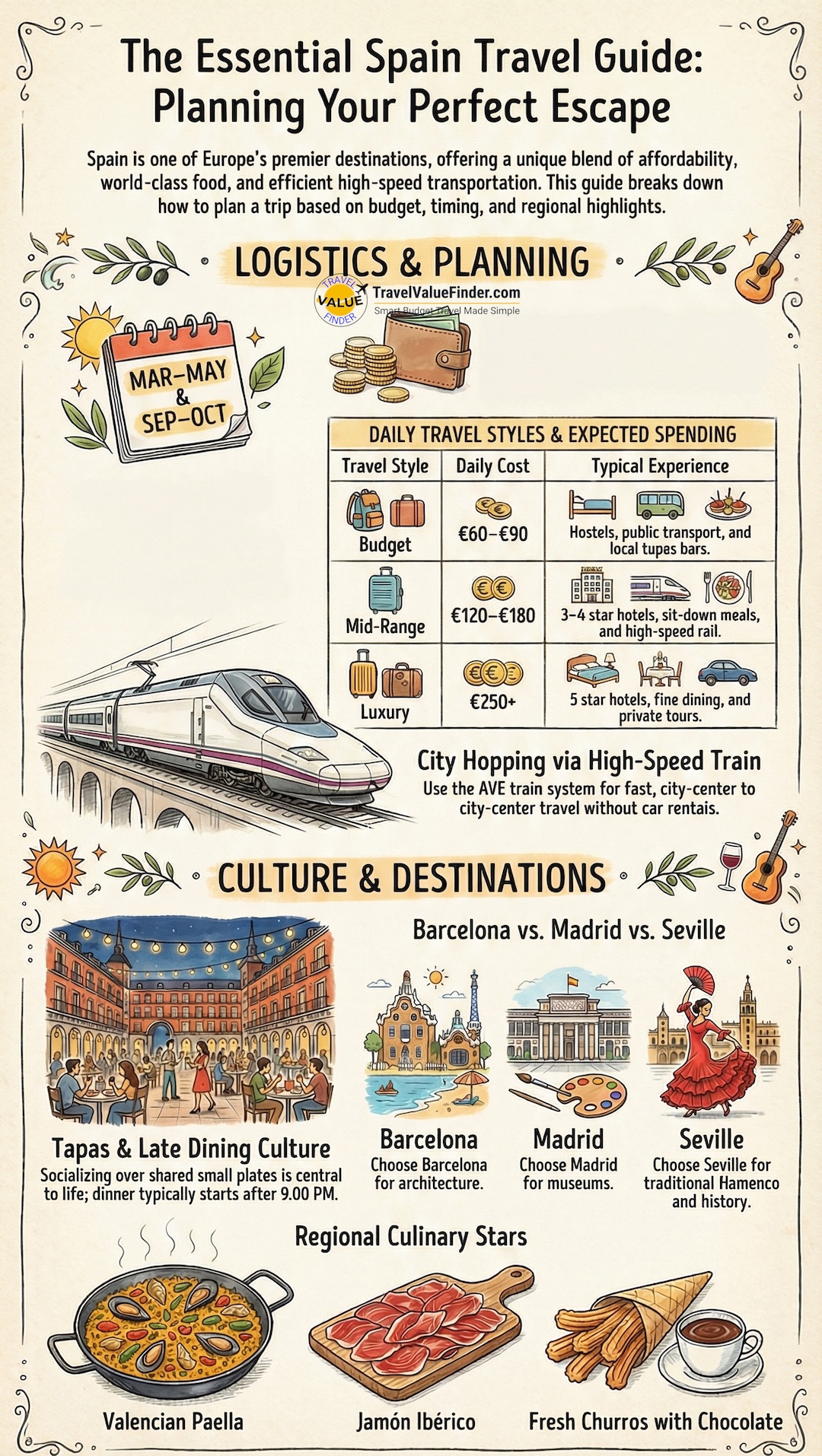
Table of Contents
In Spain, everyday street life is part of the attraction.
Why Visit Spain?
Spain is one of Europe’s best countries to visit because it combines affordable travel costs, rich history, vibrant cities, beautiful beaches, excellent food, and easy transportation—all in one destination. Whether you’re a first-time traveler or a repeat visitor, Spain offers something for every travel style.
Spain doesn’t try to impress you—it just does. One minute you’re walking through a 2,000-year-old Roman ruin, the next you’re sipping wine on a sunny plaza at 10 pm wondering how dinner is still considered “early.” It’s relaxed, lively, cultural, and surprisingly easy to travel.
Spain Offers Incredible Variety in One Country
One of the biggest reasons travelers love Spain is how different each region feels. You can experience multiple “types of trips” without leaving the country.
What makes Spain unique for travelers:
- Historic cities like Madrid and Seville
- Beach destinations like Barcelona and Valencia
- Island escapes in the Canary Islands
- Distinct regional cultures, food, and traditions
- Mountains, coastlines, and countryside in one trip
From flamenco in Andalusia to modern architecture in Barcelona, Spain feels like several countries rolled into one—without the hassle of border crossings.
Spain Is More Affordable Than Most of Western Europe
Spain is cheaper to visit than France, Italy, and the UK, especially when it comes to food, transportation, and accommodation. Travelers can enjoy high-quality experiences without luxury-level prices. This is one of Spain’s biggest advantages. You can eat extremely well without budgeting stress. A sit-down meal with wine often costs less than a takeaway in other European countries. Spain works just as well for budget travelers, mid-range vacationers, and even long-stay travelers.
Why Spain is budget-friendly:
- Affordable public transport and high-speed trains
- Reasonably priced hotels and vacation rentals
- Cheap tapas, wine, and coffee
- Free or low-cost attractions and museums
Traveling Around Spain Is Easy and Efficient
Spain has one of the best transportation systems in Europe, which makes planning stress-free—even for first-time visitors. You can have breakfast in Madrid, lunch in Valencia, and dinner in Barcelona—without ever renting a car. That level of convenience is a big reason Spain consistently ranks as a top European destination.
Why Spain is easy to travel:
- High-speed AVE trains connect major cities
- Reliable metro systems in large cities
- Affordable domestic flights
- Walkable historic city centers
Spanish Food Alone Is a Reason to Visit
Food in Spain isn’t just good—it’s part of daily life. Meals are social, unhurried, and meant to be shared. What really surprises visitors is how regional the food is. The paella you eat in Valencia won’t taste like the one in Barcelona—and locals will absolutely tell you why.
Famous Spanish foods travelers love:
- Tapas and pinchos
- Paella (especially in Valencia)
- Jamón Ibérico
- Tortilla Española
- Churros with hot chocolate
Spain Has a Lively, Social Culture That’s Easy to Love
Spain has a rhythm that travelers quickly fall into. Days start slow, afternoons are relaxed, and nights come alive. Locals are social, cities stay active late, and there’s almost always a festival, street performance, or neighborhood celebration happening somewhere.
Spanish culture is known for late dinners, social plazas, local festivals, and a relaxed pace of life—making it easy for visitors to feel comfortable and welcome. Even if you don’t speak Spanish fluently, it’s easy to connect. A smile, a few basic phrases, and a willingness to slow down go a long way.
Spain Works for Almost Every Type of Traveler
One of Spain’s biggest strengths is how well it fits different travel goals. You can plan a fast-paced city break, a slow coastal escape, or a multi-city itinerary—all without blowing your budget.
Spain is ideal for:
- First-time Europe travelers
- Couples and honeymooners
- Families
- Solo travelers
- Digital nomads and long-stay visitors
Why Spain Keeps People Coming Back
Most travelers don’t just visit Spain once. They come back—for another city, another region, another food obsession they haven’t let go of yet.
Spain feels exciting without being exhausting. It’s cultural without being intimidating. And it offers incredible value for what you get. If you’re looking for a country that delivers history, food, culture, affordability, and ease of travel, Spain checks every box.
Best Time to Visit Spain
The best time to visit Spain is during spring (March to May) and fall (September to October), when the weather is pleasant, crowds are smaller, and prices are lower than peak summer season.
Spain is one of those countries that technically works year-round, but the experience changes a lot depending on when and where you go. Knowing the seasons can mean the difference between a relaxed café-hopping trip and melting through your shoes in August heat.
Spring (March to May): Best Overall Time to Visit Spain
Why spring is the best time to visit Spain:
- Mild temperatures across most regions
- Fewer tourists than summer
- Lower hotel prices
- Major festivals like Semana Santa
Spring is when Spain feels at its best. Cities are lively but not crowded, parks are green, and walking around historic centers is actually enjoyable. This is an ideal time for city sightseeing, food travel, and multi-city itineraries.
Southern Spain—especially Seville and Andalusia—is beautiful in spring, before the intense summer heat arrives.
Summer (June to August): Beach Season & Festivals
Summer is the peak tourist season in Spain, with hot temperatures, busy cities, and higher prices—especially in coastal areas and major destinations. Summer in Spain is all about beaches, islands, and festivals. Coastal cities like Barcelona and Valencia shine during this time, and the Canary Islands remain popular for their ocean breezes. That said, inland cities like Madrid and Seville can get extremely hot, often exceeding 35°C (95°F).
Best for:
- Beach vacations
- Nightlife and festivals
- Island travel
Not ideal for:
- Budget travelers
- Midday sightseeing in southern cities
Fall (September to October): Warm Weather, Fewer Crowds
Why fall is a great time to visit Spain:
- Warm temperatures without summer heat
- Fewer tourists
- Better hotel deals
- Food and wine season
Fall is a bit of a hidden gem. The sea is still warm, cities calm down, and Spain’s food scene comes alive with seasonal ingredients and wine harvests. If you want a balance of good weather, lower prices, and fewer crowds, fall is one of the smartest times to visit Spain.
Winter (November to February): Cheapest Time to Visit Spain
Winter is the cheapest time to visit Spain, with lower flight and hotel prices and fewer tourists—especially outside major holidays. Winter in Spain surprises many travelers. While northern regions can be cool and rainy, southern Spain and the Canary Islands stay relatively mild. Museums are quieter, accommodation is cheaper, and popular attractions are easier to enjoy without crowds.
This is a great time for:
- Budget travelers
- City breaks in Madrid and Barcelona
- Long-stay travelers
- Cultural sightseeing
Best Time to Visit Spain by Travel Style
Best time to visit Spain based on your trip:
- Sightseeing & city travel: April–May, September–October
- Beaches & islands: June–September
- Budget travel: January–February
- Festivals & events: March–April, July–August
- Long stays & slow travel: October–March
Spain rewards travelers who plan around what they want to do, not just the calendar.
Best Time to Visit Spain by Region
Spain’s climate varies by region, which matters more than many first-time visitors expect.
- Barcelona & Mediterranean Coast: April–June, September
- Madrid & Central Spain: April–May, September–October
- Seville & Andalusia: March–May, October
- Valencia: April–June, September
- Canary Islands: Year-round destination
This regional flexibility is another reason Spain works so well for repeat visits.
So, When Should You Go?
If you want the best all-around experience, spring and fall are unbeatable. If beaches and nightlife are your priority, summer delivers—just plan around the heat. And if you’re traveling on a budget or staying longer, winter in Spain is far better than most people expect.
Spain doesn’t have a bad season—it just has different versions of a great one.
Spain Travel Guide Costs (Budget vs Luxury)
Spain is one of the most affordable countries in Western Europe. Budget travelers can spend €60–€90 per day, mid-range travelers €120–€180, and luxury travelers €250 or more, depending on the city, season, and travel style.
Spain is one of those rare European destinations where you don’t feel like you’re constantly doing math in your head. You can eat well, move around easily, and stay in comfortable accommodation without your daily budget spiraling out of control.
Daily Travel Costs in Spain (By Travel Style)
| Travel Style | Daily Cost (Per Person) | What to Expect |
| Budget | €60–€90 | Hostels, budget hotels, public transport, casual meals |
| Mid-Range | €120–€180 | 3–4★ hotels, restaurants, trains, attractions |
| Luxury | €250 | 5★ hotels, fine dining, taxis, private tours |
These ranges work well across Barcelona, Madrid, Valencia, and Seville, with some seasonal variation.
Budget Travel Costs in Spain
Budget travelers can comfortably visit Spain on €60–€90 per day by using public transport, staying in budget hotels or hostels, and eating at local cafés and tapas bars. Spain is extremely friendly to budget travelers, especially outside peak summer months. You’ll still be eating well, sightseeing daily, and traveling efficiently—without feeling like you’re “missing out.”
Typical daily budget breakdown:
- Accommodation: €20–€45
- Food: €15–€30
- Transport: €5–€15
- Attractions: €5–€10
Mid-Range Travel Costs in Spain
Mid-range travelers in Spain typically spend €120–€180 per day, enjoying comfortable hotels, restaurant meals, paid attractions, and fast intercity transport. This is where Spain really shines. You can stay in well-located hotels, eat out regularly, and take high-speed trains between cities without hitting luxury pricing. For most travelers, mid-range Spain offers excellent value for money.
What mid-range travel looks like:
- Boutique or 3–4★ hotels
- Sit-down meals with wine
- High-speed AVE trains
- Museum and attraction entry fees
Luxury Travel Costs in Spain
Luxury travel in Spain starts around €250 per day and includes 5★ hotels, fine dining, private tours, and premium transport options. Spain’s luxury scene is more understated than flashy, but the quality is exceptional—especially in cities like Barcelona and Madrid. That said, Spain still offers better luxury value than many other Western European countries.
Luxury costs increase significantly in:
- Summer months
- Beach destinations
- Island resorts
- Historic city centers
Food Costs in Spain
Typical food prices in Spain:
- Coffee: €1.50–€2.50
- Tapas dish: €3–€6
- Casual meal: €10–€15
- Three-course restaurant meal: €20–€30
Food is one of Spain’s biggest budget advantages. You can eat out daily without blowing your budget, especially if you follow local eating habits and avoid tourist traps.
Transportation Costs in Spain
Typical transport costs:
- Metro ticket: €1.50–€2.50
- High-speed train (Madrid–Barcelona): €40–€120
- Domestic flights: €30–€100
- Car rental: €30–€60 per day
High-speed trains often cost less than flying once you factor in airport transfers and baggage fees.
How Costs Vary by Destination
More expensive destinations in Spain:
- Barcelona
- Madrid
- Ibiza
- Canary Islands (peak season)
More affordable destinations:
- Seville
- Valencia
- Granada
- Smaller cities and inland regions
Choosing the right cities—and timing—can dramatically lower your overall travel costs.
How to Save Money While Traveling in Spain
Money-saving tips with Spain Travel Guide:
- Travel in spring or fall
- Book trains early
- Eat where locals eat
- Stay outside historic centers
- Use public transport instead of taxis
Small choices add up quickly in Spain—and often improve the experience at the same time.
Is Spain Expensive or Cheap?
Compared to most of Western Europe, Spain is decidedly affordable. Whether you’re backpacking, traveling mid-range, or splurging occasionally, Spain offers strong value at every budget level.
If you plan smartly, Spain lets you travel well without spending big—which is exactly why so many people keep coming back.
Transportation in Spain (Trains, Flights & Car Rentals)
Transportation in Spain is fast, affordable, and easy to use. Travelers can get around using high-speed trains, domestic flights, rental cars, and excellent city public transport—often without needing a car at all.
Spain is one of the easiest countries in Europe to navigate, even if it’s your first time visiting. The country is well connected, signage is clear, and transport options cover every travel style—from fast city hopping to slow countryside exploring.
Trains in Spain (AVE & Regional Rail)
Spain’s high-speed AVE trains are the fastest and most convenient way to travel between major cities like Madrid, Barcelona, Seville, and Valencia
If you’re moving between major cities, the train is usually your best option. Stations are centrally located, trains are modern and comfortable, and travel times are impressively short.
Popular train routes in Spain:
- Madrid → Barcelona: ~2.5–3 hours
- Madrid → Seville: ~2.5 hours
- Madrid → Valencia: ~2 hours
- Barcelona → Valencia: ~3 hours
Why trains are great in Spain:
- City-center to city-center travel
- No luggage fees
- Comfortable seating and Wi-Fi
- Often faster than flying
Booking early can significantly reduce ticket prices.
Domestic Flights in Spain
Domestic flights in Spain are affordable and best for long distances or island travel, including routes to the Canary Islands and Balearic Islands
Spain’s low-cost airlines make flying surprisingly cheap, especially when booked in advance. Flights make the most sense when you’re covering large distances or heading to the islands.
When flying makes sense:
- Traveling to the Canary Islands
- Long mainland routes
- Limited time itineraries
Typical domestic flight costs:
- Mainland routes: €30–€100
- Island routes: €50–€150
Just remember to factor in airport transfers and baggage fees when comparing flights to trains.
Car Rentals in Spain
Renting a car in Spain is ideal for countryside travel, road trips, and regions not well connected by train, such as Andalusia villages or coastal areas.
While cities are easier without a car, renting one gives you flexibility in rural areas and smaller towns.
Car rental costs:
- €30–€60 per day
- Fuel is reasonably priced
- Parking fees vary by city
Best places to rent a car:
- Andalusia
- Costa Brava
- Valencia region
- Smaller inland towns
In major cities, driving can be stressful and unnecessary.
Public Transportation in Spanish Cities
Spain’s city transport systems include:
- Metro systems in Madrid, Barcelona, and Valencia
- Extensive bus networks
- Trams in select cities
- Affordable day and multi-day passes
Typical costs:
- Single metro ticket: €1.50–€2.50
- Day pass: €6–€10
Public transportation in Spain is clean, reliable, and affordable. Most visitors rely on it almost exclusively within cities.
Best Transportation Option by Travel Style
Best way to travel in Spain based on your trip:
- City hopping: High-speed trains
- Island travel: Flights
- Road trips & villages: Rental car
- City sightseeing: Public transport & walking
Many travelers mix transport types—train between cities, then rent a car for regional exploring.
Transportation Tips for Traveling in Spain
Spain transport tips:
- Book trains early for cheaper fares
- Choose train over flights for mainland cities
- Avoid renting cars in big cities
- Validate metro tickets when required
- Allow time at security for high-speed trains
Small planning decisions can save both time and money.
Is It Easy to Travel Around Spain?
Yes—Spain is one of the most traveler-friendly countries in Europe. Whether you’re hopping between cities, heading to the islands, or exploring the countryside, transportation is efficient, affordable, and easy to understand.
For most travelers, Spain is a destination where the journey itself feels smooth, not stressful—which makes the entire trip better.
Spanish Food & Culture
Spanish food and culture are centered around social life, regional traditions, late meals, and shared experiences. Eating well, spending time outdoors, and enjoying life at a relaxed pace are key parts of everyday life in Spain.
In Spain, food isn’t just fuel—it’s how people connect. Meals are long, conversations linger, and nobody’s rushing you out the door. Add in sunny plazas, local festivals, and a rhythm that favors enjoyment over urgency, and it’s easy to see why travelers fall in love with Spanish culture.
Spanish Food Is Regional (And Locals Take It Seriously)
Spanish cuisine varies greatly by region, with each area having its own traditional dishes, ingredients, and cooking styles.
What surprises many visitors is how regional Spanish food really is. Paella in Valencia is different from paella elsewhere. Tapas in Andalusia aren’t the same as tapas in northern Spain. And locals care deeply about those distinctions.
Famous Spanish dishes by region:
- Valencia: Paella Valenciana
- Andalusia: Gazpacho, fried fish
- Madrid: Cocido Madrileño
- Catalonia: Seafood, crema catalana
- Canary Islands: Papas arrugadas with mojo sauce
Trying local specialties is one of the best ways to experience Spain.
Tapas Culture: How Spaniards Really Eat
What tapas culture is really about:
- Sharing small plates
- Moving between bars
- Eating slowly over several hours
- Socializing, not rushing
Tapas aren’t meant to be eaten all at once. A typical evening might include two or three bars, a drink at each stop, and a few shared dishes along the way.
In many cities, locals stand at the bar, chat, and snack casually. It’s relaxed, social, and surprisingly filling.
Spanish Meal Times (Yes, They’re Late)
Typical meal times in Spain:
- Breakfast: 8:00–10:00
- Lunch: 2:00–4:00 pm
- Dinner: 9:00–10:30 pm
These later meal times can feel strange at first, but most travelers adjust quickly—and often end up loving it. Evenings are lively, streets stay busy, and dining feels like part of the nightlife rather than the end of the day.
Festivals, Traditions & Daily Life
Spanish culture is known for its festivals, local traditions, and strong sense of community, with celebrations happening year-round across the country. Almost every town and city has its own festivals, often tied to history, religion, or local pride. Even outside major festivals, everyday life in Spain feels communal—people gather in plazas, walk in the evenings, and socialize across generations.
Famous Spanish festivals:
- Semana Santa (Easter)
- La Tomatina (Buñol)
- Las Fallas (Valencia)
- Feria de Abril (Seville)
- San Fermín (Running of the Bulls)
Coffee, Wine & Everyday Drinking Culture
Spain has a relaxed drinking culture centered on coffee, wine, and social occasions rather than excess. Coffee is taken seriously, wine is affordable, and drinks are often enjoyed alongside food. Drinking is social and casual, and it’s normal to see families and older locals enjoying a drink together in public spaces.
Common drinks in Spain:
- Café con leche
- Tinto de verano
- Spanish wine
- Vermouth
- Sangria (more tourist-oriented)
Cultural Tips for Travelers in Spain
Helpful cultural tips for visitors:
- Tipping is appreciated but not expected
- Siestas are more common in smaller towns
- Shops may close in the afternoon
- Personal space is closer than in some cultures
- Basic Spanish phrases go a long way
Understanding these small cultural details makes traveling in Spain smoother and more enjoyable.
Why Travelers Fall in Love with Spanish Culture
Spain has a way of pulling you into its rhythm. Life feels lived outdoors, food is meant to be shared, and there’s time built into the day to enjoy it all. Many travelers arrive for the landmarks—but leave remembering long dinners, casual conversations, and the feeling that nobody was in a hurry.
That’s the real magic of Spain.
Best Places to Visit in Spain (Comparison Guide)
The best places to visit in Spain depend on your travel style. Barcelona is ideal for first-time visitors, Madrid for culture and museums, Seville for history and flamenco, Valencia for beaches and food, and the Canary Islands for year-round sunshine and nature.
Spain isn’t a one-city destination. Each major region offers a completely different experience, which is why choosing the right place to start matters more than choosing the “most popular” one.
Best Places to Visit in Spain – At-a-Glance Comparison
| Destination | Best For | Vibe | Typical Stay |
| Barcelona | First-time visitors, architecture, beaches | Lively & creative | 3–5 days |
| Madrid | Museums, history, food markets | Cultural & energetic | 3–4 days |
| Seville | Traditional Spain, flamenco, history | Romantic & historic | 2–4 days |
| Valencia | Paella, beaches, modern design | Relaxed & affordable | 2–3 days |
| Canary Islands | Beaches, nature, warm weather | Laid-back & scenic | 4–7 days |
In Spain, each region changes the mood, the food, and the pace.
Barcelona: Best for First-Time Visitors
Barcelona is one of the best places to visit in Spain for first-time travelers thanks to its mix of culture, beaches, food, and nightlife. Barcelona has a little bit of everything. You can explore Gaudí architecture in the morning, relax at the beach in the afternoon, and enjoy tapas or nightlife in the evening.
Why visit Barcelona:
- Iconic landmarks like Sagrada Familia
- Walkable neighborhoods
- Beach access
- Strong food scene
Related post: Barcelona Travel Guide
Madrid: Best for Culture & Museums
Madrid is Spain’s cultural capital and best for travelers interested in museums, royal history, and local food markets. Madrid feels more local and less touristy than some coastal cities. It’s ideal if you enjoy museums, neighborhoods, and experiencing everyday Spanish life.
Why visit Madrid:
- World-class museums
- Historic plazas
- Excellent tapas culture
- Central transport hub
Related post: Where to Stay in Madrid
Seville: Best for Traditional Spanish Culture
Seville is one of the most beautiful and culturally rich cities in Spain, known for flamenco, historic architecture, and festivals. Seville delivers the classic “Spanish postcard” experience. It’s slower-paced, romantic, and deeply connected to tradition.
Why visit Seville:
- Flamenco performances
- Moorish architecture
- Iconic festivals
- Charming old town
Valencia: Best for Food & Beaches
Valencia is one of Spain’s most underrated cities, offering beaches, paella, and modern architecture at lower prices than Barcelona. Valencia strikes a great balance between city life and relaxation. It’s more affordable, less crowded, and still full of things to do.
Why visit Valencia:
- Birthplace of paella
- Beach access
- Modern architecture
- Strong value for money
Canary Islands: Best for Year-Round Sun & Nature
The Canary Islands are one of the best places to visit in Spain for warm weather, beaches, and outdoor activities year-round. Located off the coast of Africa, the Canary Islands offer volcanic landscapes, hiking, beaches, and a slower pace of life.
Why visit the Canary Islands:
- Year-round mild climate
- Beaches and hiking
- Nature and scenery
- Great for longer stays
Best Place to Visit in Spain by Travel Style
Choose your destination based on your trip:
- First-time trip to Spain: Barcelona
- Culture & museums: Madrid
- Traditional Spanish experience: Seville
- Affordable city + beach combo: Valencia
- Relaxation & nature: Canary Islands
This approach helps travelers quickly identify the destination that matches their expectations—reducing bounce and increasing engagement.
Can You Visit More Than One Place?
Yes—and that’s one of Spain’s biggest advantages. High-speed trains make it easy to combine cities like Madrid + Seville or Barcelona + Valencia in a single trip.
Many travelers start with one city and return later to explore another region—which is why Spain consistently ranks as a top repeat-visit destination.
Why Spain Should Be on Your Travel Bucket List
Spain is a country full of diverse experiences, from vibrant cities and historic landmarks to sunny beaches and world-class cuisine. Whether you’re exploring the bustling streets of Barcelona, soaking up culture in Madrid, wandering Seville’s historic neighborhoods, enjoying Valencia’s beaches and food, or relaxing in the Canary Islands, Spain offers something for every traveler.
Key Takeaways:
- Best time to visit: Spring (March–May) and fall (September–October) for pleasant weather and smaller crowds.
- Travel costs: Spain accommodates all budgets—from €60/day for budget travelers to luxury options over €250/day.
- Transportation: Efficient trains, metros, and flights make city-hopping easy; cars are optional unless exploring rural areas.
- Food & culture: Tapas, paella, fresh seafood, and vibrant festivals are central to the Spanish experience.
- Top destinations: Barcelona, Madrid, Seville, Valencia, and the Canary Islands offer unique highlights and experiences.
Spain is more than just a country to visit—it’s a journey through history, culture, cuisine, and lifestyle. Planning ahead, choosing the right season, and picking neighborhoods that suit your travel style ensures an unforgettable Spanish adventure. All the information in this Spain Travel Guide is to help you plan for your adventure to Spain.
Whether it’s your first visit or a return trip, Spain offers a mix of adventure, relaxation, and culture that keeps travelers coming back year after year. We hope that this Spain travel guide provided tips and information for your plans to visit Spain.
FAQs: Spain Travel Guide
1. Is Spain a good country to visit for first-time travelers?
Yes, Spain is an excellent country for first-time travelers because it is affordable, safe, easy to navigate, and well connected by public transportation.
Spain’s clear signage, walkable cities, and friendly culture make it especially approachable for visitors new to Europe.
2. Is Spain expensive to travel?
No, Spain is one of the more affordable countries in Western Europe, with daily travel costs ranging from €60–€90 for budget travelers and €120–€180 for mid-range travelers.
Food, public transport, and accommodation are generally cheaper than in France, Italy, or the UK.
3. What is the best time of year to visit Spain?
The best time to visit Spain is in spring (March to May) and fall (September to October), when the weather is pleasant, crowds are smaller, and prices are lower.
These months are ideal for sightseeing and multi-city trips.
4. How many days do you need in Spain?
Most travelers need 7–10 days to explore one region of Spain, while 2–3 weeks is ideal for visiting multiple cities or regions.
Spain’s fast train network makes it easy to see more in less time.
5. Is Spain safe for tourists?
Yes, Spain is considered very safe for tourists, with low violent crime rates. The main concern for visitors is pickpocketing in busy tourist areas.
Using basic precautions is usually enough to stay safe.
6. Do you need a car when traveling in Spain?
No, you do not need a car to travel around major cities in Spain, as trains and public transportation are fast and reliable.
A car is only recommended for countryside travel or visiting smaller towns.
7. Do people in Spain speak English?
English is commonly spoken in tourist areas, hotels, and major cities in Spain, though it is less common in smaller towns and rural areas.
Learning a few basic Spanish phrases can greatly improve your experience.
8. What is the cheapest city to visit in Spain?
Some of the cheapest cities to visit in Spain include Valencia, Seville, Granada, and smaller inland cities where accommodation and food are more affordable.
These destinations offer excellent value without sacrificing experience.
9. What food should I try in Spain?
Must-try foods in Spain include:
Tapas
Paella
Jamón Ibérico
Tortilla Española
Churros with chocolate
Trying regional dishes is one of the best ways to experience Spanish culture.
10. Is Spain good for long stays or slow travel?
Yes, Spain is ideal for long stays and slow travel thanks to affordable living costs, good healthcare, reliable internet, and a relaxed lifestyle.
Many travelers return to Spain for extended visits or seasonal stays.
Explore further: This Spain Travel Guide is connected to Other Spain Cities.
- Spain Travel Guide – Everything You Need to Know Before You Go
- Barcelona Travel Guide – Beaches, Gaudí, and tapas
- Where to Stay in Barcelona (Best Areas & Neighborhood Guide 2026)
- Where to Stay in Madrid (Best Areas & Neighborhood Guide 2026)
- Seville Travel Guide – Flamenco, history, and charm
- Valencia Travel Guide – Paella, beaches, and modern design
- Canary Islands Travel Guide – Nature, sun, and relaxation