Travel Value Finder

Transportation in Rome: How to Get Around Easily as a First-Time Visitor
Getting around the Eternal City is simpler than it seems. This guide to transportation in Rome covers metros, buses, taxis, and airport transfers, helping first-time visitors explore the city efficiently and stress-free.
What is the best way to get around Rome?
The best way to get around Rome is by walking combined with the metro or buses for longer distances.
Is public transportation in Rome easy for tourists?
Yes. Rome’s public transportation is affordable and easy to use once you understand the ticket system and main routes.
Do tourists need a car in Rome?
No. A car is unnecessary and often inconvenient for visitors staying in central Rome.
Getting around Rome can feel intimidating at first, but once you understand how the city works, it becomes surprisingly manageable—and even enjoyable. This in-depth guide to transportation in Rome is designed specifically for first-time visitors who want to move around confidently without wasting time, money, or energy.
This detailed infographic covers everything from the efficient Metro system to local buses, taxis, and convenient airport transfer options. We’ve gathered all the key info you need to get around Rome effortlessly, saving you time and money while ensuring you experience the best of the Eternal City with ease.
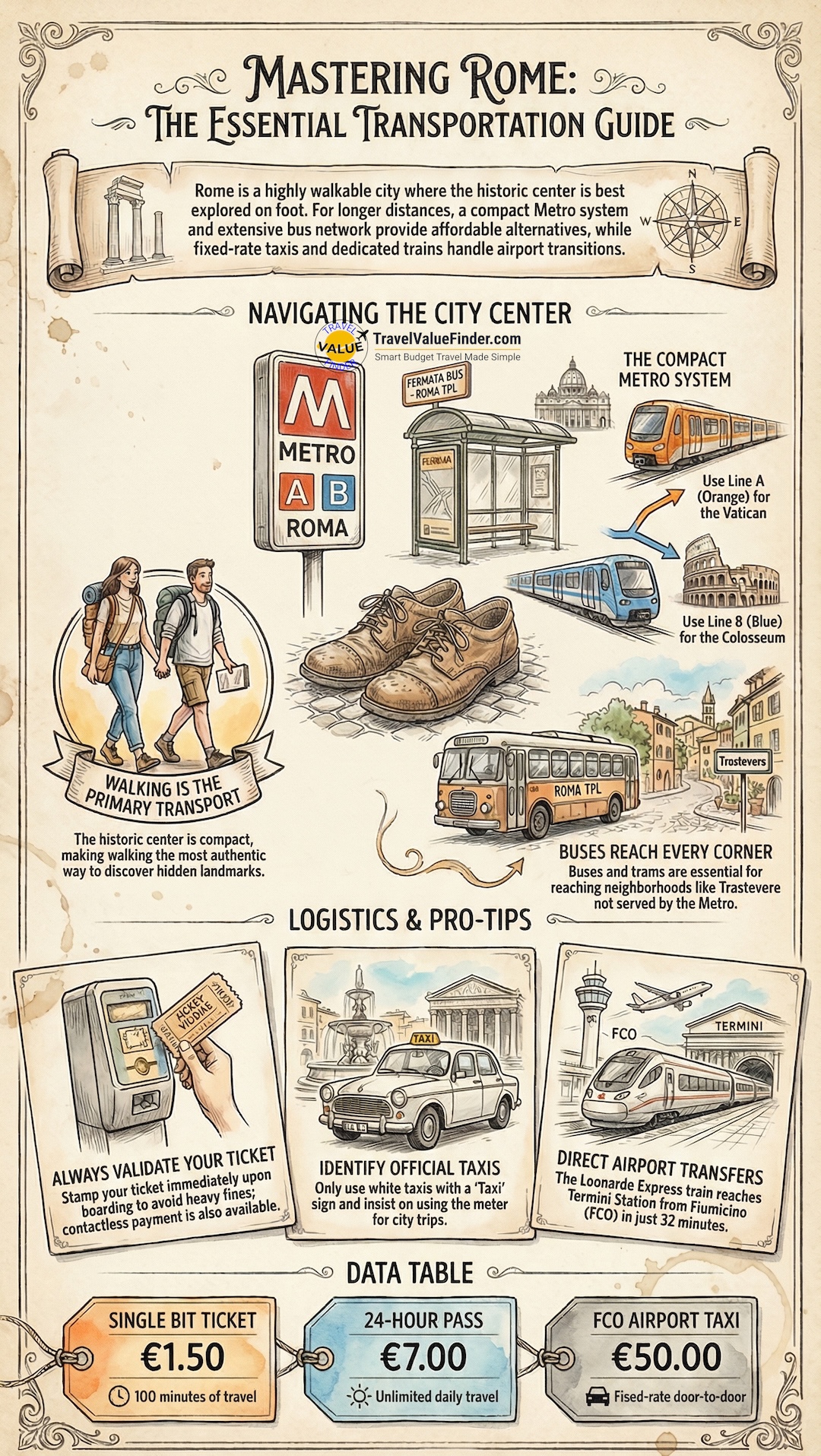
Table of Contents
Rome is not a city you rush through. Many of its most famous sights are close together, and walking is often the best option. That said, public transport, taxis, and airport transfers all play an important role depending on your itinerary, mobility, and travel style.
Transportation in Rome: At-a-Glance Overview Table
| Transport Type | Best For | Typical Cost | Pros | Cons |
| Walking | Sightseeing | Free | Scenic, flexible | Cobblestones |
| Metro | Long distances | €1.50 | Fast, simple | Limited coverage |
| Bus & Tram | Citywide routes | €1.50 | Extensive network | Slower |
| Taxi | Convenience | €10–€25 | Door-to-door | Higher cost |
| Airport Train | Airport access | €8–€14 | Reliable | Limited stops |
Walking in Rome: The Most Authentic Way to Explore
Walking is the heart of transportation in Rome. Many first-time visitors are surprised by how walkable the historic center is. For most first-time visitors, walking will account for at least half of all transportation.
Why walking works so well in Rome
- Major attractions are close together
- You discover hidden piazzas, churches, and cafés
- Streets themselves are part of the experience
Practical walking tips
- Wear supportive shoes (cobblestones are unforgiving)
- Expect uneven sidewalks
- Plan fewer activities per day
Rome Metro System Explained for Visitors
Rome’s metro system is compact but useful.
Rome Metro Lines Overview
| Line | Color | Key Stops for Tourists |
| Line A | Orange | Vatican, Spanish Steps, Termini |
| Line B | Blue | Colosseum, Termini |
| Line C | Green | Outer districts |
When to use the metro
- Traveling long distances
- Visiting the Vatican from central Rome
- Reaching Termini Station
Metro limitations
- Limited stops in historic areas
- Crowded during rush hours
Buses and Trams in Rome: When They Make Sense
Buses and trams fill the gaps left by the metro, reaching neighborhoods and attractions that aren’t served by underground lines. They’re a great option for short trips across the city or for reaching destinations like Trastevere, Testaccio, or the outskirts of Rome. While schedules can sometimes be affected by traffic, they are frequent, affordable, and offer a scenic way to experience the city above ground. Many buses and trams also connect directly to major train stations and metro hubs, making them a convenient part of a combined transportation plan.
Best uses for buses and trams
- Reaching Trastevere
- Traveling between neighborhoods
- Scenic city routes
What first-time visitors should expect
- Slower travel times
- Occasional crowding
- Stops announced in Italian
Public Transportation Tickets in Rome
Understanding tickets is essential for stress-free transportation in Rome.
Rome Public Transport Ticket Types
| Ticket Type | Validity | Price |
| BIT | 100 minutes | €1.50 |
| 24-Hour Pass | Unlimited | €7.00 |
| 48-Hour Pass | Unlimited | €12.50 |
| 72-Hour Pass | Unlimited | €18.00 |
Tickets must be validated when boarding buses or entering metro gates.
Taxis in Rome: What First-Time Visitors Need to Know
Taxis are a practical part of transportation in Rome, especially for families, travelers with luggage, or late-night trips when public transport options are limited. They offer a door-to-door service, making it easy to reach hotels, restaurants, or attractions quickly and safely. While more expensive than buses or the metro, taxis can save time and stress, particularly during Rome’s peak tourist season. You can hail official white taxis on the street, book them by phone, or use trusted apps for added convenience and fare transparency.
Important taxi tips
- Official taxis are white with a taxi sign
- Always use the meter
- Fixed airport rates apply
Average taxi costs
- Short city ride: €10–€15
- Longer cross-city ride: €20–€25
Airport Transportation in Rome
Rome has two main airports: Fiumicino (FCO) and Ciampino (CIA). Getting from Fiumicino Airport (FCO) to central Rome is straightforward, with several convenient airport transfer options. You can take the Leonardo Express train, which offers a direct 30–40 minute ride to Roma Termini station. Alternatively, regional trains or shuttle buses provide slightly slower but often more flexible options. For those seeking comfort or traveling with luggage, taxis, private transfers, and ride-hailing apps are widely available, offering door-to-door service to hotels and apartments. Booking transfers in advance can save time and ensure a smooth start to your trip, especially during peak travel periods.
| Option | Travel Time | Cost |
| Leonardo Express | 32 minutes | €14 |
| Regional Train | 45 minutes | €8 |
| Taxi | 40–60 minutes | €50 (fixed) |
Airport transfer to Rome from Ciampino Airport (CIA):
| Option | Travel Time | Cost |
| Bus + Metro | 45–60 minutes | €2–€4 |
| Taxi | 30–40 minutes | €31 (fixed) |
Ride-Hailing and Private Transfers
Ride-hailing apps like Free Now and Uber operate in Rome, providing a convenient alternative to traditional taxis, though they are less common and sometimes limited in availability compared to the city’s official white cabs. Private transfers, on the other hand, are more expensive but offer maximum convenience, especially for groups, families, or travelers with heavy luggage. These services often include meet-and-greet at airports or train stations, fixed rates, and door-to-door service, making them a stress-free option for visitors who want a smooth and reliable ride without worrying about navigating public transport or hailing a cab on the street.
Best situations for ride-hailing
- Early morning departures
- Airport transfers with luggage
Transportation in Rome at Night
Rome stays lively well into the evening, and transportation options adapt accordingly—but with some limitations. While the metro closes around 11:30 PM, buses and trams continue running on key routes, making it possible to reach many neighborhoods after dark. Taxis and ride-hailing apps provide a reliable alternative for late-night travel, especially for visitors heading to restaurants, theaters, or evening events. Walking is also a great option in central areas like Piazza Navona or Trastevere, where streets are well-lit and bustling with nightlife. Planning ahead ensures you can enjoy Rome’s vibrant evening scene without worrying about getting back to your accommodation. Night buses exist but can be confusing for first-time visitors.
Best nighttime transportation options
- Walking in central areas
- Taxis for longer distances
Transportation Planning by Travel Style
First-Time Visitors
For those exploring Rome for the first time, walking is often the best way to experience the city’s historic streets, piazzas, and landmarks up close. Use the metro selectively for longer trips across the city, such as reaching the Vatican or Termini station, but prioritize walking to soak in the local atmosphere.
Families
Families traveling with children or lots of luggage will find taxis and private transfers the most convenient option. They provide door-to-door service, reduce walking distances, and are especially helpful when avoiding busy metro or bus lines during peak hours.
Budget Travelers
Budget-conscious travelers should consider multi-day transport passes, which offer unlimited rides on buses, trams, and the metro. Pair these passes with walking-focused itineraries in central areas to save money while still covering the main attractions efficiently.
Common Transportation Mistakes to Avoid
- Forgetting to Validate Tickets: Always stamp your bus, tram, or metro ticket—skipping this can lead to fines.
- Overestimating Distances: Rome’s center is walkable, but trying to cover too much on foot can be tiring. Mix walking with other transport.
- Relying Only on Buses: Traffic can slow you down. Combine buses, metro, and taxis for smoother travel.
Mastering Transportation in Rome
Getting around the Eternal City doesn’t have to be stressful—once you master transportation in Rome, exploring becomes a breeze. First-time visitors can wander charming cobblestone streets and historic piazzas on foot, soak in the city’s incredible architecture, and stumble upon hidden gems along the way. For longer trips, evening outings, or traveling with luggage, the metro, buses, trams, taxis, and ride-hailing apps make getting around simple and convenient. By knowing when to walk and when to hop on public transport, you’ll save time, avoid frustration, and enjoy Rome at a relaxed pace—making your visit truly unforgettable.
Frequently Asked Questions – Transportation in Rome
Is Rome walkable for tourists?
Yes. Rome is one of Europe’s most walkable major cities.
Are taxis expensive in Rome?
Taxis are reasonably priced compared to other major European capitals.
Can tourists use contactless payment on public transport?
Yes, on many metro gates and buses, though tickets are still widely used.
Pages That Support This Guide
To help with deeper planning, this page connects to more Italy travel guides such as:
- Italy Travel Guide
- Rome Travel Guide
- Top 10 Things To Do In Rome
- Best Time to Visit Rome
- Transportation in Rome
- Rome Food Guide
- Cheap Hotels in Rome – Affordable & Budget Friendly
- Luxury Hotels in Rome