Travel Value Finder

By Leslie Nics for TravelValueFinder.com. Updated September 2026, drawn from stretches of slow travel across Portugal, the UK, and Malaysia.
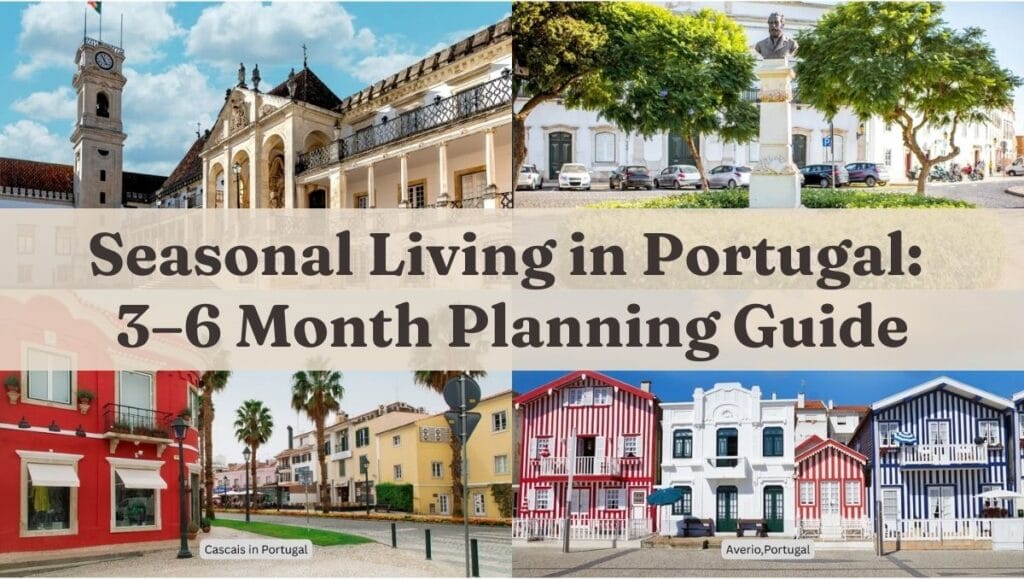
Spending a season in Portugal means picking one region and staying long enough to see it change.
This is not a moving guide or a financial plan. It is what a few unhurried months actually look and feel like, month by month, and which region and season suit that kind of pace.
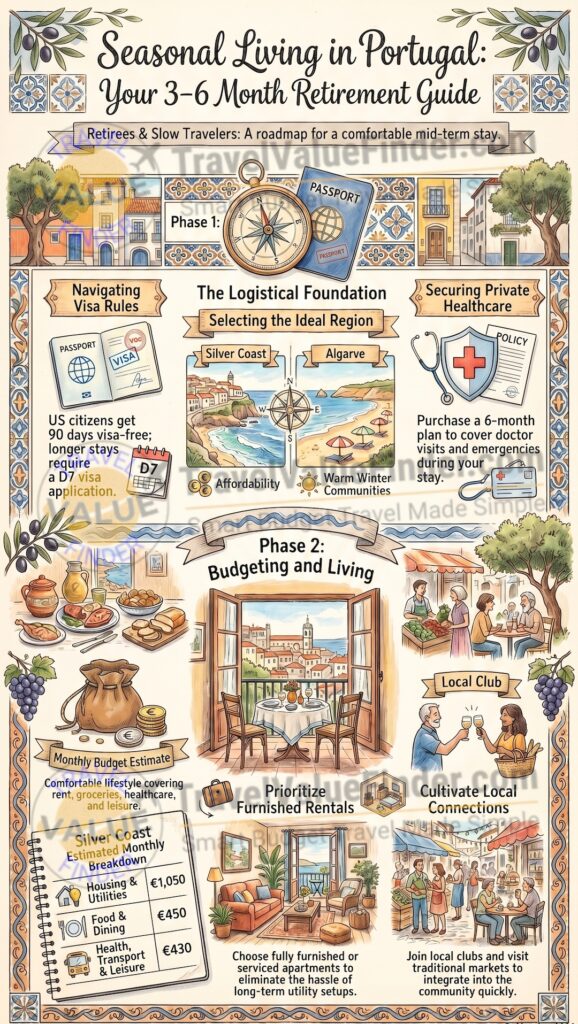
Most people spending a season here pick either the Silver Coast for quiet or the Algarve for warmth and easy company. You do not need to speak Portuguese, though a few phrases help outside the bigger towns, and a season rarely feels lonely once you fall into local routines.
A season is different from a vacation in ways that only become obvious once you are living them. Vacation days are optimized. Every hour has a plan, a reservation, or a landmark attached to it.
A season strips that away, and what replaces it is a set of small, repeated choices about where you buy bread, which bench you sit on, and who you nod to on the way there.
The first week of any long stay feels like a vacation. The second month is when it starts to feel like a life.” Leslie Nics, TravelValueFinder.com
Table of Contents
The First Two Weeks Set the Tone
The first days of any extended stay feel like an ordinary trip. You find the closest bakery, figure out the bus routes, and settle into a rental. Around day ten, something shifts.
You stop sightseeing and start living somewhere. The same waiter starts to recognize your order. That shift is the whole point of seasonal travel, and it rarely happens in under two weeks.
Choosing a Season, Not Just a Place
Where you go matters less than when you go. Portugal changes mood by season more than most people expect. This table is about atmosphere, not logistics.
| Season | What It Feels Like | Good For |
| Winter (Nov to Feb) | Quiet towns, mild but damp, log fires in cafes | Readers, writers, anyone who dislikes crowds |
| Spring (Mar to May) | Wildflowers, long walks, towns waking back up | First timers testing the pace before committing longer |
| Summer (Jun to Aug) | Busy coasts, long light evenings, festival season | Travelers who want company and energy, not solitude |
| Fall (Sep to Oct) | Warm days, cool nights, grape harvest inland | The calmest mix of good weather and thin crowds |
A Month by Month Feel on the Coast
| Months | Weather | Crowd Level |
| December, January | Mild days, cool nights, occasional rain | Very quiet, many restaurants close midweek |
| February, March | Warming up, blossoms appear inland | Quiet, a few early season visitors |
| April, May | Comfortable and dry most days | Building steadily, still relaxed |
| June, July, August | Hot on the coast, warmer inland | Busy, especially the Algarve and Silver Coast towns |
| September, October | Warm days, cool evenings return | Thinning out, the best value for calm and weather |
| November | First real chill, shorter days | Very quiet again, the cycle restarts |
Slowing Down Is a Skill, Not a Switch
Daily life on a long stay is built from small repeated habits. A morning market trip. A slow coffee instead of a rushed one. Learning which bakery sells out of bread by nine.
Portuguese shops often close for a midday break, and paperwork of any kind moves slower than most visitors expect. Neither is a problem once you stop fighting it. It is simply the pace.
Coffee culture deserves its own mention here. A bica, Portugal’s short espresso, is meant to be drunk standing at the counter in under two minutes, not carried out in a paper cup. Learning that one habit changes how mornings feel almost immediately, and counter staff notice when a visitor stops rushing through it.
I spent my first month trying to be productive on Portuguese time. My second month I just let the pace win.” Leslie Nics, TravelValueFinder.com
Day Trips That Fit a Longer Stay
A season gives you room to see places properly instead of rushing them. If you base yourself near Lisbon, our full Lisbon travel guide covers the city in depth, and Sintra makes an easy repeat day trip rather than a once and done stop.
Óbidos, Nazaré, and the wider Silver Coast reward slow exploring more than a single visit ever could. If you split your season between Lisbon and the north, see our Lisbon vs Porto cost comparison for how the two cities actually differ day to day.
Travelers based in the Algarve tend to build a different rhythm, one built around small fishing towns rather than a single city. Tavira, Lagos, and Silves each make an easy loop from a coastal rental, and none of them demand a full day the way Lisbon does. A season here often means picking a new town every week or two rather than a single repeat destination.
The Douro Valley works well as a longer detour rather than a day trip, especially for travelers who enjoy wine country at a walking pace. A two or three night stopover breaks up a season nicely without requiring you to give up your main base entirely.
Practical Logistics, Kept Simple
Pack for at least two seasons, not one. Portuguese weather shifts more than the average forecast suggests, especially along the coast.
Many travelers structure a longer stay around the 90 day Schengen limit for visa free visits. Rules and visa categories can change, so check official Portuguese immigration sources and travel.state.gov before you plan the length of any stay.
A local SIM or eSIM makes daily life easier than relying on hotel wifi. Public transport between towns is reliable enough that a car is a preference, not a requirement, for most coastal regions.
Housing for a season looks different from a hotel search. Most long stayers work with local rental agents or platforms built for month long stays rather than nightly bookings, and asking a rental about noise, water pressure, and heating tends to matter more than photos ever do. Portuguese buildings vary widely in insulation, and a charming stone house in December can be a cold one without checking first.
What Surprised Me About Slowing Down
I expected to miss constant sightseeing. Instead I missed it for about ten days, then stopped noticing. What stuck with me instead were small routines: a regular table at a cafe, a weekly market stall.
The version of Portugal you see on a two week trip and the version you see over a season are almost different countries. Neither is more real. They are just different speeds.
Most first timers underestimate how much slower errands and paperwork move, how quiet a small town feels after a busy home schedule, and how attached they get to one specific bakery within a matter of weeks.
A Few More Questions
How much luggage should I bring for a season?
Pack light and plan to do laundry regularly. Most rentals include a washing machine, and layering covers Portugal’s shifting weather better than a full suitcase for every season.
Is it better to stay in one town or move around?
One base with short trips out tends to feel calmer than moving every few weeks. Constant moving recreates the pace of a vacation, which defeats the purpose of slowing down.
Can retirees and younger travelers both do this kind of trip?
Yes. Seasonal travel suits anyone with flexible time, not just retirees. The habits that make it work, like slowing down and picking one base, apply at any age.
Where can I read more about planning a trip like this?
Our Retirement Travel category covers more slow and extended travel guides if this style of trip appeals to you.
Weather patterns referenced here come from Instituto Portugues do Mar e da Atmosfera, Portugal’s official climate service. Entry and residency notes draw on the US Department of State and Portugal’s Immigration and Borders Service. Regional tourism detail comes from Turismo de Portugal, the national tourism board.