Travel Value Finder


The cost of living in Spain for retirees is generally affordable, but it depends on location and lifestyle. Coastal cities may be pricier, while smaller towns offer lower housing and daily expenses. Understanding costs like groceries, healthcare, and transportation helps retirees budget wisely and enjoy a comfortable life in Spain.
Leslie Nics, TravelValueFinder.com | Last updated: April 2026 | Based on first-hand research having spent seasonal living in Spain.
Table of Contents
Cost of Living in Spain for Retirees: What It Really Costs
Understanding the Cost of Living in Spain for Retirees and Why I Focus on Real Costs, Not Averages. When people ask me about the cost of living in Spain, they often want a single number. But averages don’t tell you much if your lifestyle, location, or expectations are different. What actually matters is how the cost of living in Spain shows up in daily life-rent, groceries, healthcare, transportation, and small recurring expenses that add up over time.
That’s why I use examples and practical tips in every section below. This is the kind of information I wish I had when I first started planning.
This guide is written for people over 55 who are researching travel, long-term stays, or retirement abroad. I share real-world planning insights, official sources, and practical examples to help you understand what life in Spain is actually like – not just the highlights.
This content is educational, not legal or financial advice. Rules change, and personal situations differ, so I always recommend confirming details with official or professional sources before making decisions. Refer to the Trust & Transparency page for more information.
A Realistic Monthly Budget for Retirees in Spain
From everything I’ve reviewed, spoken with retirees about, and budgeted myself, these ranges are realistic:
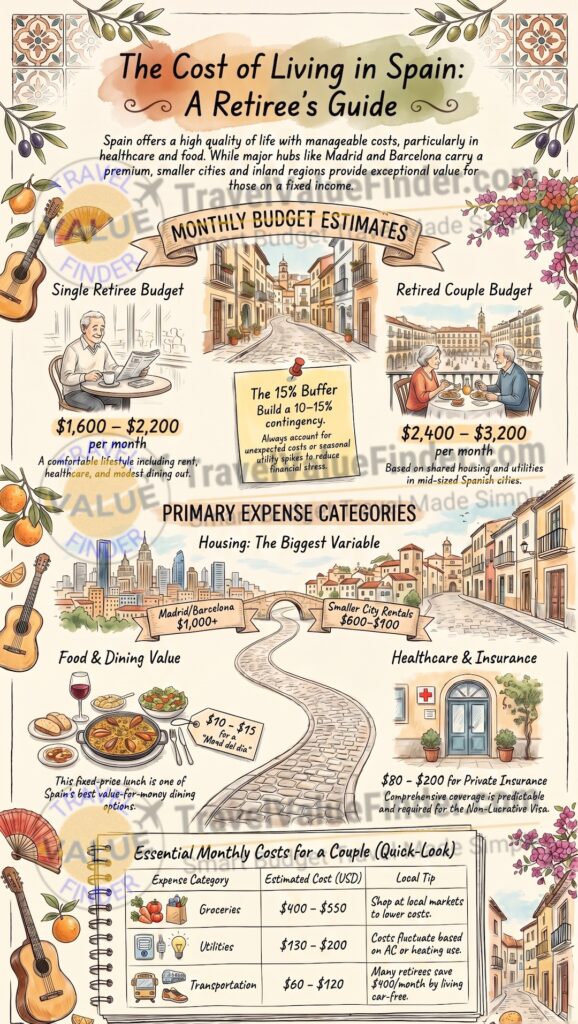
- Single retiree: $1,600 – $2,200 per month
- Retired couple: $2,400 – $3,200 per month
Example
A retired couple living in Valencia shared a monthly budget close to $2,600:
- Rent: $1,000
- Groceries & dining: $600
- Utilities & internet: $200
- Healthcare insurance: $300
- Transportation & lifestyle: $500
They live comfortably but not extravagantly.
Tip
When estimating your own cost of living in Spain, always build a buffer of 10 – 15%. Unexpected costs are less stressful when they’re already planned for.
Housing Costs: Where the Biggest Differences Appear
Housing has the biggest impact on the cost of living in Spain.
From my research:
- Madrid and Barcelona are the most expensive
- Coastal hotspots cost more during high season
- Smaller cities and inland areas offer strong value
Typical Monthly Rent Examples
- One-bedroom in a smaller city: $600 – $900
- One-bedroom in Madrid or Barcelona: $1,000 – $1,400
- Two-bedroom outside city centers: $900 – $1,300
Example
A retiree I studied chose a neighborhood 20 minutes outside Málaga instead of the city center. The result:
- $400 less in rent
- Same healthcare access
- Quieter lifestyle
Tip
Rent short-term first. I strongly recommend 3 – 6 months of renting before signing long leases or buying property.
Related post: Best Places to Live in Spain After 55
Cost of Living in Spain for Retirees (Monthly Estimates)
These are realistic averages for retirees living comfortably, not luxury and not bare-bones. Actual costs vary by city and lifestyle.
Spain – Monthly Cost Breakdown (USD)
| Expense Category | Single Retiree | Retired Couple | Notes |
|---|---|---|---|
| Housing (Rent) | $700 – $1,200 | $900 – $1,500 | Major cities cost more; inland & smaller cities cost less |
| Utilities (Electric, Water, Gas) | $100 – $160 | $130 – $200 | Seasonal variation (AC/heating) |
| Internet & Mobile | $40 – $60 | $50 – $70 | Reliable nationwide |
| Groceries | $250 – $350 | $400 – $550 | Local markets lower costs |
| Dining Out | $150 – $250 | $250 – $350 | Menu del día offers strong value |
| Transportation | $40 – $80 | $60 – $120 | Many retirees live car-free |
| Healthcare (Private Insurance) | $80 – $180 | $160 – $300 | Age & coverage dependent |
| Entertainment & Lifestyle | $100 – $200 | $150 – $300 | Cultural events often low-cost |
| Miscellaneous | $80 – $150 | $120 – $200 | Clothing, small trips, extras |
| Estimated Monthly Total | $1,600 – $2,200 | $2,400 – $3,200 | Comfortable retiree lifestyle |
Planning Tip
In Spain, housing choice has the single biggest impact on monthly costs. Choosing a neighborhood slightly outside a city center can reduce total expenses by $400 – $700 per month without sacrificing healthcare or lifestyle quality.
Utilities and Household Expenses
Utilities are usually reasonable, but they vary by season and region.
Typical Monthly Costs
- Electricity, gas, water: $100 – $180
- Internet & mobile: $40 – $60
Example
In southern Spain, summer air-conditioning can double electricity bills. In northern Spain, winter heating plays the same role.
Tip
When viewing rentals, ask for previous utility bills. It’s one of the easiest ways to avoid surprise costs.
Food Costs: One of Spain’s Best Values
Food is where many retirees save money without feeling deprived.
Typical Monthly Food Costs
- Groceries (one person): $250 – $350
- Menu del día lunch: $10 – $15
- Coffee at a café: $1.50 – $2.50
Example
A single retiree shopping at local markets and cooking most meals kept food costs under $300/month-while eating better than they did back home.
Tip
Shop where locals shop. Tourist-area supermarkets and restaurants inflate the cost of living in Spain without improving quality.
Transportation: A Hidden Cost Saver
Transportation is often underestimated when calculating the cost of living in Spain.
Typical Costs
- Monthly public transport pass: $30 – $60
- Intercity trains: affordable with senior discounts
- Taxis: reasonable for occasional use
Example
One couple sold their car after moving to Valencia and saved over $400 per month in insurance, fuel, parking, and maintenance.
Tip
If you live near a city center or good transit line, try living car-free for 2 – 3 months before deciding to buy or ship a car. Get your Barcelona Bus and Metro or Madrid Metro Card.
Healthcare Costs: Predictable and Manageable
Healthcare is one of Spain’s strongest value points.
Typical Retiree Costs
- Private health insurance: $80 – $200/month
- Doctor visits: often included or low-cost
Example
A 62-year-old retiree pays $140/month for comprehensive private insurance with no copays, including specialist visits.
Tip
Choose insurance that meets Spain Non-Lucrative Visa requirements, even if it costs slightly more. Related post: Healthcare in Spain: What Retirees Actually Experience
Lifestyle Costs: Where Personal Choices Matter Most
Lifestyle spending varies widely, but Spain makes it easy to enjoy life without overspending.
Common Monthly Extras
- Gym membership: $30 – $50
- Cultural events: free to low-cost
- Day trips: affordable by train
Example
A retiree living inland spends under $150/month on entertainment thanks to free community events and low-cost travel.
Tip
Spain rewards retirees who participate locally-community centers, walking groups, and cultural events often cost little or nothing.
How Location Choice Changes the Cost of Living in Spain
Two people can have vastly different costs simply by choosing different regions.
Example Comparison
- Madrid: higher rent, excellent transit, vibrant culture
- Valencia: lower rent, beach access, balanced costs
- Inland Andalusia: lowest costs, quieter pace
Tip
Always compare total monthly cost, not just rent, when choosing a location. Related post: Spain Retirement Scorecards: Regions Compared
Common Cost-of-Living Mistakes I See
Some recurring mistakes include:
- Using tourist prices as benchmarks
- Over-renting too early
- Underestimating utility seasonality
- Ignoring healthcare insurance costs
Tip
If something feels unusually cheap or expensive, ask locals. Spain is very regional, and context matters.
How the Cost of Living in Spain Fits Into Retirement Planning
The cost of living in Spain works best when:
- Housing choices are intentional
- Healthcare is planned upfront
- Lifestyle expectations are realistic
Spain offers excellent value, but it rewards retirees who adapt slightly rather than trying to replicate life back home exactly. Related post: Retire in Spain: A Complete Guide for Over 55s, Retire in Spain on $2,500 a Month: The Honest 2026 Cost Guide
Knowing the Cost of Living in Spain
From everything I’ve studied, the cost of living in Spain offers strong value-but only when choices are made thoughtfully. The key is choosing the right place and planning with clarity instead of assumptions. Spain allows retirees to live well without excess spending, especially when daily life aligns with local rhythms.
Ready to compare cities now?
- Use our Free Retirement Cost of Living Calculator — get your personalized report in 30 seconds – Free PDF download.
- How to Use a Retirement Cost of Living Calculator – to Compare Cities Worldwide
Frequently Asked Questions About the Cost of Living in Spain
1. Is Spain affordable for retirees?
Yes, especially outside major cities and tourists zone. Many retirees live comfortably on moderate fixed incomes.
2. What is the biggest expense?
Housing but depending on your chosen region. Rent choice has the biggest impact on monthly costs.
3. Is Spain cheaper than the US?
In most cases, yes-particularly for healthcare, food, and transportation.
4. Can I live well on a fixed income?
Many retirees do, with careful location and lifestyle choices.
5. Can I live in Spain without a car?
Absolutely. Many retirees rely entirely on public transport.
Pages That Support This Guide
To help with deeper planning, this page connects to detailed guides such as:
- Retire in Spain (A Warm, Practical Guide for People Over 55)
- Spain Non-Lucrative Visa Explained for US and EU Citizens Over 55
- Healthcare in Spain: A Retiree’s Perspective
- Best Places to Live in Spain After 55
- Renting vs Buying Property in Spain
- Taxes in Spain for Retirees
- Common Mistakes When Moving to Spain
- Seasonal Living in Spain: 3 – 6 Month Planning
- Spain Retirement Scorecards for Retirees
- Spain Retirement Checklist for Retirees