Travel Value Finder

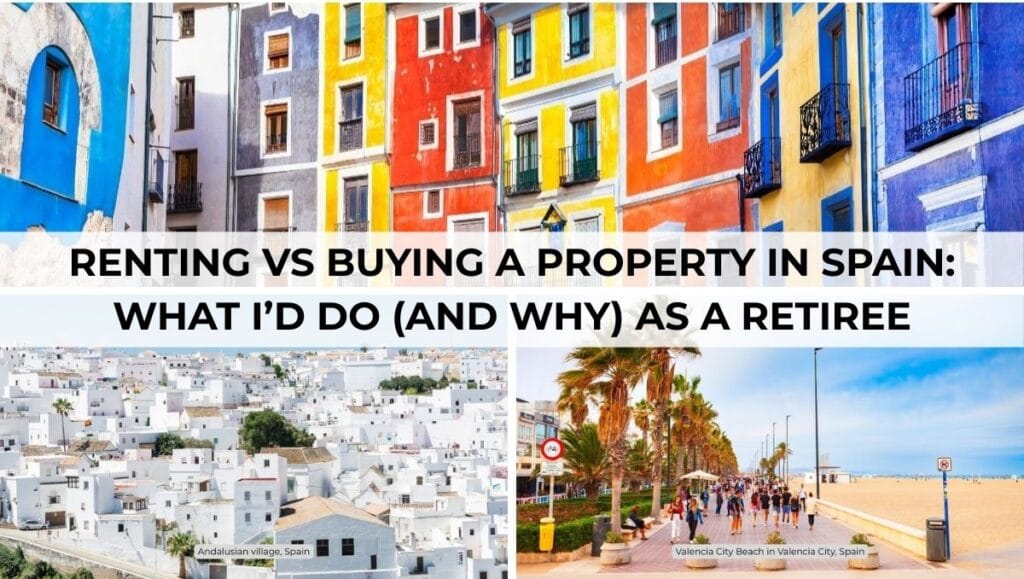
Deciding between renting vs buying property in Spain is one of the most important choices for retirees. Renting offers flexibility, lower upfront costs, and the freedom to explore different regions before committing. Buying provides long-term stability, potential property appreciation, and the comfort of owning your own home. By weighing lifestyle preferences, budget, and long-term goals, retirees can make an informed decision that ensures a comfortable and enjoyable life in Spain.
Leslie Nics, TravelValueFinder.com | Last updated: April 2026 | Based on first-hand research having spent seasonal living in Spain.
Understand your options with “Renting vs Buying a Property in Spain Guide.” This simple infographic explains the key differences between renting and buying a home in Spain. It helps you compare costs, long-term benefits, and what each choice means for your lifestyle. Learn about upfront costs, monthly expenses, and important things to consider like flexibility, commitment, and legal steps. Whether you are planning to move, invest, or stay short-term, this guide makes it easy to decide which option is best for you.
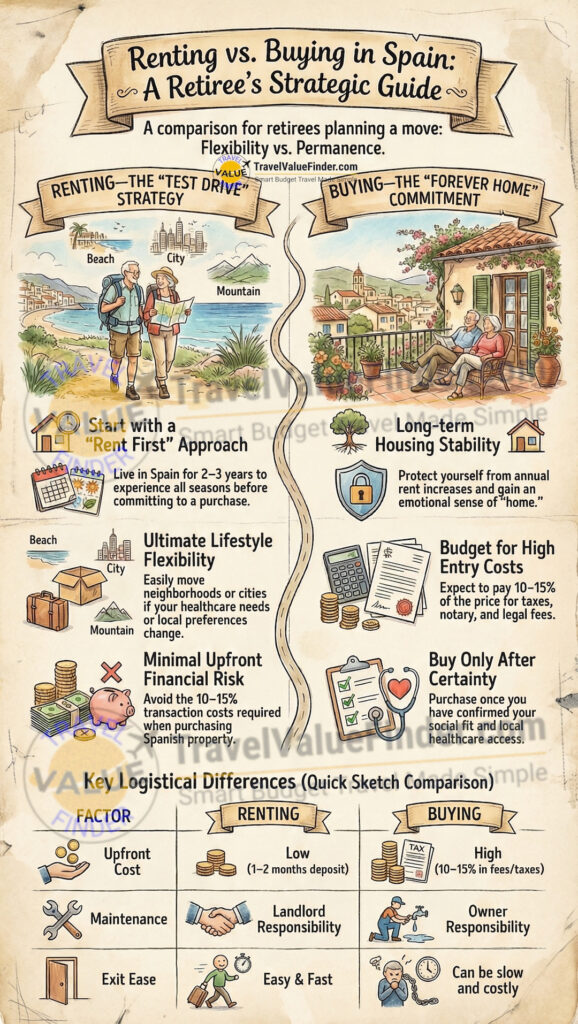
Table of Contents
Renting vs Buying a Property in Spain: A Retiree’s Practical Guide
When we’re younger, housing decisions often come with momentum. We move for jobs, family, or opportunity. After 55, it’s different. This move isn’t just about where you live – it’s about how you want your days to feel. When I speak to retirees considering to retire in Spain, I hear the same concern over and over:
“I don’t want to make an expensive mistake at this stage of life.”
That concern is valid. Spain is a wonderful place to retire, but the choice between renting and buying deserves patience, not pressure. What I learned instead is this: renting vs buying a property in Spain is not a lifestyle decision first – it’s a strategy decision.
This guide is written for people over 55 who are researching travel, long-term stays, or retirement abroad. I share real-world planning insights, official sources, and practical examples to help you understand what life in Spain is actually like – not just the highlights.
This content is educational, not legal or financial advice. Rules change, and personal situations differ, so I always recommend confirming details with official or professional sources before making decisions. Refer to the Trust & Transparency page for more information.
Renting in Spain: Why I Encourage Most Retirees to Start Here
Renting in Spain isn’t temporary in the way many people imagine. For retirees, it often becomes a comfortable, low-stress way of living – especially during the first few years.
Most long-term rentals come with 11 – 12 month contracts that renew easily. Apartments are often furnished, which means you can arrive with a few suitcases and settle in without needing to buy furniture or appliances.
Example:
I spoke with a retired couple who rented in Malaga. After six months, they realized the neighborhood was louder than expected in summer. Because they were renting, they simply moved a few neighborhoods inland the following year – same city, calmer lifestyle, no financial loss.
Why Renting Brings Peace of Mind
What I appreciate most about renting, especially later in life, is the absence of responsibility. If something breaks, it’s not your problem. If the neighborhood changes, you can move. If Spain turns out not to be your forever home, leaving is simple. This kind of flexibility is incredibly valuable as our needs evolve.
Long-term rentals in Spain typically mean:
- 11 – 12 month contracts (renewable)
- Furnished or semi-furnished apartments
- Utilities often not included
- Deposits of 1 – 2 months’ rent
Pros of Renting in Spain
- Flexibility to change cities or neighborhoods
- Lower upfront costs
- No property taxes, repairs, or HOA surprises
- Easier exit if plans change
Cons of Renting in Spain
- Annual rent increases in popular areas
- Less control over the property
- Competitive markets in major cities
Tip:
If you’re unsure how you’ll feel about Spanish bureaucracy, healthcare systems, or seasonal tourism, renting gives you breathing room to learn without commitment.
Buying Property in Spain: When It Truly Makes Sense
Buying Isn’t a Lifestyle Upgrade – It’s a Long-Term Commitment. Buying property in Spain can be rewarding, but it works best after you already know Spain fits you well. The purchase process involves lawyers, notaries, taxes, and registration. It’s not difficult, but it does require attention, patience, and trusted professionals.
Buying property in Spain comes with significant upfront costs, usually 10 – 15% of the purchase price, including:
- Transfer tax or VAT
- Notary fees
- Legal fees
- Registration costs
Example:
One retiree I spoke with bought an apartment in Valencia after living there for four years. By then, they understood the healthcare system, spoke conversational Spanish, and had local friends. Buying enhanced their life because the decision came from certainty, not excitement.
The Emotional Side of Ownership
Ownership can bring comfort – a feeling of permanence and belonging. For some retirees, that emotional security matters deeply. But it should come after clarity, not before it.
Pros of Buying Property in Spain
- Long-term housing stability
- Protection from rising rents
- Emotional sense of “home”
- Potential rental income (with rules)
Cons of Buying Property in Spain
- High upfront transaction costs
- Property taxes and ongoing maintenance
- Less flexibility if lifestyle changes
- Legal complexity for foreigner
Example:
A retiree bought a coastal apartment immediately after arrival. Two years later, healthcare needs changed, and the location no longer worked – selling took time and cost money.
Tip:
Buying makes the most sense when you’ve lived in the same region through multiple seasons and still feel confident it’s where you want to stay long-term.
Renting vs Buying a Property in Spain: Side-by-Side Comparison
| Factor | Renting | Buying |
| Upfront Cost | Low | High (10 – 15%) |
| Flexibility | Very High | Low |
| Maintenance | Landlord | Owner |
| Taxes | None | IBI, possible wealth tax |
| Exit Ease | Easy | Can be slow |
| Best For | New retirees | Long-term settled retirees |
Regional Differences Matter More Than People Expect
Spain is not uniform.
- Barcelona & Madrid: High prices, competitive rentals
- Valencia & Malaga: Better value, strong rental markets
- Inland towns: Very affordable, but limited resale demand
Example:
Buying inland may be cheap, but resale can take years. Renting first reveals whether the area truly fits your daily needs.
Tip:
Always assess resale demand, not just purchase price. Refer to the Taxes of Buying and Selling a Property in Span.
How Location Changes the Renting vs Buying a Property in Spain Equation
Big Cities Feel Different Over Time
Cities like Barcelona and Madrid are exciting at first, but over time, noise, crowds, and cost can wear on some retirees. Renting lets you experience this reality without being trapped by ownership.
Smaller Towns Require Extra Thought
Inland towns and rural areas are affordable, but resale demand can be limited. Buying in these areas should come only after deep familiarity with the region.
Legal and Financial Risks – Spoken Plainly
Buying property in Spain is safe if done correctly, but retirees are often targeted by overly optimistic agents.
I always emphasize:
- Never skip independent legal advice
- Never rush deposits
- Never assume verbal promises will be honored
Example:
I’ve seen buyers discover later that rental permissions were restricted – something that would have changed their decision entirely.
Legal and Practical Risks to Be Aware Of
Common Buying Pitfalls
- Properties without proper registration
- Unpaid community fees
- Assumed rental permissions that don’t exist
- Relying on seller’s lawyer
Tip:
Always use an independent lawyer – never one recommended by the seller or agent.
How Renting vs Buying a Property in Spain Affects Residency and Taxes
Owning property in Spain:
- Does not give residency rights
- Can trigger additional tax reporting
- May affect wealth tax exposure
Renting:
- Keeps your financial footprint lighter
- Simplifies exit strategies
- Works well with seasonal or trial living
Example:
Several retirees I spoke with rented for 3 – 5 years before buying – and were glad they waited.
What I’d Personally Recommend (If You Were Sitting Across From Me)
If we were having coffee and you asked me honestly, I’d say this: Rent first. Always.
Give yourself time. Let Spain reveal itself to you slowly. If after a few years you feel rooted – emotionally, socially, practically – then buying can be a wonderful next step.
- Buy only after:
- Living in Spain at least 2 – 3 years
- Experiencing all seasons
- Confirming healthcare and social fit
- Feeling confident you won’t relocate again
Spain is forgiving to renters – and expensive for rushed buyers. Spain isn’t going anywhere. You don’t need to rush.
Decision on Renting vs Buying a Property in Spain
The decision between renting vs buying a property in Spain is less about money and more about timing. Renting gives you clarity. Buying requires certainty. Most retirees I trust – and what I would personally do – choose to rent first, learn deeply, and buy only when Spain truly feels like home. Find out more to Retire in Spain on $2,500 a Month: The Honest 2026 Cost Guide
Ready to compare cities now?
- Use our Free Retirement Cost of Living Calculator — get your personalized report in 30 seconds – Free PDF download.
- How to Use a Retirement Cost of Living Calculator – to Compare Cities Worldwide
Frequently Asked Questions: Renting vs Buying a Property in Spain
1. Is renting secure in Spain for retirees?
Yes. Long-term rentals are common, and tenant protections exist.
2. Can I buy property later without problems?
Absolutely. Many retirees buy after years of renting. Most buy after they are approved of permanent residency.
3. Will renting affect my Non-Lucrative Visa?
No. Renting is fully acceptable for residency purposes.
4. Is it cheaper to buy than rent in Spain?
Renting can be seen as expensive in the long-term, but upfront costs make buying riskier early on.
5. Can retirees get mortgages in Spain?
Yes, but age limits and income requirements apply.
6. Is renting difficult in Spain?
In popular cities, yes – preparation and flexibility help.
7. Does buying property help with visas?
No. Property ownership does not grant residency.
Pages That Support This Guide
To help with deeper planning, this page connects to detailed guides such as:
- Retire in Spain (A Warm, Practical Guide for People Over 55)
- Cost of Living in Spain for Retirees (City-by-City)
- Spain Non-Lucrative Visa Explained for US and EU Citizens Over 55
- Healthcare in Spain: A Retiree’s Perspective
- Best Places to Live in Spain After 55
- Taxes in Spain for Retirees
- Common Mistakes When Moving to Spain
- Seasonal Living in Spain: 3 – 6 Month Planning
- Spain Retirement Scorecards for Retirees
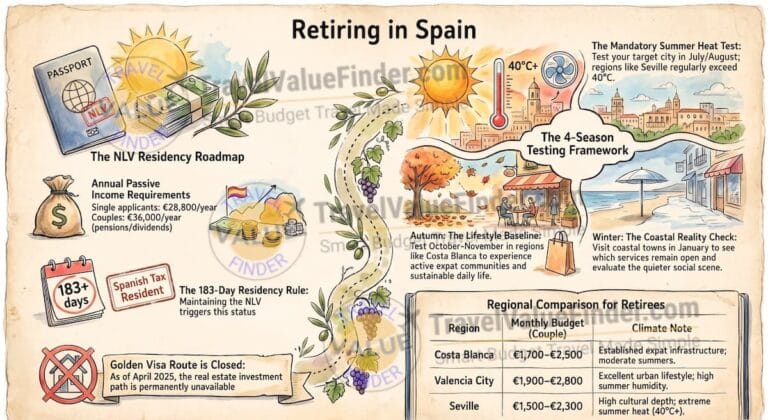
- Spain Retirement Checklist for Retirees