Travel Value Finder

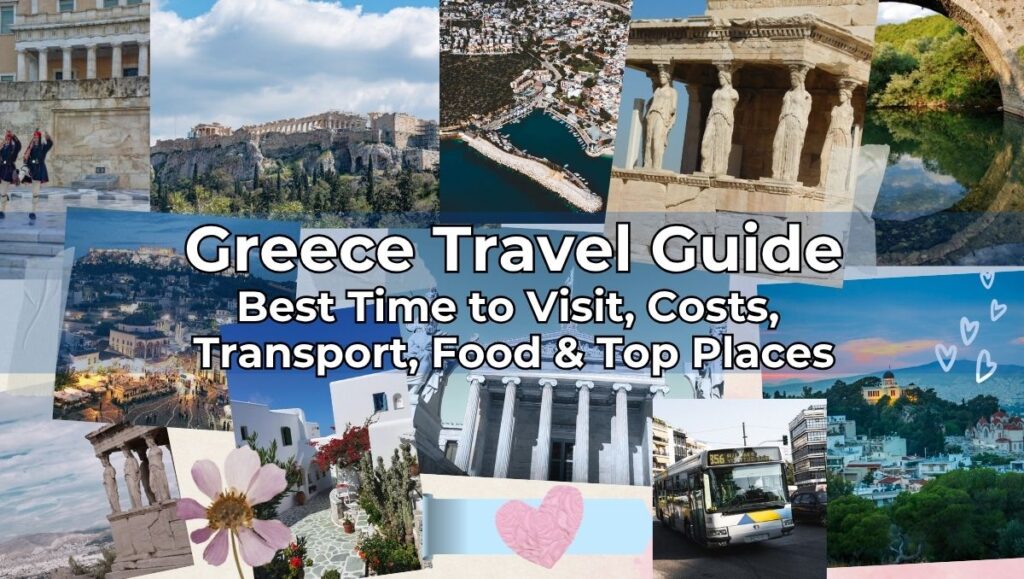
The best places to visit in Greece include;
- Athens for history,
- Santorini for romance and sunsets,
- Mykonos for nightlife,
- Crete for nature and food, and
- Rhodes for medieval charm and beaches.
Each destination offers a different travel experience depending on your interests and budget.
Greece isn’t a one-size-fits-all destination. The mainland and islands offer very different vibes, so choosing where to go depends on whether you’re after culture, beaches, nightlife, nature, or relaxation.
From exploring Athens’ historical landmarks to relaxing on Santorini’s white-sand beaches and discovering Crete’s natural beauty, Greece blends culture, relaxation, and adventure in one unforgettable trip.
Leslie Nics, TravelValueFinder.com | Last updated: April 2026 | Based on first-hand research and on-the-ground travel across Athens, Thessaloniki, and Santorini.
Table of Contents
Why Visit Greece
Greece is the kind of place that works for first-time travelers and repeat visitors alike.
One day you’re wandering through ancient temples, the next you’re swimming in crystal-clear waters or enjoying sunset dinners by the sea. It’s romantic, family-friendly, backpacker-friendly, and surprisingly accessible for budget travelers too.
Why travelers love Greece:
- World-famous historical sites (Acropolis, Delphi, Olympia)
- Iconic islands with beaches and sunsets
- Mediterranean food and café culture
- Friendly locals and relaxed lifestyle
- Great mix of culture, nature, and island hopping
In Greece, even the quiet towns carry centuries of beauty in plain sight.” Leslie Nics, TravelValueFinder.com
Top Destinations in Greece: What Each Is Best For
Athens, Best for History & Culture
- Home to the Acropolis, ancient ruins, and world-class museums
- Great base for first-time visitors to Greece
- Lively food scene and café culture
Santorini, Best for Romance & Views
- Famous for whitewashed villages and dramatic sunsets
- Popular for honeymoons and couples
- More expensive than most Greek destinations
Mykonos, Best for Nightlife & Beaches
- Known for beach clubs, nightlife, and party scene
- Trendy, upscale vibe
- Higher prices during summer peak season
Crete, Best for Nature, Food & Variety
- Greece’s largest island with beaches, mountains, and ancient ruins
- Great for road trips and hiking
- More affordable and less crowded than Santorini/Mykonos
Rhodes, Best for History + Relaxed Island Life
- Medieval Old Town, beaches, and historic villages
- Good mix of culture and beach relaxation
- Often more budget-friendly than Santorini or Mykonos
Greece Destinations Comparison Table
The best place to visit in Greece depends on your travel style-culture, beaches, nightlife, romance, or budget.
| Destination | Best For | Vibe | Budget Level | Ideal For |
| Athens | History, museums, city life | Urban, historic | Budget – Mid | First-time visitors, culture lovers |
| Santorini | Sunsets, romance, views | Scenic, romantic | Mid – Luxury | Couples, honeymoons |
| Mykonos | Nightlife, beach clubs | Lively, upscale | Mid – Luxury | Party travelers, young adults |
| Crete | Nature, food, road trips | Diverse, local | Budget – Mid | Families, long stays, adventurers |
| Rhodes | History + beaches | Relaxed, historic | Budget – Mid | Balanced trips, slower travel |
How to Choose Where to Go in Greece
- Choose Athens for ancient history and museums
- Choose Santorini for romantic scenery and iconic views
- Choose Mykonos for nightlife and social beach scenes
- Choose Crete for nature, food, and diverse landscapes
- Choose Rhodes for medieval towns and relaxed island life
Suggested Itineraries by Travel Style
- First-time Greece (7 – 10 days): Athens + Santorini
- Beach & nightlife: Mykonos + Paros
- Culture + nature: Athens + Crete
- Relaxed island escape: Rhodes or Crete
- Budget-friendly island trip: Athens + Naxos or Crete
Free Trip Planner: Get a Personalized Day-by-Day Itinerary in Seconds
Why Greece Is Perfect for Multi-Destination Trips
One of the best things about Greece is how easy it is to combine destinations.
Many travelers pair Athens with one or two islands, creating a trip that blends culture, food, beaches, and relaxation.
Whether you’re short on time or planning a slow island-hopping adventure, Greece lets you customize your trip based on your travel style and budget.
Greece Travel Costs (Budget vs Luxury)
Travel costs in Greece vary widely by season, destination, and travel style.
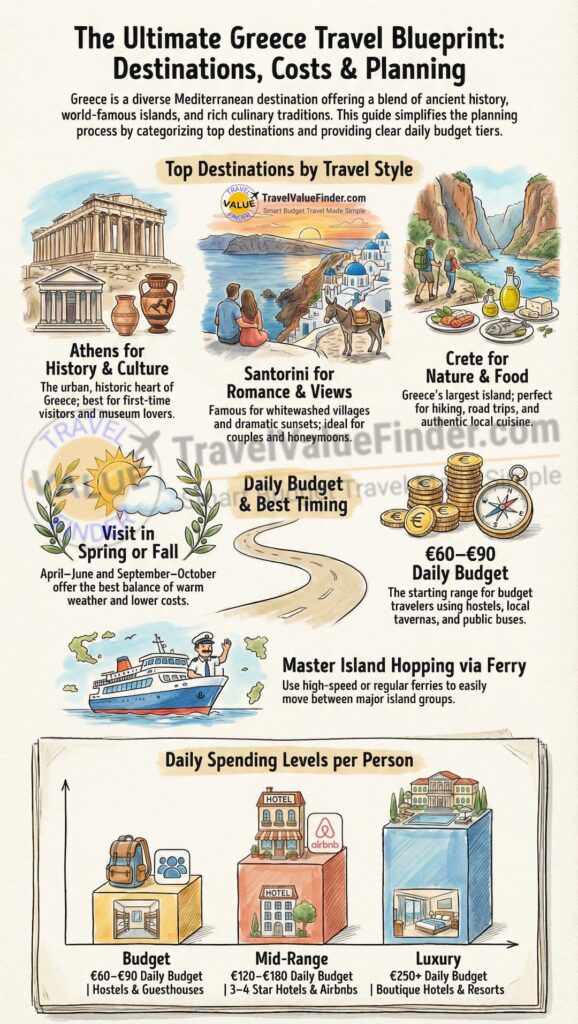
Budget travelers can expect to spend around €60 – €90 per day, mid-range travelers €120 – €180 per day, while luxury trips can exceed €250+ per day, especially on popular islands like Santorini and Mykonos during peak summer.
Greece is one of those rare European destinations where you can travel cheaply or indulge in five-star luxury-sometimes in the same city.
A simple taverna meal can cost under €10, while a cliffside sunset dinner in Santorini can easily reach €100+. Your daily budget will mostly depend on when you visit, where you stay, and how you move around.
What Impacts Travel Costs in Greece?
- Season: July – August is peak season with higher prices; spring and fall are cheaper
- Destination: Santorini and Mykonos are significantly more expensive than Athens, Crete, or Naxos
- Accommodation type: Hostels and family-run guesthouses are far cheaper than boutique hotels and resorts
- Transport style: Ferries and buses cost less than flights and private transfers
- Dining choices: Local tavernas are affordable; fine dining and seaside restaurants cost more
Daily Budget Breakdown (Budget vs Mid-Range vs Luxury)
Greece daily travel costs range from €60/day on a budget to €250+/day for luxury, depending on comfort level and destinations.
| Travel Style | Daily Budget (Per Person) | Accommodation | Food | Transport | Activities |
| Budget | €60 – €90 | Hostels, budget hotels, guesthouses | Bakeries, street food, local tavernas | Buses, ferries, walking | Free sights, low-cost attractions |
| Mid-Range | €120 – €180 | 3 – 4 star hotels, Airbnbs | Sit-down restaurants, casual dining | Trains, ferries, occasional taxis | Museums, guided tours |
| Luxury | €250 | Boutique hotels, resorts, villas | Fine dining, beachfront restaurants | Flights, private transfers, car rentals | Private tours, experiences |
Accommodation Costs in Greece
Accommodation is the biggest cost factor in Greece.
Prices vary dramatically between mainland cities and popular islands. A budget room in Athens may cost €30 – €60 per night, or a budget hotel in Santorini may cost €80 – 150 per night, while a luxury hotel in Santorini can exceed €400 per night in peak season.
Typical Nightly Rates:
- Budget: €20 – €60 (hostels, guesthouses)
- Mid-range: €80 – €150 (3 – 4 star hotels)
- Luxury: €250+ (boutique hotels, resorts, cliffside villas)
Money-saving tip: Stay just outside tourist hotspots and use public transport-prices drop sharply even 1 – 2 neighborhoods away from the center.
Greek Food & Culture
Greek food and culture revolve around fresh Mediterranean ingredients, shared meals, strong coffee culture, and warm hospitality (philoxenia).
Travelers can expect flavorful dishes like gyros, souvlaki, moussaka, and Greek salad, enjoyed slowly in social settings that reflect Greece’s relaxed, people-first lifestyle.
In Greece, eating isn’t just about fueling up-it’s a daily ritual and social experience. Meals are long, conversations flow, and tables are often filled with shared plates.
Pair that with centuries-old traditions, festivals, and a deep sense of community, and you get a culture that feels welcoming from day one.
Must-Try Greek Dishes
- Gyros & Souvlaki: Grilled meat wrapped in pita with tzatziki
- Moussaka: Baked layers of eggplant, minced meat, and béchamel
- Horiatiki (Greek Salad): Tomato, cucumber, olives, feta, olive oil
- Tzatziki: Yogurt, garlic, cucumber dip
- Dolmades: Grape leaves stuffed with rice and herbs
- Fresh Seafood: Grilled octopus, calamari, sea bream
- Baklava: Honey-soaked pastry with nuts
Each region adds its own twist-Crete is known for olive oil and mountain herbs, while island cuisine highlights seafood and simple grilled dishes.
Café Culture & Daily Eating Habits
Cafés are central to Greek life. Locals spend hours chatting over freddo espresso or Greek coffee, and it’s completely normal to linger without rushing.
What to expect:
- Late breakfasts and long coffee breaks
- Lunch between 1 – 3 PM
- Dinner often after 8:30 – 9 PM
- Sharing dishes instead of ordering individually
This slower rhythm is part of what makes traveling in Greece feel relaxed and human.
Drinks & Nightlife Traditions
Greek drinking culture is social and food-focused. Wine, ouzo, raki, and tsipouro are often enjoyed with small plates of meze (snacks).
Popular drinks to try:
- Ouzo: Anise-flavored aperitif
- Raki/Tsipouro: Strong local spirits
- Greek wine: Especially from Santorini and Crete
- Local beers: Widely available
Drinks are rarely rushed-expect slow evenings, shared food, and lively conversation.
Festivals, Traditions & Local Life
Greek culture is deeply tied to religious festivals, local celebrations, music, and dance. You’ll often stumble upon village festivals (panigyria) with live music, dancing, and communal meals.
Cultural highlights:
- Easter celebrations (biggest holiday of the year)
- Summer village festivals with music and dancing
- Name days celebrated like birthdays
- Outdoor gatherings in village squares
These experiences offer some of the most authentic moments of a trip to Greece.
Greek Hospitality (Philoxenia)
Philoxenia, meaning “love of strangers,” is a core part of Greek culture. Visitors are often welcomed with warmth, small gestures, and genuine friendliness-whether that’s a free dessert at a taverna or helpful directions from a local.
What travelers notice:
- Friendly service in family-run tavernas
- Locals eager to help with directions
- Casual conversations with strangers
- A general sense of welcome
Cultural Etiquette Tips for Travelers
- Greet people with a friendly “Yassas” (hello)
- Dress modestly when visiting monasteries and churches
- Tipping is appreciated but not mandatory (5 – 10% is common)
- Don’t rush meals-slow dining is part of the culture
- Accept small gestures of hospitality graciously
How to Eat Like a Local in Greece
- Choose local tavernas away from main tourist streets
- Order several dishes to share
- Ask what’s fresh or homemade
- Visit local markets for snacks and picnic food
- Try regional specialties, not just gyros
Why Greek Food & Culture Are Central to the Travel Experience
Greek cuisine and culture go hand in hand. The food is simple but rich in flavor, the people are welcoming, and the pace of life encourages you to slow down and savor each moment.
Experiencing Greece properly means not just seeing the sights-but sitting at a table, sharing food, and enjoying the rhythm of everyday Greek life.
Transportation in Greece (Flights, Ferries & Car Rentals)
Getting around Greece is easy using a combination of domestic flights, ferries, buses, trains, and car rentals.
Flights are best for long distances and major islands, ferries are ideal for island hopping, and car rentals are perfect for exploring Crete and rural mainland areas at your own pace.
Greece’s geography-mainland + hundreds of islands-means your transport choices can shape both budget and travel time.
Most travelers combine flights to reach islands, ferries to move between them, and public transport or rental cars for local exploration.
Domestic Flights in Greece
Domestic flights are the fastest way to travel long distances in Greece, especially between Athens and major islands like Santorini, Mykonos, Crete, and Rhodes.
They save time compared to long ferry routes, especially if you’re short on time.
When flights make sense:
- Athens ↔ Santorini / Mykonos / Crete / Rhodes
- Travelers with limited time
- Avoiding overnight ferries
Typical Costs & Tips:
- One-way flights: €40 – €120 (cheaper if booked early)
- Book 2 – 8 weeks in advance for best prices
- Early morning flights are usually cheaper
- Budget airlines serve popular routes
Ferries in Greece (Island Hopping)
Ferries are the most popular way to travel between Greek islands and offer a scenic, relaxed way to explore the Aegean. High-speed ferries are faster but more expensive, while regular ferries are slower and more budget-friendly.
Island hopping is one of Greece’s biggest travel highlights-and ferries are part of the experience.
Routes connect major island groups like the Cyclades, Dodecanese, and Crete, with Athens’ Piraeus Port acting as the main hub.
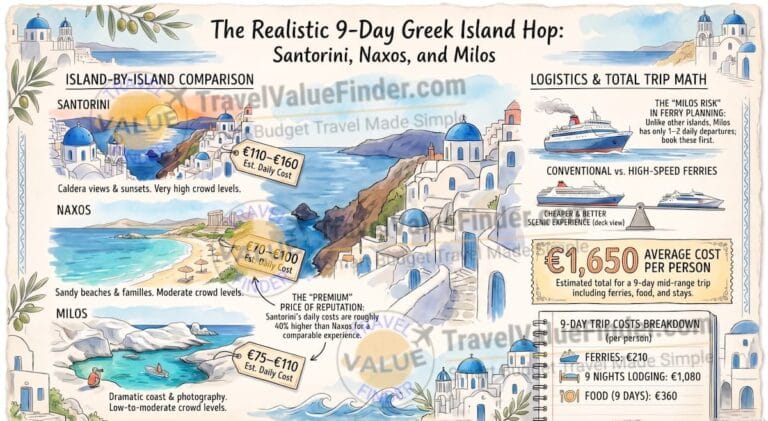
Find more about the Best Greek Islands to Visit: I Spent 9 Days Island-Hopping to Find Out Which Ones Are Actually Worth It.
Ferry Types:
- High-speed ferries: Faster, pricier, less outdoor deck space
- Regular ferries: Slower, cheaper, more scenic
Typical Costs:
- Short routes: €20 – €40
- Longer routes: €40 – €80
Insider Tips:
- Book ferries early in summer
- Choose morning ferries for calmer seas
- Check weather for potential delays
- Bring snacks for longer journeys
Car Rentals in Greece
Renting a car in Greece is ideal for large islands like Crete and for exploring the mainland countryside, beaches, and villages. It gives you flexibility to reach places that buses and tours don’t easily cover.
Best places to rent a car:
- Crete (highly recommended)
- Mainland road trips (Peloponnese, Meteora, Delphi)
- Rural areas and hidden beaches
Typical Costs & Tips:
- Daily rental: €30 – €70
- Automatic cars cost more than manual
- Book early in summer
- International driving permit may be required
- Parking in Athens can be challenging
Public Transport in Greece (Cities & Mainland)
Public transport in Greece is reliable in major cities like Athens and Thessalonik, with metro, buses, and trams making city travel easy and affordable. On islands, buses are the main public transport option.
Transport Examples:
- Athens metro/bus: €1.20 – €1.40 per ride
- Intercity buses: Affordable and extensive
- Trains: Best for Athens ↔ Thessaloniki
When public transport works best:
- Exploring Athens without a car
- Budget travel between cities
- Short trips on popular islands
Transportation Comparison Table
The best way to travel in Greece depends on your route, time, and budget.
| Transport Type | Best For | Speed | Cost | When to Use |
| Domestic Flights | Long distances, major islands | Fast | €€ – €€€ | Short trips, time-saving |
| Ferries | Island hopping, scenic travel | Medium | € – €€ | Exploring multiple islands |
| Car Rental | Flexibility, rural areas | Medium | €€ | Crete, mainland road trips |
| Public Transport | Cities, budget travel | Medium | € | Athens, Thessaloniki |
| Trains | Mainland routes | Medium | € | Athens ↔ Thessaloniki |
How to Choose the Best Transport in Greece
- Use flights for long distances or tight schedules
- Use ferries for island hopping and scenic routes
- Rent a car for Crete and mainland countryside
- Use public transport in Athens and cities
- Combine multiple transport types for flexibility
Common Transportation Mistakes to Avoid
- Underestimating ferry travel time
- Not booking summer ferries early
- Driving in Athens city center (parking is difficult)
- Relying only on taxis on islands (can be expensive)
- Not checking seasonal ferry schedules in winter
Luxury Travel in Greece: What You Get
Luxury travel in Greece means sunset-view suites in Santorini, private island cruises, boutique hotels in Mykonos, and vineyard dining experiences. You’re paying for views, exclusivity, and convenience-often worth it for honeymooners and special occasions.
Best Time to Visit Greece
The best time to visit Greece is during spring (April – June) and fall (September – October), when the weather is warm, crowds are smaller, and travel costs are lower than peak summer.
These shoulder seasons are ideal for sightseeing, island hopping, and enjoying Greece’s beaches without the intense heat or peak-season prices.
Greece is a year-round destination, but the experience changes dramatically by season. Your ideal time to visit depends on whether you’re coming for beaches, island hopping, cultural sightseeing, festivals, or budget travel.
Greece by Season: What to Expect
Spring (April – June) – Best Overall Time to Visit
Spring is one of the best times to visit Greece thanks to pleasant temperatures, blooming landscapes, and fewer tourists. It’s perfect for exploring Athens, hiking in Crete, and island hopping before the summer crowds arrive.
Why visit in spring:
- Comfortable weather for walking and sightseeing
- Cheaper flights and hotels than summer
- Green landscapes and wildflowers
- Great balance of beaches + culture
Best for: First-time visitors, city sightseeing, photography, active travelers
Summer (July – August) – Peak Season for Beaches & Islands
Summer is peak travel season in Greece, especially for islands like Santorini, Mykonos, and Paros. Expect hot weather, vibrant nightlife, and the most ferry connections-but also higher prices and larger crowds.
Why visit in summer:
- Best beach weather and swimming conditions
- Lively festivals and nightlife
- Full ferry schedules between islands
Things to consider:
- Hot temperatures (30°C+ in many areas)
- Higher accommodation prices
- Popular attractions get crowded
Best for: Beach lovers, party travelers, island hopping
Fall (September – October) – Best for Relaxed Travel
Fall is a sweet spot for visiting Greece. The sea is still warm, summer crowds thin out, and prices begin to drop. It’s ideal for travelers who want a relaxed island experience with fewer tourists.
Why visit in fall:
- Warm water for swimming
- Pleasant temperatures for walking
- Lower hotel and flight prices than summer
- Less crowded landmarks and beaches
Best for: Couples, slow travelers, budget-conscious travelers
Winter (November – March) – Best for Budget & Culture
Winter is the low season in Greece, making it the cheapest time to visit, especially for cities like Athens and Thessaloniki. While many island resorts close, cultural travel is still enjoyable.
Why visit in winter:
- Lowest prices on flights and hotels
- Fewer tourists at major historical sites
- Great time for museums, food, and local culture
Things to consider:
- Some islands are very quiet
- Ferry schedules are reduced
- Beach weather is not ideal
Best for: Budget travelers, culture lovers, city breaks
Weather Overview in Greece
Greece has a Mediterranean climate with hot, dry summers and mild winters. Summer temperatures often exceed 30°C, while spring and fall offer more comfortable conditions for exploring cities and ruins.
- Spring: 18 – 25°C (comfortable for walking)
- Summer: 28 – 35°C (hot, beach weather)
- Fall: 20 – 28°C (warm but less intense)
- Winter: 10 – 16°C (cooler, best for city sightseeing)
Tips for Choosing the Right Time to Visit Greece
- Visit in May or September for the best balance of weather and crowd levels
- Book summer travel early to secure better prices
- Choose less touristy islands in peak season to avoid crowds
- Visit Athens and major ruins early morning in summer
- Travel in shoulder season for better hotel deals and ferry availability
Why Greece Belongs on Your Bucket List
Greece offers a perfect mix of history, island beauty, food, and laid-back Mediterranean lifestyle.
Whether you’re exploring ancient ruins in Athens, watching sunsets in Santorini, partying in Mykonos, or relaxing on Crete’s beaches, Greece delivers unforgettable travel experiences for every type of traveler.
1. Is Greece expensive to visit?
Greece can be affordable or expensive depending on where and how you travel. Mainland cities and islands like Crete are budget-friendly, while Santorini and Mykonos are among the most expensive. Budget travelers can expect to spend around €50 – €90 per day, while mid-range travelers spend €120 – €200 per day
2. What is the best month to visit Greece?
The best months to visit Greece are May, June, September, and October, when the weather is warm, crowds are smaller, and prices are lower than peak summer. July and August are the hottest and busiest months, especially on popular islands.
3. How many days do you need in Greece?
You need at least 7 – 10 days in Greece to see Athens and one island comfortably. For a more relaxed trip that includes multiple islands, 10 – 14 days is ideal. Short trips under 5 days are best focused on Athens alone.
4. Do I need a visa to travel to Greece?
Greece is part of the Schengen Area. Travelers from the EU, UK, US, Canada, Australia, and many other countries can visit Greece visa-free for up to 90 days within a 180-day period. Always check entry requirements based on your passport before traveling.
5. Is Greece safe for tourists?
Yes, Greece is generally very safe for tourists. Violent crime is rare, and most visits are trouble-free. The most common issues are petty theft in busy tourist areas and public transport, especially in Athens. Basic travel precautions are usually enough.
6. Is it better to visit Athens or the Greek islands?
Athens is best for history, museums, and ancient landmarks, while the Greek islands are better for beaches, scenery, and relaxation. Many travelers combine both, starting in Athens and then visiting one or two islands for a balanced Greece itinerary.
7. What is the cheapest way to travel around Greece?
The cheapest way to travel around Greece is by using public transport in cities, buses for mainland travel, and ferries for island hopping. Booking ferries and flights in advance and traveling in shoulder season can significantly reduce transportation costs.
8. What food should I try in Greece?
Must-try Greek foods include gyros, souvlaki, moussaka, Greek salad, tzatziki, fresh seafood, and baklava. Each region has its own specialties, and eating at local tavernas offers both better prices and more authentic flavors.
9. Can you visit Greece on a budget?
Yes, Greece is very doable on a budget if you avoid peak season and expensive islands. Staying in budget hotels or guesthouses, using public transport, and eating at local tavernas can keep daily costs under €70 – €100 per day in many destinations.
10. What should I pack for a trip to Greece?
Lightweight, breathable clothing
Comfortable walking shoes
Swimwear and quick-dry towel
Sunscreen and hat
Modest clothing for churches and monasteries
Power adapter (Type C/F plugs)