Travel Value Finder


What is the best time to visit Rome?
The best time to visit Rome is April – May and September – October, when the weather is mild, crowds are manageable, and travel costs are more reasonable.
What is the cheapest time to visit Rome?
The cheapest time to visit Rome is January through February, excluding holidays, when flights and hotels are at their lowest prices.
Is summer a good time to visit Rome?
Summer can be challenging due to heat and crowds, but it works for travelers who plan early mornings, late evenings, and indoor attractions.
Choosing the best time to visit Rome can shape your entire travel experience. Weather, crowd levels, prices, and even how enjoyable sightseeing feels can change dramatically depending on when you go.
For first-time visitors, timing matters just as much as choosing things to do in Rome.
Leslie Nics, TravelValueFinder.com | Last updated: April 2026 | Based on first-hand research and on-the-ground travel across Rome, Milan, Florence, Venice, and Naples
Table of Contents
Best Time to Visit Rome: A First-Time Visitor’s Complete Guide
This guide to the best time to visit Rome explains each season clearly, helps you match timing to your travel style, and shows how to avoid common planning mistakes.
It is written as a dedicated page supporting the Rome Travel Guide.
When is the best time to visit Rome
This table summarizes the best time to visit Rome by season.
| Season | Weather | Crowds | Costs | Best For |
|---|---|---|---|---|
| Spring (Mar – May) | Mild, pleasant | Medium – High | Medium | First-time visitors, sightseeing |
| Summer (Jun – Aug) | Hot | Very High | High | Festivals, evening travel |
| Fall (Sep – Oct) | Comfortable | Medium | Medium | Food, culture, walking |
| Winter (Nov – Feb) | Cool | Low | Low | Budget travel, museums |
Why Timing Matters When Visiting Rome
Rome is a city best explored on foot, which means weather and crowd levels directly affect how enjoyable your trip feels.
Choosing the best time to visit Rome can mean the difference between relaxed sightseeing and exhausting days navigating heat and long lines.
First-time visitors often underestimate:
- How hot Rome becomes in summer
- How busy major attractions are during peak months
- How pleasant Rome feels during shoulder season
Visiting Rome in Spring (March to May)
Spring is widely considered the best time to visit Rome for first-time travelers.
What Spring in Rome Is Like:
- Comfortable daytime temperatures
- Flowers and greenery in parks and gardens
- Increasing daylight hours
Pros of Visiting Rome in Spring:
- Ideal weather for walking
- Lively atmosphere without peak summer intensity
- Excellent conditions for sightseeing
Cons to Consider:
- Crowds increase around Easter
- Prices rise toward May
Best for: First-time visitors, photographers, culture-focused travelers
Visiting Rome in Summer (June to August)
Summer is Rome’s busiest and hottest season.
What Summer in Rome Is Like:
- Temperatures often exceed 30°C (86°F)
- Long daylight hours
- Peak tourist crowds
Pros of Visiting Rome in Summer:
- Vibrant nightlife
- Evening events and festivals
- Extended attraction hours
Cons to Consider:
- Extreme heat during midday
- Long lines at major attractions
- Higher hotel and flight prices
Tips for summer visitors: – Sightsee early morning and late evening – Take midday breaks – Prioritize museums and churches during peak heat
Visiting Rome in Fall (September to October)
Fall rivals spring as the best time to visit Rome, especially for travelers who love exploring local culture and enjoying seasonal cuisine. During autumn, the city offers warm but comfortable temperatures, smaller crowds compared to the summer months, and vibrant seasonal food festivals that showcase Italy’s culinary traditions.
Pros of Visiting Rome in Fall:
- Excellent walking weather
- Fewer crowds
- Relaxed pace
Cons to Consider:
- Shorter daylight hours in October
Best for: Couples, food lovers, slow travelers
Visiting Rome in Winter (November to February)
Winter is the quietest season in Rome, making it ideal for travelers seeking fewer crowds and a more relaxed experience. Although temperatures are cooler, this period offers lower hotel prices, shorter lines at attractions, and a chance to explore the city’s iconic landmarks at a slower, more enjoyable pace.
Pros of Visiting Rome in Winter:
- Lower prices on hotels and flights
- Minimal crowds at major attractions
- Excellent museum experiences
Cons to Consider:
- Shorter days
- Cooler evenings
Best for: Budget travelers, museum lovers, repeat visitors
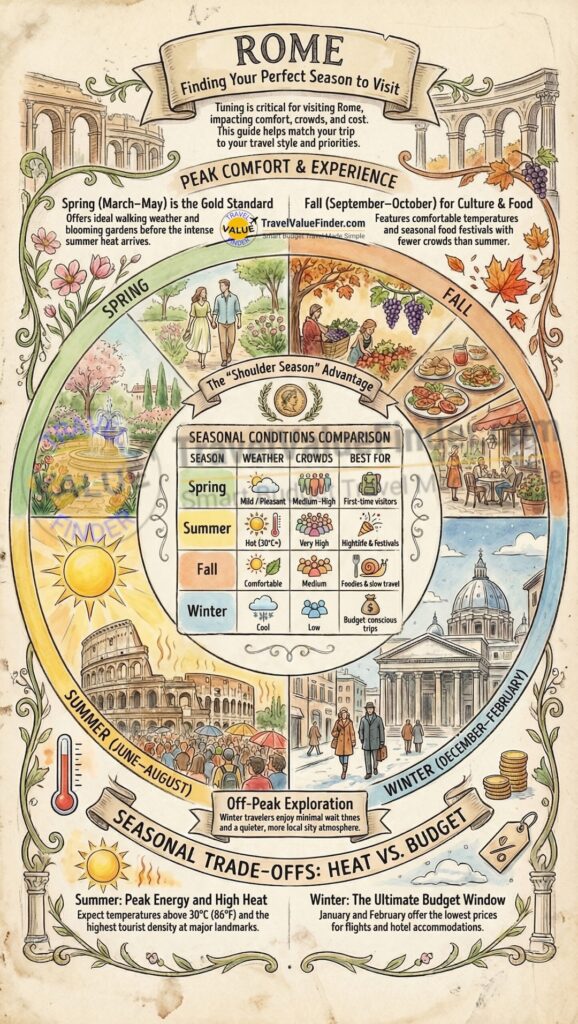
Best Time to Visit Rome Based on Travel Style
The best time to visit Rome can vary depending on your travel goals and priorities.
- First-time visitors will enjoy April to May or September to October, when the weather is pleasant and sightseeing is comfortable.
- Budget travelers may prefer January, February, or late November for lower hotel rates and fewer tourists.
- For those seeking a quieter experience, early winter months like January and early February offer peaceful streets and shorter lines at attractions.
Food and culture enthusiasts will find April and September to October ideal, with seasonal festivals, outdoor dining, and local culinary events at their peak.
Best Time to Visit Rome for First-Time Visitors:
- April – May
- September – October
Best Time to Visit Rome on a Budget:
- January – February
- Late November
Best Time to Visit Rome for Fewer Crowds:
- January
- Early February
Best Time to Visit Rome for Food & Culture:
- September – October
- April
Rome Weather by Month (Overview Table)
| Month | Avg High | Avg Low | Travel Notes |
|---|---|---|---|
| Jan | 12°C | 4°C | Coldest, lowest prices |
| Feb | 13°C | 5°C | Quiet, good value |
| Mar | 16°C | 7°C | Spring begins |
| Apr | 19°C | 10°C | Ideal sightseeing |
| May | 24°C | 14°C | Peak spring travel |
| Jun | 28°C | 18°C | Start of summer crowds |
| Jul | 31°C | 21°C | Very hot |
| Aug | 31°C | 22°C | Hot, some closures |
| Sep | 27°C | 18°C | Excellent conditions |
| Oct | 22°C | 14°C | Comfortable, fewer crowds |
| Nov | 17°C | 9°C | Cooler, good deals |
| Dec | 13°C | 6°C | Festive, quieter |
When to Avoid Visiting Rome
While there is no bad time to visit Rome, some periods are more challenging:
- August midday heat
- Easter week crowds
- Major holidays without advance planning
Planning Tips Based on the Best Time to Visit Rome
- Book spring and fall trips early
- Reserve Vatican and Colosseum tickets in advance
- Adjust daily schedules based on season
- Choose the right neighborhoods and where to stay in Rome for convenience
- Get to know transportation in Rome to get around Rome easily
Choosing the Best Time to Visit Rome
Knowing the best time to visit Rome helps first-time travelers plan their trip with confidence and experience the city at its finest.
- Spring and fall are ideal for most visitors, offering pleasant weather, manageable crowds, and good value for accommodations.
- Summer can be hot and busy, while winter brings fewer tourists, lower prices, and a more peaceful atmosphere-perfect for budget-conscious travelers or those who prefer quieter streets.
By choosing the right season, you can make the most of Rome’s iconic landmarks, charming piazzas, and vibrant local life.
Find out more about Rome or Florence: Which Italian City Is Better for First-Time Visitors?
Or you may be interested to find out on Spain vs Italy: Which Country Is Better for First-Time Visitors?
Best Time to Visit Rome FAQs
1. What is the best time to visit Rome?
The best time to visit Rome is spring (April – June) or fall (September – October). Mild weather, smaller crowds, and pleasant conditions make sightseeing, outdoor dining, and exploring historic streets more enjoyable for first-time visitors.
2. Is spring a good time to visit Rome?
Yes, spring is one of the best times to visit Rome. Temperatures are comfortable, flowers bloom across the city, and major attractions are less crowded than in summer, perfect for walking tours and sightseeing.
3. Why is fall ideal for visiting Rome?
Fall, especially September and October, offers cooler temperatures and fewer tourists than summer. It’s a great time for first-time visitors to explore landmarks, piazzas, and cafes without battling large crowds.
4. Can I visit Rome in winter?
Yes, winter is quieter and more budget-friendly. Attractions remain open, streets are peaceful, and hotel rates are lower, making it ideal for travelers who enjoy a relaxed, off-season experience.
5. Should I avoid summer in Rome?
Summer can be very hot and crowded, especially in July and August. Long lines at attractions and high hotel prices make spring or fall a better choice for most visitors.
6. How do crowds affect the best time to visit Rome?
Crowds peak in summer, which can slow sightseeing and make walking tours less enjoyable. Visiting in spring or fall allows for easier access to attractions and a more relaxed experience.
7. How does weather impact the best time to visit Rome?
Mild temperatures in spring and fall make walking and sightseeing comfortable. Summer heat can be exhausting, and winter is cool but manageable, especially for indoor attractions and quiet exploration.
8. When is the cheapest time to visit Rome?
Winter offers the lowest hotel rates and fewer tourists. It’s the best season for budget-conscious travelers who don’t mind cooler temperatures and shorter daylight hours.
9. How do seasonal factors affect travel plans in Rome?
Seasonal changes impact weather, crowds, and costs. Spring and fall balance comfort and value, summer brings high prices and crowds, and winter offers lower costs and a quieter city.
10. What’s the ultimate recommendation for the best time to visit Rome?
Spring or fall is ideal for first-time visitors, combining pleasant weather, manageable crowds, and good value. Timing your visit during these seasons ensures a memorable, comfortable, and stress-free Rome travel experience.