Travel Value Finder


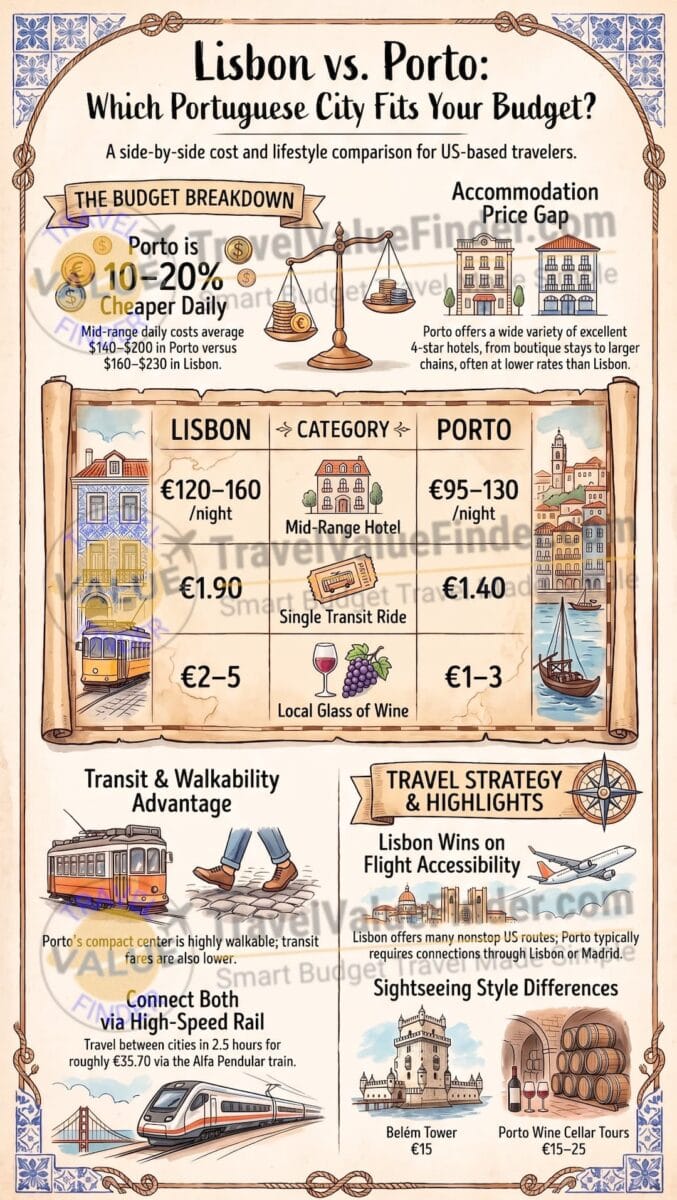
Lisbon or Porto, which is cheaper? Porto runs about 15 to 20 percent less per day than Lisbon. Lisbon still wins on flight choice and sightseeing variety, which can close that gap for many US travelers.
Both cities remain good value next to the rest of Western Europe. The choice usually comes down to flights and pace, not just price.
Leslie Nics, TravelValueFinder.com | Last updated: September 2026 | Based on official Portuguese transit, heritage, and rail pricing
This article is for general informational purposes only and is not financial, legal, or travel advisory advice. Prices are estimates and can change. Confirm current costs before booking.
Table of Contents
Porto Costs Less, But Not By As Much As You Think
Both cities are inexpensive next to Paris or London. The real gap between them shows up mainly in hotels, not in food or sightseeing.
| Category | Lisbon | Porto |
| Daily cost, budget | $70 to $95 | $60 to $85 |
| Daily cost, mid range | $165 to $225 | $140 to $195 |
| Best for | City variety, day trips, flights | Wine culture, walkability, lower prices |
| Direct US flights | Yes, several cities | Newark and JFK only |
If cost decides your trip, Porto is the answer. If flight options and sightseeing variety matter more, Lisbon earns its slightly higher price.
Neither city ranks as expensive by Western European standards. The gap between them matters more to a tight budget than to a flexible one.
A Full Week, Side by Side
Here is a 7 night, per person estimate for one traveler, hotel split two ways, excluding international flights.
| Travel Style | Lisbon, 7 Nights | Porto, 7 Nights |
| Budget | $490 to $665 | $420 to $595 |
| Mid range | $810 to $1,050 | $635 to $855 |
Where the Savings Actually Come From
Lisbon is bigger, hillier, and carries more of a capital city premium on hotels and tourist zone restaurants.
Porto is smaller, which means less room for prices to spread between the tourist center and the rest of the city.
Neither city’s higher cost of living reaches most visitors directly. What you feel as a traveler is the hotel rate, not the rent Lisbon locals actually pay.
Porto is small enough that you are rarely more than a few blocks from a normal, local price, even right in the center.” Leslie Nics, Founder and Lead Travel Writer, TravelValueFinder.com
Hotels: The Line Item That Decides Everything
Accommodation drives most of the total gap between these two cities.
| Room Type | Lisbon, per Night | Porto, per Night |
| Hostel or budget | $28 to $50 | $22 to $44 |
| Mid range hotel | $135 to $180 | $105 to $145 |
| Luxury hotel | $280 and up | $225 and up |
See where to stay in Lisbon and cheap hotels in Porto for neighborhood picks.
Staying a short walk from the center in either city usually cuts the nightly rate without adding real travel time.
Season Swings Both Cities’ Prices
Peak summer pushes hotel rates up in both cities, though Lisbon’s swing is generally sharper.
| Season | Months | Effect on Hotel Rates |
| Peak | June through August | Up to 30 percent higher in Lisbon, 20 percent in Porto |
| Shoulder | April, May, September, October | Best value in both cities |
| Off season | November through March | Lowest rates, some tours reduce frequency |
Getting Around Both Cities
Both cities use rechargeable transit cards rather than paper tickets.
| Transit Item | Lisbon (Navegante) | Porto (Andante) |
| Card cost | $0.55 | $0.65 |
| Single ride | $2.10 | $1.55 |
| Day pass | $8.00 | $5.70 |
Porto’s compact historic core means many visitors barely use transit at all. Lisbon’s hills and trams see far more everyday use.
Walking covers most of Porto’s Ribeira and Aliados districts. Lisbon visitors usually lean on the Metro or a funicular for Alfama and Bairro Alto’s steeper streets.
Food, Coffee, and Wine
Meal prices are close between the two cities. The real difference shows up in wine.
| Item | Lisbon | Porto |
| Casual lunch | $11 to $16 | $11 to $16 |
| Mid range dinner | $22 to $33 | $20 to $31 |
| Local beer | $2.75 to $3.30 | $2.20 to $2.75 |
| Glass of house wine | $2.20 to $5.50 | $1.10 to $3.30 |
See our Lisbon cheap eats guide for specific restaurant picks.
Attractions Worth Paying For
Lisbon’s headline sites cost more but cover more ground. Porto’s top draw works differently.
| Attraction | City | 2026 Price |
| Belem Tower | Lisbon | $16, standard adult |
| Jeronimos Monastery cloister | Lisbon | About $20, church is free |
| Livraria Lello bookstore | Porto | $11, redeemable against a book |
Both Belem Tower and Jeronimos Monastery offer free entry on Sunday mornings before 2pm.
Livraria Lello’s entry fee applies against a book purchase, so most visitors who planned to buy one anyway pay nothing extra to browse.
A Day Trip From Each City: Sintra or the Douro Valley
Both cities put a genuinely different day trip within easy reach, and the price gap between them is real.
| Day Trip | Self Guided | Organized Tour |
| Sintra from Lisbon | About $55 to $65 per person | $75 to $110 per person |
| Douro Valley from Porto | About $70 to $90 per person | $95 to $145 per person |
A self guided Sintra trip covers the train, a Pena Palace ticket, Quinta da Regaleira, and lunch. A Douro day covers the regional train, one winery tasting, and lunch.
Guided tours cost more but remove the planning, especially useful for Douro since wineries sit far apart.
Sintra gets crowded fast in peak season, so an early train and a pre booked timed ticket both matter. Douro rewards a slower pace, so build in a full day rather than a rushed half day.
A Note on Longer Stays
Some travelers researching this comparison are weighing a longer stay, not just a one week visit.
For a month or more, Porto’s lower accommodation cost compounds quickly, while Lisbon’s wider flight network still matters for the arrival and departure days.
The Train Between Lisbon and Porto
CP, Portugal’s state rail operator, runs frequent high speed service between the two cities.
The Alfa Pendular covers the trip in as little as 2 hours 35 minutes, with second class fares around $39 one way. The slower Intercidades service starts around $31.
Trains run roughly every hour, which makes a two city trip, or even a rushed day trip between them, genuinely realistic.
Flights From the US: Which City Costs Less to Reach
Lisbon’s Humberto Delgado Airport is Portugal’s main gateway, with nonstop flights from several US cities.
Porto’s airport only has nonstop US service from Newark and JFK. Travelers flying from elsewhere usually connect through Lisbon or another European hub.
Our guide to finding cheap flights covers booking strategy that applies to both cities.
If Porto is your main destination, compare a direct Porto fare against flying into Lisbon and taking the train north.
Is Portugal Safe for First Time Visitors?
Portugal holds a Level 1 advisory from the US State Department, its lowest risk category.
Pickpocketing in crowded tourist spots is the main practical concern, most notably on Lisbon’s Tram 28 and in Porto’s busiest historic streets.
Keeping bags zipped and in front on crowded trams and buses covers most of the practical risk in either city.
People Also Ask
Is Lisbon or Porto cheaper to visit?
Porto is cheaper overall, typically 15 to 20 percent less per day, mainly through lower hotel rates.
How many days should I spend in each city?
Most first time visitors spend 3 to 4 days in Lisbon and 2 to 3 days in Porto.
Can I do a day trip to Porto from Lisbon?
Technically yes by train, but it makes for a very long day. An overnight stay works better for most travelers.
Which city has better nightlife?
Lisbon has the bigger club scene and more late night options. Porto offers a smaller, more social bar and fado scene.
If You Only Have One City, Start Here
Start with Lisbon if you want the most nonstop US flights, bigger city sightseeing, and easy day trips to Sintra and Cascais.
Start with Porto if cost is your top priority, or you are drawn to port wine culture and a smaller, walkable center.
Do both if you have 5 or more days. The 2.5 hour train makes a two city itinerary genuinely practical.
How to Spend Less in Either City
A short list of changes that make a real difference in either city.
- Load a Navegante or Andante card once instead of buying single tickets throughout your stay.
- Eat the prato do dia lunch special rather than ordering a la carte at dinner prices.
- Visit Jeronimos Monastery on a Sunday morning for free church entry.
- Book a small, independent Douro producer directly instead of a bundled tour package.
- Walk or use funiculars instead of taxis for short hilly hops in Lisbon’s Alfama and Bairro Alto.
- Use a card with no foreign transaction fee to avoid losing 2 to 3 percent on every purchase.
Frequently Asked Questions
How much does a week in Lisbon cost?
A mid range, 7 night trip for one person typically runs $810 to $1,050, excluding flights.
How much does a week in Porto cost?
A mid range, 7 night trip for one person typically runs $635 to $855, excluding flights.
Is Portugal safe to visit right now?
Yes. Portugal holds a Level 1 advisory, the lowest category, from the US State Department.
What is the best way to travel between Lisbon and Porto?
High speed train. CP’s Alfa Pendular runs roughly hourly and covers the route in under 3 hours.
Do I need a visa to visit Lisbon or Porto?
No. US citizens can enter Portugal visa free for stays up to 90 days within a 180 day period.
Which city is better for first time visitors?
Lisbon usually works best as a first stop thanks to its size and easier flight connections.
Is Porto worth visiting if I only have a few days?
Yes. Porto’s compact center means a short stay still covers the main sights without feeling rushed.
Are prices in Portugal rising?
Yes, gradually. Both cities cost more than five years ago, though both remain cheaper than most of Western Europe.
Plan the Rest of Your Portugal Trip
- Lisbon on a Budget for a full money saving breakdown.
- Cheap Things to Do in Lisbon Under 10 Euros for low cost sightseeing.
- How Expensive Is Portugal for a countrywide budget view.
- Check out the Travel Cost guide to more destinations.
- Our AI Trip Planner builds a day by day itinerary with costs included.
Sources
- Metropolitano de Lisboa, official Lisbon Metro and Carris fares.
- Metro do Porto, official Andante fare information.
- Direcao Geral do Patrimonio Cultural, official Belem Tower ticketing.
- Livraria Lello, official ticket pricing FAQ.
- CP Comboios de Portugal, official Alfa Pendular train information.
- US Department of State, Portugal Travel Advisory, official safety guidance.
Disclaimer: Prices in this article are 2026 research based estimates. They change by season, exact listing, and exchange rate. Confirm current pricing before finalizing your trip budget.