Travel Value Finder

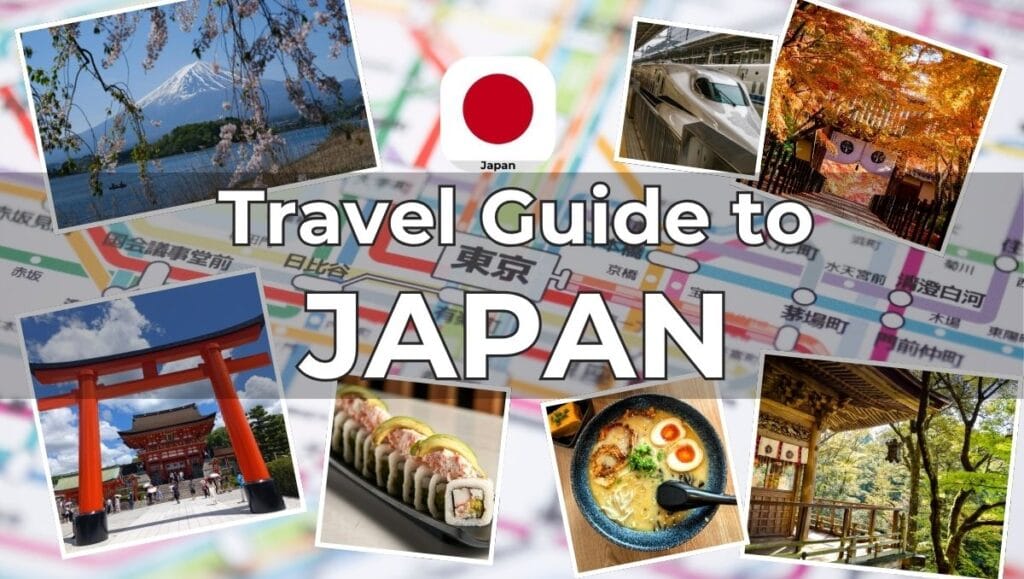
Why Visit Japan? Japan is ranked #1 in the world as a travel destination for 2026. It earns 88 out of 100 points across safety, value, fun, and quality. It offers a unique blend of ancient culture, world-class food, efficient transport, and stunning natural landscapes.
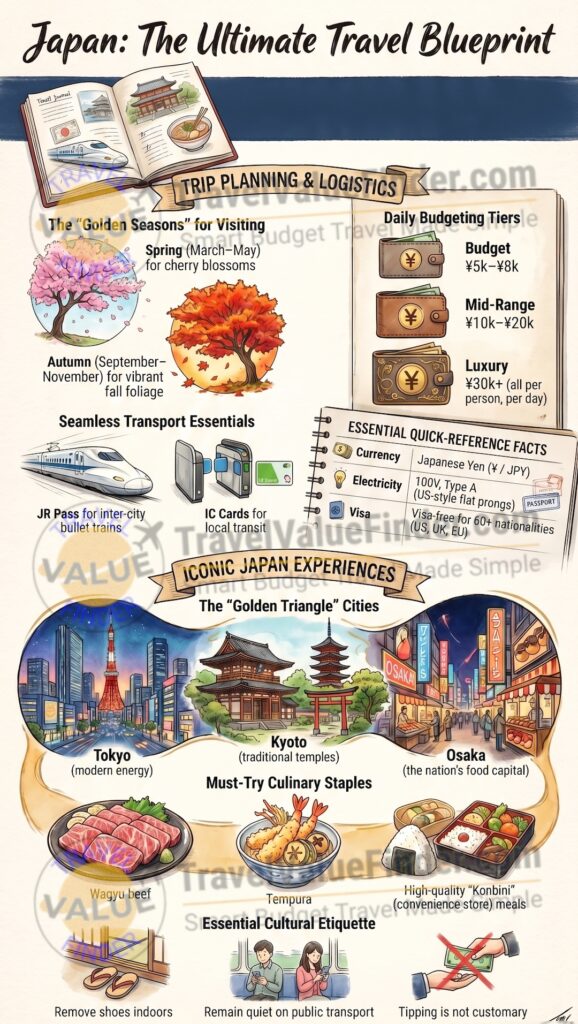
| Category | Details |
| Capital | Tokyo |
| Language | Japanese (English widely understood in tourist areas) |
| Currency | Japanese Yen (¥ / JPY) |
| Time Zone | JST (UTC+9) – No daylight saving |
| Electricity | 100V, Type A plugs (US-style flat prongs) |
| Best Time to Visit | Spring (Mar – May) & Autumn (Sep – Nov) |
| Visa | Visa-free for 60+ nationalities including US, UK, EU |
| Budget (daily) | ¥5,000 – ¥15,000 mid-range; ¥20,000+ luxury |
| Getting Around | JR Pass, IC Card, Shinkansen bullet train |
| Emergency Number | Police: 110 | Ambulance & Fire: 119 |
From serene cherry blossom parks to rejuvenating volcanic hot springs and majestic snow-capped mountains, discover it all with this comprehensive Japan Travel Guide.
Leslie Nics, TravelValueFinder.com | Last updated: September 2026
Table of Contents
Why Japan Should Be Your Next Travel Destination
Whether you’re a first-time visitor trying to figure out where to start, or a seasoned traveler looking for hidden gems, this Japan travel guide covers everything you need to know.
We’re talking top destinations, food, transport, budgeting, visa info, cultural tips, and more.
Best Time to Visit Japan
Japan is a four-season destination, and each season brings its own magic. That said, spring and autumn consistently steal the spotlight – and for good reason.
| Season | Months | Highlights | Crowds |
| Spring | March – May | Cherry blossoms (sakura), mild weather, festivals | High. Book early |
| Summer | June – August | Vibrant festivals, beaches in Okinawa, lush mountains | High. Hot & humid |
| Autumn | Sep – November | Fall foliage, comfortable temps, harvest food culture | High. Book early |
| Winter | Dec – February | Skiing in Hokkaido, snow festivals, fewer crowds, onsen season | Low. Best value |
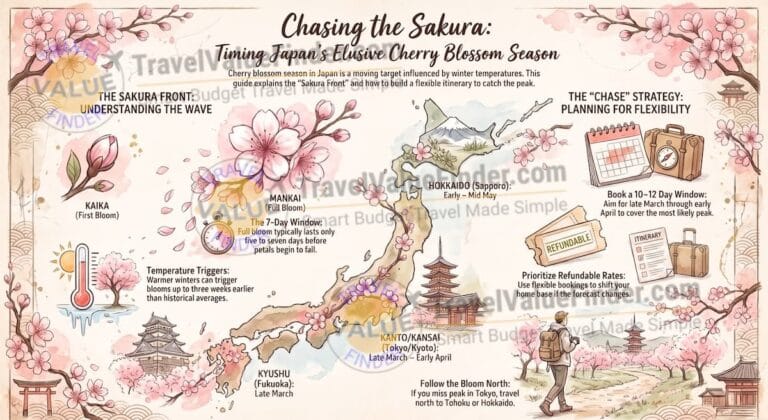
Pro tip: If you’re visiting during cherry blossom season (late March to early April), book your accommodation at least 3 – 6 months in advance. It sells out fast!
Use our hotel search tool to compare prices and lock in the best deal.
| Best Time to Visit Japan: The best time to visit Japan is spring (March to May) for cherry blossoms, or autumn (September to November) for fall foliage and comfortable temperatures. Winter offers the best value with fewer crowds, especially for skiing in Hokkaido. |
Top Destinations in Japan You Need to Visit
This Japan travel guide introduces the top destinations you shouldn’t miss, including;
- Tokyo,
- Osaka,
- Kyoto,
- Hiroshima,
- Hokkaido,
- Nara,
- Hakone, and
- Mount Fuji.
Each city offers a unique blend of culture, history, and natural beauty-explore the highlights below to find the best places for your Japan itinerary.
1. Tokyo: The City That Has Everything
Tokyo is Japan’s capital and home to over 13 million people, yet it manages to feel strangely organized, clean, and easy to navigate.
It’s a city of contrasts. Peaceful shrines tucked between skyscrapers, ramen shops next to Michelin-starred restaurants, and neighborhoods that each feel like their own small town.
Must-visit spots in Tokyo include:
- Shibuya Crossing: the world’s busiest pedestrian crossing and an iconic photo spot
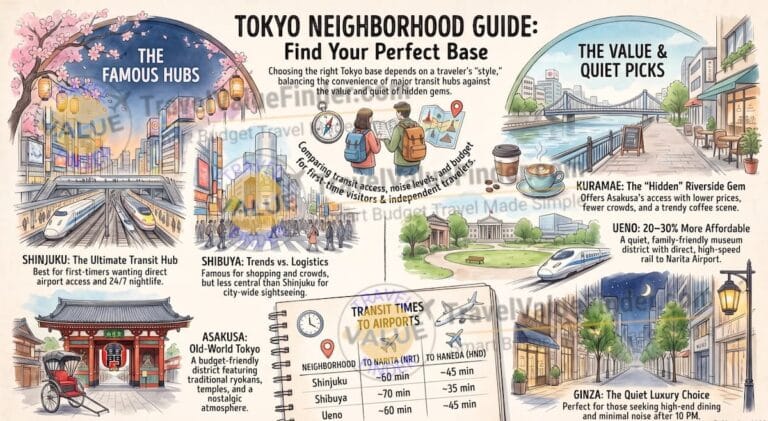
- Senso-ji Temple in Asakusa: Tokyo’s oldest and most beloved Buddhist temple
- Akihabara: the global hub of anime, manga, and electronics
- Shinjuku: great for nightlife, shopping, and the famous Golden Gai alley
- Harajuku: Takeshita Street for quirky fashion and the serene Meiji Shrine nearby
2. Kyoto: The Soul of Traditional Japan
If Tokyo is Japan’s heartbeat, Kyoto is its soul. The former imperial capital is home to over 1,600 Buddhist temples, 400 Shinto shrines, and some of the most beautifully preserved traditional architecture in all of Asia.
Top things to do in Kyoto:
- Walk through the famous Arashiyama Bamboo Grove
- Visit Fushimi Inari-taisha: thousands of orange torii gates winding up a mountain
- Stroll through Gion district and spot real geisha (called geiko)
- Explore Kinkaku-ji, the stunning Golden Pavilion
- Experience a traditional tea ceremony in one of the local teahouses
3. Osaka: Japan’s Food Capital
Osaka is loud, fun, friendly, and absolutely obsessed with food. Locals have a saying: “kuidaore”, eat until you drop. And trust me, you will want to.
Osaka highlights:
- Dotonbori: the colorful entertainment district with incredible street food
- Takoyaki (octopus balls) and okonomiyaki (savory pancakes): must-eat street foods
- Osaka Castle: a magnificent 16th-century landmark surrounded by parkland
- Universal Studios Japan: especially if you’re a Harry Potter or Nintendo fan
- Namba and Shinsaibashi for shopping, bars, and izakayas (Japanese pubs)
4. Hiroshima & Miyajima: Powerful History and Natural Beauty
Hiroshima is a city of remarkable resilience and profound peace. The Peace Memorial Museum and the A-Bomb Dome are moving, sobering experiences that every traveler should have.
Just a short ferry ride away, Miyajima Island is home to the iconic floating torii gate of Itsukushima Shrine; one of Japan’s most photographed images.
5. Hokkaido: Nature, Snow, and Seafood
Japan’s northernmost island is a completely different world. Think wide-open lavender fields in summer, world-class skiing in winter, and some of the freshest seafood you’ll ever taste.
Sapporo, the capital, hosts the famous Snow Festival every February. The natural beauty of Hokkaido can be enjoyed year-round, but it’s particularly spectacular in both summer and winter.
6. Nara: Deer, Temples & Ancient History
Just 45 minutes from Kyoto, Nara is famous for its freely roaming sacred deer, and the fact that you can bow to them and they bow back!
The city is home to Todai-ji, one of Japan’s most impressive temples, housing a massive bronze Buddha statue.
7. Hakone & Mount Fuji: Iconic Japan
No Japan travel guide would be complete without mentioning Mount Fuji.
While climbing the mountain is only possible in summer (July – mid September), the surrounding Fuji Five Lakes area and the Hakone region offer stunning views of the iconic peak year-round.
Hakone is also a fantastic spot for onsen (hot spring) bathing – especially at a traditional ryokan inn.
Looking for a ryokan near Hakone? Search and compare the best options here.
Japanese Food Guide: What to Eat in Japan
Japanese cuisine is a UNESCO Intangible Cultural Heritage, and once you taste it, you’ll understand why.
The food culture here goes far beyond sushi and ramen (though both are incredible). Here’s what you absolutely must try:
- Sushi & Sashimi: Fresh, elegant, and available everywhere from conveyor belt restaurants (kaiten-zushi) to high-end omakase counters
- Ramen: Rich, soul-warming noodle soup in four regional styles: Sapporo (miso), Hakata (tonkotsu), Tokyo (shoyu/soy), and Kyoto (lighter broth)
- Tempura: Light, crispy battered seafood and vegetables. Surprisingly not originally Japanese but imported from Portuguese traders
- Wagyu Beef: Japan is home to approximately 90% of the world’s full-blood wagyu cattle; an indulgent splurge worth every yen
- Takoyaki: Osaka’s beloved grilled octopus balls, best eaten fresh from a street stall in Dotonbori
- Matcha Everything: Green tea ice cream, matcha lattes, matcha Kit Kats. Uji (near Kyoto) is ground zero for matcha lovers
- Kaiseki: Japan’s answer to fine dining: a multi-course seasonal meal that’s as beautiful as it is delicious; try it at lunch for a fraction of the dinner price
- Convenience Store Food :Japan’s konbini (7-Eleven, FamilyMart, Lawson) are shockingly good – fresh onigiri, hot meals, quality sandwiches, and amazing desserts
| Japanese Food Highlights: Japan’s must-eat foods include sushi, ramen, tempura, wagyu beef, takoyaki, and matcha-flavored treats. For budget eating, Japan’s convenience stores (konbini) offer surprisingly high-quality fresh meals for under ¥500. For splurging, a multi-course kaiseki dinner is one of the world’s great dining experiences. |
Getting Around Japan: Transport Guide
Japan has one of the best, and most punctual public transport systems in the world. Once you understand the basics, getting around is remarkably easy.
The Japan Rail Pass (JR Pass)
If you plan to travel between cities, the JR Pass is often your best investment. It gives you unlimited travel on most JR trains, including the iconic Shinkansen bullet trains.
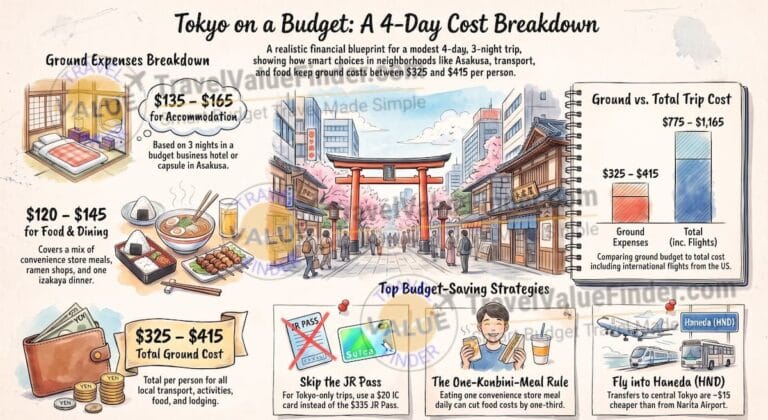
A 7-day pass starts from around ¥50,000 (~$335). Compare this to a single Tokyo-Osaka bullet train ticket at around ¥13,600 ($90) each way. The math adds up quickly if you’re moving around a lot.
Important: Purchase your JR Pass before arriving in Japan, as it’s cheaper when bought abroad. Check the latest prices and availability at Japan Experience.
IC Cards: Your Everyday Transport Card
For daily city travel, get a rechargeable IC card (Suica, Pasmo, or ICOCA depending on the region).
It works on subways, local trains, buses, and even at convenience stores and vending machines. Load it with yen and tap in/out; no need to figure out ticket prices each time.
The Shinkansen (Bullet Train)
Japan’s bullet trains travel at speeds up to 320 km/h. Tokyo to Osaka takes under 3 hours.
Tokyo to Kyoto: around 2 hours and 15 minutes.
The experience is smooth, quiet, and genuinely exciting the first time. Buy an eki-bento (station lunch box) to eat on board. It’s a Japanese tradition.
Getting to Japan
Most international flights arrive at Tokyo Narita (NRT) or Tokyo Haneda (HND), with Kansai International Airport (KIX) serving Osaka, Kyoto, and Nara.
Find the cheapest flights with our guide on how to find cheap flights.
Japan Travel Budget Guide: How Much Does it Cost?
Here’s something that surprises many first-time visitors: Japan can be surprisingly affordable if you know where to look.
In this Japan travel guide, we break down the costs by budget level to help you plan smarter:
| Budget Level | Daily Cost | Includes |
| Budget | ¥5,000 – ¥8,000/day (~$35 – $55) | Hostels, convenience store meals, local trains |
| Mid-Range | ¥10,000 – ¥20,000/day (~$70 – $135) | Business hotels, sit-down restaurants, day trips |
| Luxury | ¥30,000+/day (~$200+) | Ryokan, fine dining, private tours, bullet train upgrades |
Money-saving tips: Eat at set lunch menus (teishoku), use convenience stores for snacks and quick meals.
Travel on overnight buses between cities, and visit free attractions like parks, shrines, and public gardens.
Many of Japan’s greatest experiences like temples, viewpoints, markets cost little to nothing.
Where to Stay in Japan: Accommodation Guide
Japan offers an incredible variety of accommodation options-from ultra-modern business hotels to centuries-old ryokan inns. In this Japan travel guide, here’s what you need to know:
Ryokan (Traditional Japanese Inn)
A stay in a ryokan is a bucket-list experience.
You’ll sleep on futon mats, wear a yukata robe, enjoy multi-course kaiseki dinners served in your room, and soak in an onsen hot spring bath.
Ryokan in the Hakone, Kyoto, or Kinosaki Onsen areas offer the most authentic experiences. Expect to pay ¥15,000 – ¥50,000 per person per night (including dinner and breakfast).
Business Hotels
Japan’s business hotels (like Toyoko Inn, APA Hotel, or Dormy Inn) are clean, efficient, and excellent value. Typically ¥7,000 – ¥15,000 per night in a double room.
Many include a free breakfast and access to a communal hot spring bath.
Capsule Hotels
A uniquely Japanese experience. Small, pod-like sleeping spaces that are surprisingly comfortable and often come with shared bathroom facilities, lounges, and even rooftop baths.
Great for solo travelers on a budget at ¥3,000 – ¥6,000 per night.
Budget Hostels
Major cities have a growing number of excellent hostels and guesthouses catering to international travelers. Many are stylishly designed and centrally located.
Dorm beds start from around ¥2,500 – ¥4,000 per night.
See our picks on the best hotels in Tokyo, and the best hotels in Osaka
Japanese Culture: What to Know Before You Go
Japan is a uniquely polite and rule-conscious society, where cultural awareness plays an important role in showing respect.
This Japan travel guide highlights the most important things to keep in mind during your visit:
- Remove shoes indoors: Always take off your shoes when entering temples, ryokan, and many traditional restaurants. There will usually be a genkan (entrance area) and slippers provided
- No tipping: Tipping is not customary in Japan and can actually be considered rude. Good service is simply the standard – say “arigatou gozaimasu” (thank you very much) instead
- Quiet on public transport :Japanese trains and buses are remarkably quiet. Keep your voice down, silence your phone, and avoid taking calls
- Onsen etiquette: Wash thoroughly before entering the communal bath. Tattoos are banned at many traditional onsen. Check the policy before you go
- Chopstick rules :Never stick chopsticks upright in rice (a funeral custom), and don’t pass food chopstick-to-chopstick
- Queuing: Japan takes queuing very seriously. Follow the marked lines on train platforms and always let people exit before boarding
- Cash is still king: While cities are increasingly accepting card payments, many traditional restaurants, smaller shops, and rural areas are still cash-only. Withdraw yen at 7-Eleven or Japan Post ATMs, which reliably accept foreign cards
- Learn basic Japanese: Even a few words go a long way. Learn: Arigatou (thank you), Sumimasen (excuse me), Eigo ga hanasemasu ka? (Do you speak English?)
Japan Visa & Entry Requirements (2026)
Japan offers visa-free entry to citizens of more than 60 countries, including the United States, United Kingdom, Canada, Australia, and most of the European Union.
Citizens of these countries can typically stay for up to 90 days without a visa.
Starting in 2026, Japan is rolling out a new electronic travel authorization system similar to ESTA (used for the US). Check the latest requirements at the Japan Ministry of Foreign Affairs official website or the Japan National Tourism Organization before you travel.
| Important Entry Notes Departure Tax: Visitors pay a ¥1,000 departure tax when leaving Japan. This is typically included in your airline ticket price. Customs: Standard rules apply. Declare any food items, alcohol over 3 bottles, or cash over ¥1,000,000. Visit the Japan Customs official page for full guidance. Health: No required vaccinations as of 2026. Standard travel health insurance is strongly recommended. |
Staying Connected: Internet & SIM Cards in Japan
Staying connected in Japan is easy-and important, especially since Google Maps will become your best friend for navigating the train system. In this Japan travel guide, here’s what you need to know:
- Pocket WiFi: Rent a portable WiFi router at the airport or pre-order online. Ninja WiFi is a popular, reliable option that can be ordered through the JR Pass website
- eSIM: Great option for travelers with compatible smartphones. Buy before you travel for instant activation on arrival. Holafly and Airalo are two popular eSIM providers with Japan coverage
- Physical SIM: Mobal offers an unlimited Japan SIM card that works in most unlocked phones
- Free WiFi: Available in all major airports, at many convenience stores, and increasingly in cafes and public transport hubs in Tokyo and Osaka
Sample Japan Itinerary: 10 Days for First-Time Visitors
Not sure where to start?
In this Japan travel guide, here’s a tried-and-tested itinerary that covers the best of Japan without feeling rushed:
- Days 1 – 3: Tokyo: Explore Shibuya, Asakusa, Shinjuku, Akihabara. Day trip to Nikko or Kamakura
- Day 4: Hakone: Views of Mount Fuji, onsen experience, open-air museum
- Days 5 – 6: Kyoto: Fushimi Inari, Arashiyama, Gion, Golden Pavilion, tea ceremony
- Day 7: Nara: Day trip from Kyoto: deer park, Todai-ji Temple
- Days 8 – 9: Osaka: Dotonbori, Osaka Castle, Universal Studios Japan, Namba food crawl
- Day 10: Hiroshima & Miyajima: Peace Memorial Museum, Itsukushima Shrine’s floating torii gate
Want a personalized itinerary? Try TravelValueFinder’s free Trip Planner. Enter your travel dates and preferences and get a day-by-day itinerary in seconds.
Related Guides from TravelValueFinder
Looking to plan more of your trip? These Japan travel guides will help:
- 25 Best Things to Do in Tokyo: The Ultimate Guide
- 25 Best Things to Do in Osaka: The Ultimate Osaka Bucket List: Food, Culture, Nightlife & Hidden Gems
- How Much Does It Cost to Visit Japan? What to Budget Per Day
- Find out Tokyo Travel Guide: 4 Days Budget Guide
Trusted External Resources
For the most accurate and up-to-date official information, consult these authoritative sources:
- Japan National Tourism Organization (JNTO), Official travel planning resource
- japan-guide.com, Comprehensive travel and living guide to Japan
- Japan Ministry of Foreign Affairs, Visa and entry requirements
Frequently Asked Questions About Japan Travel
How many days do I need for Japan?
For a first visit, 10 – 14 days gives you enough time to explore the Tokyo – Kyoto – Osaka corridor comfortably. If you only have a week, you can do a focused 7-day trip covering Tokyo, Hakone/Fuji, and Kyoto/Osaka.
Is Japan safe for solo travelers?
Japan is consistently ranked as one of the safest countries in the world for solo travelers, including women traveling alone. Crime rates are extremely low, people are helpful even with language barriers, and the transport system is reliable and well-lit. That said, standard travel precautions always apply.
What is the best way to get around Japan?
For inter-city travel, the Shinkansen (bullet train) is the fastest and most comfortable option. For city travel, the subway and local train networks are excellent. The JR Pass is worth buying if you plan to take two or more bullet train journeys. IC cards (Suica, Pasmo) handle all your daily city transport needs.
Do I need to speak Japanese to visit Japan?
Not at all. English is widely understood in tourist areas, airports, major stations, and popular restaurants. Most signage in cities includes English. Learning a few basic Japanese phrases (“Arigatou” for thank you, “Sumimasen” for excuse me) is appreciated and will be warmly received.
Is Japan expensive to visit?
It’s possible to travel comfortably in Japan for $50 – $80 per day if you stay in budget hotels or hostels, eat at convenience stores and ramen shops, and use public transport. The main costs are flights and accommodation, and both can be reduced with smart planning.
When is cherry blossom season in Japan?
Cherry blossom (sakura) season typically runs from late March to early April in most of Japan.
What is a ryokan and should I stay in one?
A ryokan is a traditional Japanese inn where you sleep on futon mats laid on tatami floors, wear a yukata robe, and enjoy multi-course meals served in your room.
Do I need a JR Pass?
A JR Pass is worth it if you plan to travel between multiple cities by Shinkansen. For example, if you’re traveling round-trip between Tokyo and Kyoto plus exploring Osaka and Hiroshima, a 7-day pass will likely save you money. If you’re staying in one city the whole time, skip it and use an IC card instead.
Disclaimer: This article contains affiliate links. When you book through our hotel search, we may earn a small commission at no extra cost to you. This helps keep TravelValueFinder free to use. We only recommend tools and services we genuinely believe in.