Travel Value Finder

Leslie Nics, TravelValueFinder.com | Last updated: September 2026 | Based on first hand wellness trip research and current 2026 pricing
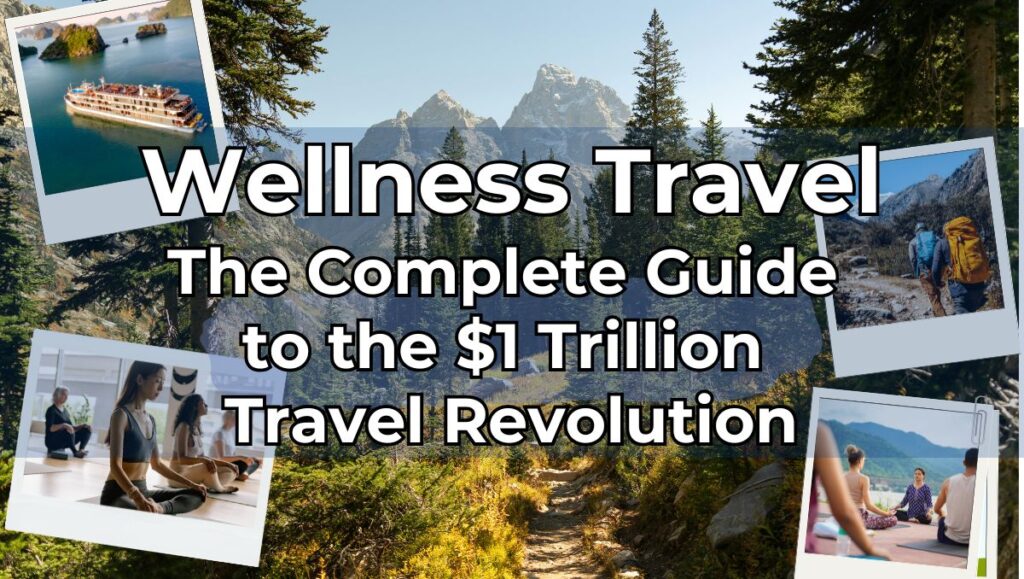
Wellness travel means taking a trip built around rest, movement, or healing. It covers yoga retreats, thermal baths, digital detox stays, and spa programs. This guide breaks down real 2026 costs, top trends, and destinations for every budget.
Wellness travel is no longer a small niche. Global spending on wellness trips has grown fast since 2020. This guide is built for travelers who want the benefit without the markup.
Table of Contents
What Is Wellness Travel?
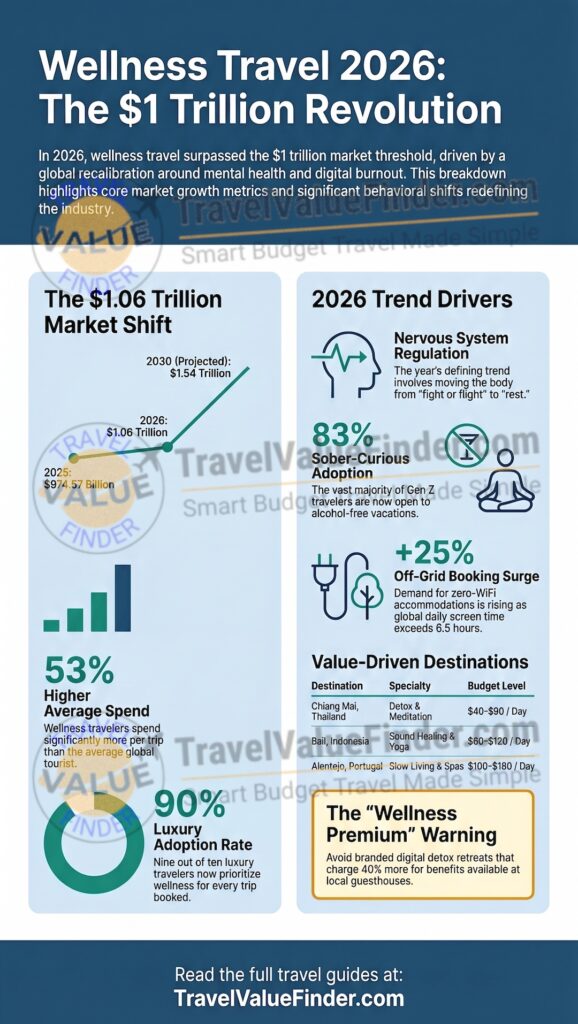
| Wellness travel is a trip focused on physical, mental, or emotional health. Rest and recovery are the goal, not sightseeing. Common formats include yoga retreats, spa stays, thermal bathing, and digital detox trips. Global wellness tourism topped 1 trillion dollars in 2026, per Grand View Research. |
Wellness Travel by the Numbers
Wellness travel is one of the fastest growing parts of global tourism. The table below shows where the growth and spending are concentrated.
| Metric | Figure | Source |
| Wellness tourism value, 2025 | 990.4 billion USD | Grand View Research |
| Wellness tourism value, 2026 (projected) | About 1.09 trillion USD | Grand View Research |
| Projected wellness tourism value by 2035 | 2.4 trillion USD | Grand View Research |
| Annual growth rate, 2026 to 2035 | 9.3 percent | Grand View Research |
| Wellness tourism value, 2024 (actual) | 894 billion USD | Global Wellness Institute |
| Total global wellness economy, 2024 | 6.8 trillion USD | Global Wellness Institute |
| Wellness economy forecast by 2029 | 9.8 trillion USD | Global Wellness Institute |
| North America share of wellness tourism, 2025 | 35.9 percent, the largest region | Grand View Research |
| Spas worldwide, 2024 | 201,861, up 15 percent since 2019 | Global Wellness Institute |
These numbers point to one thing. Wellness travel has moved from a luxury niche to a mainstream travel category.
Wellness Travel Trends to Watch in 2026
Wellness travel keeps changing shape every year. Here is what is actually driving bookings in 2026, and where to find each trend on a budget.
| Trend | What Changed | Budget Option |
| Nervous system reset travel | Trips built around calm, not sightseeing | A rural stay with no fixed schedule |
| Digital detox stays | Cabins and lodges with no WiFi | Any budget stay with no signal |
| Sound healing | Singing bowl and gong sessions | Bali or Thailand sessions from 15 USD |
| Sober curious trips | More alcohol free options on tours | Cruise and tour mocktail menus |
| Wellness safaris | Yoga and meditation paired with safaris | East Africa lodges with wellness add ons |
| Family wellness trips | Resorts programming wellness for all ages | Family resorts with shared activities |
| Skin care travel | Trips built around skin treatments | Public clinics and spas in Seoul |
| Wellness on the move | Trains, cruises, and airports adding spa space | Long haul trains and cruise wellness decks |
Digital detox lodging is growing fast, especially in the UK and Europe. Off grid cabins with no WiFi are booking out early. The benefit costs nothing beyond a normal stay with no signal.
Sound healing has moved from niche retreats into five star hotel spas. Bali, Chiang Mai, and Rishikesh offer the same sessions for 15 to 40 dollars. The relaxation effect is the same either way.
Sober curious travel is reshaping tour and cruise menus. Operators now list mocktail and alcohol free itineraries as a standard option. This shift is strongest among younger travelers.
Wellness safaris are the newest crossover trend. Lodges in East Africa now pair morning game drives with yoga and guided meditation. The wildlife stays the main draw, but the wellness layer adds real value.
Family wellness travel is also expanding fast. Resorts now run children’s and teen programs next to adult spa treatments. Families get shared downtime instead of one parent booking a solo spa day.
People Also Ask About Wellness Travel
What is the difference between wellness travel and a regular vacation?
A regular vacation centers on sightseeing or leisure. Wellness travel centers on rest, movement, or healing as the main purpose. The activities can look similar, but the intent is different.
How much does wellness travel cost?
Wellness travel runs from about 30 dollars a day to over 800 dollars a day. Budget destinations like India and Thailand sit at the low end. Luxury medical wellness resorts sit at the high end.
Is wellness travel worth the money?
Research links time in nature and thermal bathing to lower blood pressure and stress. Many of the same benefits come from a quiet trip with no formal program. Value depends on the destination, not the price tag.
What is the biggest wellness travel trend in 2026?
Digital detox travel is one of the fastest growing trends this year. Travelers are booking cabins and lodges with no WiFi on purpose. Off grid stays are up sharply across several regions.
Do I need to visit a spa to get the benefits of wellness travel?
No, a spa is not required. Time outdoors, good sleep, and home cooked meals deliver most of the same benefits. A quiet trip with no program can work just as well.
Best Wellness Travel Destinations by Budget
Price and quality do not always move together in wellness travel. A 50 dollar yoga stay in Ubud can match a 500 dollar resort program.
| Destination | Best For | Daily Budget | Standout Value |
| Rishikesh, India | Yoga and meditation | 30 to 80 USD | Ten day meditation retreats from 200 USD |
| Chiang Mai, Thailand | Massage and detox | 40 to 90 USD | Traditional massage from 8 USD an hour |
| Ubud, Bali | Yoga and sound healing | 60 to 120 USD | Retreat stays from 80 USD with classes included |
| Alentejo, Portugal | Slow travel and thermal spas | 100 to 160 USD | Rural farmhouse week from about 700 USD |
| Tuscany, Italy | Thermal baths | 150 to 250 USD | Saturnia hot springs, free public access |
| Tohoku, Japan | Onsen bathing and forest walks | 100 to 200 USD | Ryokan stay from about 90 USD with two meals |
| Seoul, South Korea | Skin care and public baths | 70 to 110 USD | Jimjilbang all day entry from about 10 USD |
| Costa Rica | Nature and surf wellness | 80 to 150 USD | Cloud forest lodges from about 90 USD a night |
For more on two of these regions, see our guides to where to stay in Bali and what it costs to visit Japan.
Best Time of Year for Wellness Travel
Timing changes the price of a wellness trip more than almost anything else. Shoulder season brings lower rates and smaller crowds at most retreat centers.
| Region | Shoulder Season | Why It Works |
| Bali and Southeast Asia | April, May, September, October | Lower rates before and after the peak dry months |
| India, Rishikesh | October to March | Cooler weather and full retreat schedules |
| Portugal and Southern Europe | April, May, September, October | Mild weather with fewer summer crowds |
| Japan, onsen regions | Late spring or late autumn | Comfortable bathing weather, lower hotel rates |
| Costa Rica | May to July | Green season pricing with shorter afternoon rain |
Booking in shoulder season can cut retreat and hotel costs by 20 to 40 percent. The weather trade off is usually small.
Wellness Travel Alone vs With a Group
Solo and group wellness trips solve different problems. Both can deliver the same physical benefits at very different costs.
| Factor | Solo Wellness Travel | Group Wellness Travel |
| Typical daily cost | Lower, no shared program fees | Higher, includes group instruction and meals |
| Flexibility | Full control over schedule and pace | Fixed schedule set by the retreat |
| Social connection | Depends on effort to meet others | Built in through shared meals and sessions |
| Best for | Self directed routines and quiet reset | First time retreat guests and structured guidance |
Neither option is better on its own. The right choice depends on how much structure a traveler wants.
Self Directed Wellness Travel vs a Structured Retreat
A structured retreat sets the schedule, meals, and activities in advance. Self directed wellness travel means building that routine on your own.
| Factor | Structured Retreat | Self Directed Trip |
| Cost | Higher, program and instruction included | Lower, 40 to 60 percent less on average |
| Guidance | Instructors plan each day | Traveler sets the pace and activities |
| Best for | First time visitors who want structure | Experienced travelers with an existing routine |
| Flexibility | Fixed itinerary, hard to change | Open itinerary, easy to adjust |
Self directed trips work well for travelers who already meditate, cook, or exercise at home. A kitchen, a daily walk, and one paid treatment a week can match a retreat’s results.
Common Wellness Travel Mistakes to Avoid
A few planning mistakes drive up cost without adding any real benefit.
- Booking a branded retreat without comparing local, independent options first.
- Filling every day with paid activities, which defeats the point of rest.
- Skipping accommodation with a kitchen, then overspending on restaurant meals.
- Ignoring shoulder season dates that offer the same weather for less money.
- Choosing a destination for its photos instead of its actual wellness infrastructure.
What Wellness Travel Really Costs
Costs stack up across four categories on any wellness trip. The table below breaks down a typical day at three spending levels.
| Cost Category | Budget Tier | Mid Tier | Luxury Tier |
| Accommodation, per night | 15 to 30 USD | 40 to 90 USD | 200 USD and up |
| Meals, per day | 8 to 15 USD | 20 to 35 USD | 60 USD and up |
| One wellness activity | 5 to 20 USD | 25 to 60 USD | 100 USD and up |
| Local transport, per day | 3 to 8 USD | 10 to 20 USD | 40 USD and up |
| Typical daily total | 30 to 70 USD | 90 to 200 USD | 400 USD and up |
Run your own numbers with our travel budget calculator. Most travelers land comfortably in the mid tier with some planning.
Trip length also changes the math. A longer stay lowers the average nightly rate at most retreat centers. A one week trip and a one month trip rarely cost the same per day.
Does Wellness Travel Work? The Research
Wellness travel is not just marketing. Independent research backs several of its core claims.
| Benefit | What Studies Show | Source |
| Lower blood pressure | Forest walks lowered blood pressure across multiple trials | National Institutes of Health, PMC |
| Reduced stress hormone | Cortisol levels dropped after forest bathing in most studies reviewed | National Institutes of Health, PMC |
| Lower anxiety and tension | A meta analysis found reduced anxiety and tension after forest bathing | National Institutes of Health, PMC |
| Steadier daily rhythm | Wellness sectors tied to sleep and recovery are among the fastest growing | Global Wellness Institute |
The research is strongest for time outdoors, not for expensive spa packages. A free walk in a forest can outperform a costly treatment room.
How to Book Wellness Travel Without Overpaying
A few simple steps keep wellness travel costs under control. None of them require giving up quality or comfort.
- Search local, independent providers before booking a branded retreat package.
- Book accommodation with a kitchen so meals are not a fixed daily cost.
- Pick one signature wellness activity per stop instead of a packed schedule.
- Travel in shoulder season to cut retreat and hotel rates by 20 to 40 percent.
- Read independent reviews instead of relying on a retreat’s own marketing photos.
Five Rules for Smarter Wellness Travel
These are the rules Leslie Nics uses when planning any wellness trip.
- Pick a destination where wellness is part of daily life, not a paid extra.
- Book a room with a kitchen and cook with local, seasonal produce.
- Walk, hike, or swim instead of paying for a fitness class.
- Travel in shoulder season for lower rates on retreats and hotels.
- Choose one paid wellness activity per stop and skip the rest.
My best wellness trip cost under 50 dollars a day. Morning yoga by the Ganges in Rishikesh beat any five star spa I have tried. Leslie Nics, TravelValueFinder.com
Soothe Yourself with Wellness Travel
Wellness travel does not require a five star budget to work. The physical benefits come from rest, nature, and food, not the invoice.
Start with one destination from the budget tier above. Add a kitchen, a daily walk, and one paid treatment worth the cost.
Who Wellness Travel Is Best For
Wellness travel suits a wide range of travelers, not just spa regulars. It works best for people ready to slow down for a few days.
- Travelers recovering from a stretch of heavy work or screen time.
- Anyone who wants a trip built around sleep, movement, and food, not sightseeing.
- Solo travelers looking for a quiet, low pressure itinerary.
- Families who want shared downtime instead of a packed sightseeing schedule.
Wellness Travel FAQ
What should I pack for a wellness retreat?
Pack breathable clothing, a reusable water bottle, and a journal. Bring earplugs and a sleep mask for better rest. Confirm what the retreat already provides before packing extra gear.
How do I avoid overpriced wellness retreats?
Compare listings on BookRetreats and Retreat Guru before booking. Watch for vague program descriptions with no clear pricing. Read reviews from past guests, not just marketing photos.
What is a jimjilbang?
A jimjilbang is a Korean public bathhouse and sauna complex. Entry usually costs 8 to 15 dollars for all day access. Many stay open 24 hours with hot and cold baths.
What is forest bathing?
Forest bathing means spending slow, quiet time in a forest. It is not the same as hiking for exercise or distance. Research links it to lower blood pressure and less stress.
Can I do wellness travel without booking a retreat?
Yes, many travelers build their own routine instead. This means a kitchen, a daily walk, and one paid treatment a week. It often costs less than a structured retreat program.
Is wellness travel good for a first solo trip?
Yes, wellness travel is a common choice for first time solo trips. Retreat settings offer built in structure and easy social contact. Self directed trips suit travelers who prefer more privacy.
Related Reading
- Travel for Food: How to Plan a Culinary Trip
- Cherry Blossom Season in Japan: Best Time to Go
- Best Countries for First Time Travelers
- Discover Your Travel Personality Quiz
Sources
- Global Wellness Institute, wellness tourism data
- Global Wellness Institute, 2025 Global Wellness Economy Monitor
- Grand View Research, Wellness Tourism Market Report
- National Institutes of Health, PMC: forest bathing and cortisol, systematic review
- National Institutes of Health, PMC: forest bathing and blood pressure