Travel Value Finder


You can travel the world on $50 a day in dozens of countries right now. That budget covers a private room, three real meals, local transport, and one paid activity most days. It works best across Southeast Asia, Latin America, and parts of Eastern Europe.
| Question | Quick Answer |
| Is $50 a day realistic? | Yes, across most of Asia, Latin America, and Eastern Europe. |
| Does it include flights? | No. Flights are a separate, one time cost. |
| Best starter destination? | Mexico or Vietnam for value and ease of entry. |
| Hardest place to hit $50? | Western Europe, Japan, Australia, and Scandinavia. |
| Monthly cost at $50 a day? | About $1,500, not counting flights or insurance. |
Leslie Nics, TravelValueFinder.com | Last updated: September 2026 | Based on firsthand budget travel research and current 2026 pricing for US travelers
This guide breaks down the real monthly math, the destinations where $50 stretches furthest, and the costs first time budget travelers usually forget to plan for.
Table of Contents

The Real Monthly Cost to Travel the World on $50 a Day
Most guides stop at the daily number. Real trips run for weeks or months, so the monthly and yearly math matters more than a single day snapshot.
Fifty dollars a day adds up to about $1,500 a month. Over a full year, that is roughly $18,250 before flights, insurance, or gear.
| Timeframe | Ground Cost Total | What It Covers |
| 1 week | $350 | Room, food, transport, and 4 to 5 paid activities |
| 1 month | $1,500 | Full month on the ground in one region |
| 3 months | $4,500 | A slow, multi country trip with weekly rate discounts |
| 1 year | $18,250 | Ground costs only, no flights or insurance included |
For comparison, the US government’s own standard daily travel allowance for federal employees is $178 for domestic US trips, according to the General Services Administration. A $50 a day international budget runs at roughly a third of that federal domestic rate.
One Time Costs Most Travelers Forget
The daily number never includes what you pay before you leave home. Budget for these separately so they do not derail your trip.
| Item | Typical Cost | Notes |
| Travel insurance | $45 to $80 per month | Non negotiable. See our full guide below. |
| Routine gear | $150 to $400 one time | Backpack, shoes, adapter, first aid basics |
| Vaccines and prescriptions | $0 to $300 | Check the CDC destination page before booking |
| Visa fees | $0 to $160 | Varies widely by country and passport |
| Emergency buffer | $500 to $1,000 | Kept untouched unless something goes wrong |
Insurance and gear rarely change trip to trip, but the emergency buffer should scale with trip length. A longer trip deserves a bigger cushion.
Where $50 a Day Travel Works Best
Destination choice decides whether $50 feels generous or tight. This table ranks regions by how comfortably the budget stretches.
| Region | Typical Daily Cost | Best For |
| Southeast Asia | $25 to $40 | First time budget travelers, food, beaches |
| Latin America | $30 to $50 | Short flights from the US, culture, easy entry |
| Eastern Europe | $35 to $55 | First time Europe trips, nightlife, history |
| South Asia | $20 to $40 | Experienced travelers, immersive culture |
| Western Europe | $65 to $100 | Only with hostel dorms and self catering |
| Japan, Australia, Scandinavia | $90 and up | Not realistic on $50 without major sacrifice |
Planning a Southeast Asia trip specifically? See our Southeast Asia budget travel guide for country by country pricing.
Match the region to your trip length, not just the price. A two week trip can absorb a longer flight to Southeast Asia and still come out ahead on daily costs.
A shorter trip of a week or less often makes more sense in Mexico or Central America, where flights are cheap and short. The savings on airfare offset the slightly higher daily ground cost.
Cutting Your Three Biggest Costs: Sleep, Food, and Getting Around
Accommodation, food, and transport make up nearly all of a daily travel budget. Small changes to each one add up fast.
Sleep. A private hostel room or guesthouse costs $12 to $25 a night across most budget regions. Booking five or more nights often unlocks a 20 to 40 percent weekly discount. For a full comparison of rooms versus dorms, see our guide to saving money on hotels.
Food. Street stalls and markets cost 60 to 80 percent less than restaurants aimed at tourists. Walk two streets away from any major attraction and prices usually drop by half.
Getting around. Public buses, metros, and trains cost a fraction of taxis or ride share apps. Staying in one city for a week instead of two nights also cuts transport costs sharply.
Slow Travel Is the Single Biggest Money Saver
Speed is the most common budget killer in travel. Every new city means a new transport fare, a higher short stay room rate, and a few wasted meals while you figure out where to eat.
A traveler changing cities every two days often spends $15 a day on transport alone. Staying in one place for a week can cut that same cost to $3 to $5 a day.
The best money saving habit I ever picked up was simply staying put. Choosing a week in one town over three fast paced stops cut my daily spending by nearly a third.” Leslie Nics, Founder & Lead Travel Writer, TravelValueFinder.com
Weekly hostel and guesthouse rates also reward slow travel. Many properties knock 20 to 40 percent off nightly prices for stays of five nights or longer.
Currency, ATMs, and Cash Habits That Protect Your Budget
Hidden banking fees quietly eat into a $50 a day budget more than almost anything else. A few habits keep that money in your pocket instead.
- Withdraw from local bank ATMs, not standalone machines at airports or tourist strips
- Skip airport currency exchange counters, which run 8 to 12 percent worse than the real rate
- Carry $20 to $40 in local cash at all times for markets and small vendors
- Use a fee free debit card that gives the real exchange rate on every withdrawal
These habits alone can save $5 to $10 a day, which is often the price of your next meal or activity.
What This Looks Like in Practice: One Week in Oaxaca
Numbers are easier to trust with a real example. Here is roughly what a week in Oaxaca, Mexico looks like on this budget.
A private room near the historic center runs about $20 a night, dropping closer to $16 with a weekly rate. Breakfast at a market stall costs $2 to $3, and a full lunch at a local comedor runs $4 to $6.
Local colectivo vans cost under a dollar per ride, and most days include at least one free plaza, market, or church visit. One paid outing, like a mezcal tasting or a trip to nearby ruins, adds $10 to $15.
Total for the week lands close to $315, or $45 a day, with room to spare for an extra dinner out.
The Mindset Behind $50 a Day Travel
The hardest part of this budget is rarely the math. It is unlearning the idea that spending more always means a better experience.
A $2 bowl of noodles from a family run stall is often better than a $12 version at a restaurant built for tourists. Eating, sleeping, and moving the way locals do is not a compromise.
It is usually the fastest way to actually experience a place, rather than a polished version built for visitors passing through.
Travelers who make this shift often report richer memories, not fewer of them. A hostel kitchen conversation or a crowded local bus ride frequently outlasts a pricier, more curated version of the same day.
Free Things to Do Every Day You Travel the World on $50 a Day
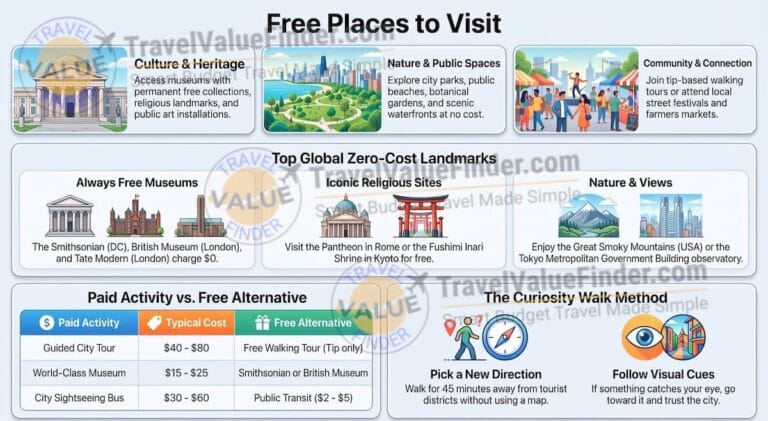
Many of the best travel memories cost nothing. Free walking tours run in most major cities and work on tips.
- Free tip based walking tours in nearly every major city worldwide
- Temples, markets, plazas, and viewpoints with no entry fee
- Public beaches, hiking trails, and city parks
- Sunrise and sunset views that cost nothing but timing
Build each day around free activities first. Add one paid experience only when it genuinely earns its place.
Ways to Sleep for Less Than a Hostel
Hostels are not the only budget option. These alternatives can push a daily budget well under $50, especially on longer trips.
| Option | Typical Cost | What You Trade |
| House sitting | Free lodging | Caring for a home or pets while owners travel |
| Work exchange | Free room and board | Around 20 to 25 hours a week of work |
| Couchsurfing | Free | Staying with a local host, limited availability |
| Long term rental | 20 to 40 percent less per night | Committing to 4 or more weeks in one place |
These options work best for trips of a month or longer. They also tend to create the most memorable local connections.
Platforms like Workaway and HelpX connect travelers with hosts needing help on farms, hostels, or family homes. Most require a modest annual membership fee, usually under $50, well below what the free lodging saves over a month.
House sitting works especially well for travelers with some flexibility on dates and destinations. Longer sits of two weeks or more are easier to find and often include a car.
People Also Ask
Can you really see the world on $50 a day? Yes, in most of Asia, Latin America, and parts of Eastern Europe. Western Europe, Japan, and Australia require a much higher daily budget.
What is the cheapest way to travel long term? Stay longer in fewer places, eat where locals eat, and use public transport instead of taxis. Slow travel is the single biggest cost cutter.
Do I need travel insurance on a tight budget? Yes. A medical evacuation can cost tens of thousands of dollars, while insurance runs $45 to $80 a month.
How much should I save before a long trip? Save your full ground cost estimate plus flights, insurance, gear, and a $500 to $1,000 emergency buffer.
One Day, Two Budgets: Chiang Mai Compared
Numbers make more sense side by side. Here is one real day in Chiang Mai, Thailand at two different spending levels.
| Expense | Lean Day ($35) | Comfortable Day ($50) |
| Room | $8 dorm bed | $18 private guesthouse room |
| Breakfast | $1 market rice porridge | $3 cafe breakfast with coffee |
| Lunch | $2 street stall noodles | $4 local restaurant curry |
| Transport | $1 songthaew rides | $3 scooter rental for the day |
| Activity | Free temple visit | $10 cooking class |
| Dinner | $3 night market meal | $6 local restaurant dinner |
| Extras | $2 water and snacks | $4 drinks and dessert |
| Total | $34.50 | $48.00 |
Flights and the Real Per Day Cost
Flights sit outside the daily budget but still shape the true cost of a trip. Spread across more days, a flight costs less per day.
| Trip Length | $700 Flight Adds | $400 Flight Adds |
| 14 days | $50 a day | $29 a day |
| 30 days | $23 a day | $13 a day |
| 60 days | $12 a day | $7 a day |
For a full strategy on cutting airfare, read How to Find Cheap Flights: 12 Proven Strategies.
Protecting the Budget: Insurance, Cards, and Safety
A tight budget still needs guardrails. Skipping these to save a few dollars usually costs far more later.
Get a no fee travel debit or credit card before you leave. Foreign transaction fees and poor ATM exchange rates can quietly add several dollars a day. The Consumer Financial Protection Bureau explains how these fees work and how to avoid them.
Enroll in the Smart Traveler Enrollment Program through the US State Department before any international trip. It sends safety alerts and helps officials reach you in an emergency.
Check the CDC destination health pages for vaccine and health guidance well before you fly. For deeper coverage details, see our Travel Insurance Guide.
A tight budget should never mean cutting corners on safety. Choose well reviewed accommodation, keep digital copies of your passport, and trust your instincts if something feels wrong.
Common Mistakes That Blow a $50 a Day Budget
A handful of habits explain most budget overruns. Watching for these keeps a $50 a day trip on track.
- Moving cities every one or two nights instead of staying a week and losing weekly rate discounts
- Eating every meal at restaurants near major tourist sites instead of walking a few blocks further
- Exchanging cash at airport currency counters instead of withdrawing from a local bank ATM
- Booking flights and buses at the last minute, when prices run highest
- Skipping travel insurance to save a small daily amount that is not worth the risk
- Underestimating one time costs like gear, visas, and vaccines before the trip even starts
Comparing hostels against budget hotels for your trip type? See Hostels vs Budget Hotels: Which Is Worth It for a full breakdown.
Frequently Asked Questions
Is $50 a day enough to travel internationally?
Yes, in Southeast Asia, Latin America, and much of Eastern Europe. It is much tighter in Western Europe, Japan, or Australia, where daily costs often run double.
What is the cheapest region to visit on this budget?
Southeast Asia and South Asia typically offer the lowest daily ground costs, often $20 to $40 a day for a private room and three meals.
Does $50 a day include flights and insurance?
No. It covers only room, food, local transport, and activities. Flights and insurance are separate, one time or monthly costs to plan alongside it.
How do I track spending while traveling?
Log expenses daily using a free budgeting app so small leaks in the budget show up quickly, before they add up over a full trip.
Is it safe to travel this cheaply?
Yes, as long as insurance, well reviewed lodging, and basic safety habits stay part of the budget rather than the first things cut.
What is the biggest expense on a $50 a day trip?
Accommodation and food usually split the budget close to evenly, together making up roughly 60 percent of daily spending.
Final Thoughts
The math behind $50 a day travel is simple once you see it laid out by month instead of just by day.
Pick a destination where the budget works in your favor. Then let the savings buy you more time on the road, not less experience.
Sources
- US General Services Administration, FY2026 Per Diem Rates
- US Department of State, Smart Traveler Enrollment Program
- CDC, Travel Health Destination Pages
- Consumer Financial Protection Bureau, Foreign Transaction Fees