Travel Value Finder

How to Travel for Food;
- Choose a region with strong home cooking traditions, not just fine dining.
- Set aside at least 25 percent of your trip budget for food.
- Book one paid food experience per stop, such as a class or a market tour.
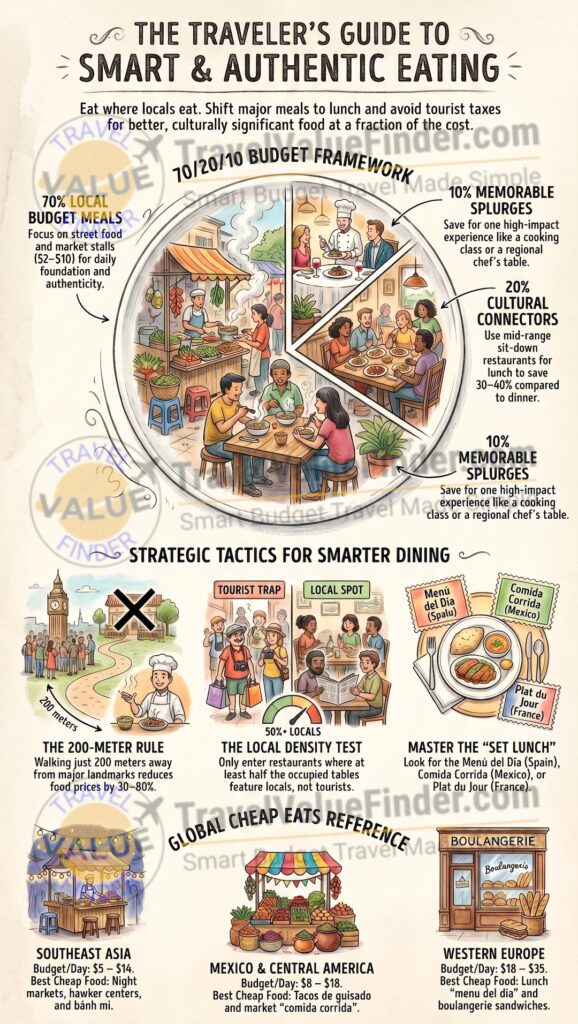
- Eat lunch where local workers eat, not only where tourists eat.
- Time your trip around a food festival or harvest season when you can.
Travel for food by building your trip around meals, not squeezing meals around your trip.
Pick a region known for strong home cooking. Set a real food budget. Book at least one hands on food experience per stop.
Leslie Nics, TravelValueFinder.com | Last updated: September 2026 | Based on first hand food travel research and 2026 pricing for US and Canadian travelers
This guide covers how to choose a destination and plan your meals. Set a smart budget and every trip becomes a culinary one.
Table of Contents
What Does It Mean to Travel for Food?
Traveling for food means the meal comes first when you plan a trip. You choose a destination partly because of what people cook there. Everything else, from hotels to sightseeing, gets built around that choice.
This approach has a name in the travel industry. It is often called culinary tourism or food tourism. Food is not a break between activities. It is the activity.
Research from Grand View Research shows culinary tourism spending has grown into a massive industry. Food now ranks alongside price and location. Travelers use it to choose a destination.
A separate study from TravelBoom Marketing found that most leisure travelers rate food as important. Street food and market visits rank as the experiences that excite travelers most.
According to WifiTalents Food Tourism Statistics, many food travelers now seek cooking classes. It is a primary trip activity for them. That number keeps rising each year.
This shift makes sense once you think about it. Food carries history, family recipes, and regional pride. Few other travel experiences can match that.
A single meal can teach you more than an afternoon in a museum. Travelers are also spending differently than they did a decade ago.
Many now prefer several smaller, personal food moments spread across a trip. A market breakfast, a lunch counter, and a cooking class add up fast. Together they often beat one formal dinner.
Best Regions to Travel for Food
Some regions reward food focused travel more than others. The table below compares five regions on signature experience, cost, and season.
| Region | Signature Food Experience | Average Daily Food Cost | Best Season for Food Travel |
| Mexico and Central America | Street tacos, mole, regional markets | $10 to $25 | October through May, the dry season |
| Southeast Asia | Night markets, hawker centers, noodle culture | $8 to $20 | November through March |
| Western Europe | Market lunches, wine regions, farm to table dining | $25 to $50 | April through June and September |
| Japan | Sushi counters, department store food floors, ramen shops | $20 to $35 | Spring cherry blossom season and autumn |
| USA regional cuisine | Food trucks, farmers markets, ethnic neighborhoods | $30 to $55 | Year round, varies by region |
Mexico and Southeast Asia offer strong value for travelers who want variety on a budget. Western Europe and Japan reward travelers willing to spend more.
No region on this list is a wrong choice. The right one depends on what you value most in a meal.
First time food travelers often do well starting in Mexico or Southeast Asia. The lower daily cost makes it easy to try many small meals.
The best food trips are not about finding the fanciest restaurant. They are about finding the table where a recipe has been perfected over fifty years. Leslie Nics, TravelValueFinder.com
How to Plan a Trip Focused on Food
Planning a food focused trip takes a few extra steps compared to a standard vacation. These five steps cover the process from first idea to final booking.
None of these steps require special skills or a large budget. They just require putting food decisions earlier in the planning process.
1. Pick your region by cuisine, not by landmark.
Start with the food you want to eat. Let that choice guide the destination, not the other way around. A traveler chasing great noodles will plan a very different route than one chasing wine.
2. Research food festivals and harvest seasons before booking flights.
Many regions have a peak food season tied to a harvest or a festival. Timing a trip around one of these events adds real value. A grape harvest or a chili festival can shape an entire itinerary.
3. Set a real food budget before you leave.
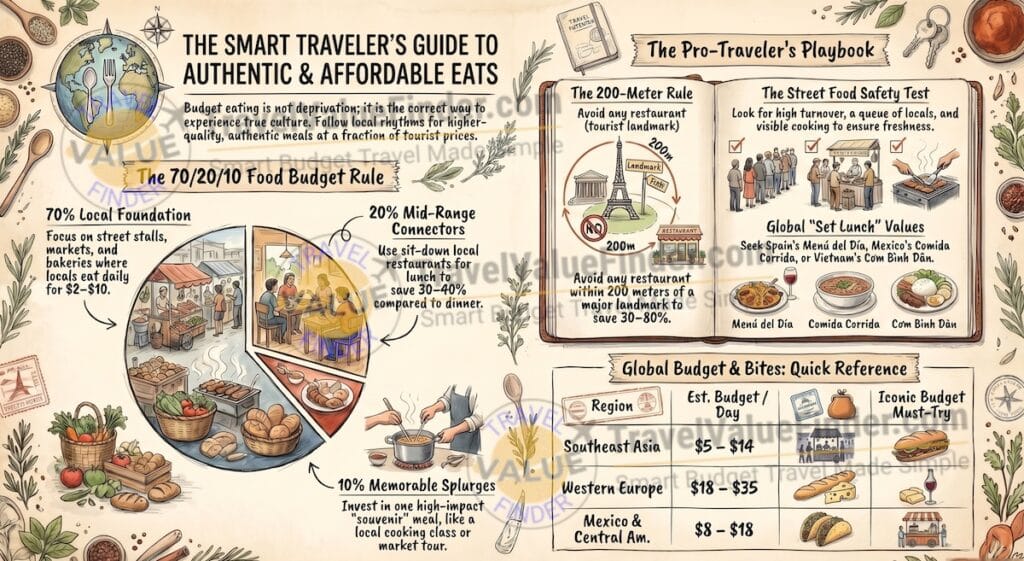
Decide what share of your trip budget goes to food. Twenty five to thirty percent is a reasonable target for most travelers. Splitting that further between daily meals and one splurge experience per stop keeps spending honest.
4. Book one signature food experience per stop.
A cooking class, food tour, or market visit anchors each destination. Book it early, since the best ones sell out weeks ahead. This single booking often becomes the trip’s most memorable meal.
5. Leave room in your schedule for spontaneous meals.
Some of the best meals happen by accident. Do not overbook every hour of every day. A loosely planned afternoon often leads to the best small restaurant of the whole trip.
Top Food Experiences Worth Booking When You Travel for Food
Paid food experiences vary widely in cost, length, and structure. Some teach a skill. Others deliver a tasting or a shared meal with new people.
The table below compares five common options. Use it to match one to your travel style and budget.
| Experience | Typical Cost | Typical Length | Best For |
| Cooking class with a local host | $30 to $90 | 3 to 4 hours | Hands on learners who want a recipe to take home |
| Guided market tour | $15 to $50 | 2 to 3 hours | First time visitors who want context and history |
| Street food crawl | $20 to $45 | 2 to 3 hours | Travelers who want variety in one outing |
| Food festival ticket | $5 to $25 | Half a day | Groups and families visiting during festival season |
| Home cooked meal with a local family | $25 to $60 | 2 to 3 hours | Travelers who want conversation along with the meal |
Cooking classes and market tours give the most lasting value for the price. Both teach skills or knowledge you keep long after the trip ends.
Food Festivals Worth Building a Trip Around
A food festival gives an entire trip a natural center point. These events pack regional food culture into one place and one weekend.
The table below lists five well known food events across different regions and seasons. Each one is worth checking dates for before you book flights.
| Region | Festival Season | What to Expect | Example Festival |
| Spain | Late summer | Regional produce festivals in small towns | La Tomatina, Bunol, August |
| Germany | Late September | Beer halls, sausage stands, pretzel culture | Oktoberfest, Munich |
| Italy | Spring | Wine tastings paired with regional dishes | Vinitaly, Verona, April |
| USA | Midsummer | Citywide food festivals with dozens of vendors | Taste of Chicago, July |
| Thailand | April | Fresh fruit festivals tied to the harvest | Rayong Fruit Festival, April |
Booking around one of these events takes extra planning. Hotels near festival grounds fill up months ahead. Lock in lodging as soon as dates are confirmed.
Ready to plan your next trip? Use our Free AI Trip Planner to build a food focused itinerary for any destination.
Packing and Practical Tips for a Food Focused Trip
A few small items make food focused travel easier and more comfortable. None of these take up much space in a bag.
- Pack basic digestive aids in case your stomach needs a day to adjust.
- Bring a reusable container for market samples and leftovers.
- Download a translation app that works offline for menus and allergy notes.
- Carry small bills and coins, since many market stalls do not take cards.
- Bring hand sanitizer for use before eating at busy street stalls.
How Much Does It Cost to Travel for Food?
Food costs shift enormously by region and by travel style. The table below breaks daily spending into a budget tier and a mid range tier.
| Region | Budget Traveler | Mid Range Traveler | What Drives the Cost |
| Southeast Asia | $8 to $15 per day | $20 to $35 per day | Street stalls versus full service restaurants |
| Mexico | $10 to $18 per day | $22 to $40 per day | Market food versus resort area dining |
| Western Europe | $20 to $35 per day | $40 to $70 per day | Set lunch menus versus full dinner service |
| Japan | $18 to $28 per day | $35 to $55 per day | Convenience store meals versus specialty restaurants |
| USA | $25 to $45 per day | $50 to $85 per day | Food trucks versus destination restaurants |
These figures cover food only, not lodging or transport. Navy Federal Credit Union tracks domestic food spending. The average American spends close to $58 a day. Careful planning brings that number down.
I have spent three dollars on the best meal of a trip and eighty dollars on one I forgot by the next morning. Price and memory do not always line up. Leslie Nics, TravelValueFinder.com
Food Safety and Etiquette When You Travel for Food
Street food and market stalls are usually safe when a few simple rules are followed. Look for stalls with a line of local customers. Choose food that is cooked in front of you and served hot.
The World Health Organization notes that most foodborne illness risk comes from improper temperature control. Hot, freshly cooked food carries much lower risk than food that has been sitting out.
Etiquette also varies by culture, so a little research goes a long way. In many countries, pointing at another table’s dish is a normal way to order. In parts of Japan, eating while walking is considered impolite.
- Learn a few food words in the local language before you go.
- Ask before photographing a vendor or their food.
- Tip according to local custom, not your home country’s habits.
- Carry a card noting any allergy or dietary restriction in the local language.
None of these precautions should discourage you from eating out often. They simply make each meal a little smoother and safer. That matters most in the first day or two of a trip.
Common Mistakes That Ruin a Food Focused Trip
A few avoidable mistakes show up again and again on food focused trips. Watching for these keeps a good plan from falling apart.
- Booking too many restaurants and leaving no room for discovery.
A fully booked schedule leaves no space for the small stall you notice while walking. Leave at least one meal per day unplanned.
- Skipping lunch specials that are often the best value of the day.
Many countries offer a discounted set lunch at restaurants that charge full price for dinner. Skipping this meal means paying more for the same food later.
- Avoiding street food entirely out of unnecessary caution.
Reasonable caution is smart. Total avoidance means missing some of the best food on the trip. Use the visible cooking and busy stall rule instead.
- Eating every meal within sight of a major landmark.
Restaurants near famous sites usually charge more for lower quality food. Walking two or three blocks away almost always improves both price and taste.
- Not confirming a cooking class location and start time in advance.
Small cooking schools sometimes change locations or start times close to the date. A quick message the day before avoids a wasted morning.
Where to Stay for the Best Food Access
Where you sleep affects where you eat. A hotel near a produce market beats one near a tourist plaza.
A short walk to a market or a food street means more spontaneous meals. It is one of the simplest upgrades to any food focused trip.
Before booking, search the neighborhood name along with the word market. A short list of nearby food streets usually appears. That list often says more than any hotel description.
Residential neighborhoods just outside the main tourist center often deliver the best combination. Prices tend to be lower there. Restaurants nearby tend to serve locals rather than tour groups.
Plan the rest of your trip with these guides:
- Where to Stay in Mexico City, for taco and market access
- Where to Stay in Chicago, for food halls and ethnic dining
- How to Travel Europe on a Budget, for the best food value by country
- Free AI Trip Planner, to build a food focused itinerary
People Also Ask About Travel for Food
What does it mean to travel for food?
It means choosing a destination based on its food culture first. Hotels, sights, and transport are then planned around meals, markets, and food experiences. The trip is organized by what you will eat, not just what you will see.
How much should I budget for food when traveling?
Plan for 25 to 30 percent of your total trip budget. Daily costs range from about $10 in Southeast Asia to $50 in Western Europe. Set aside extra for one paid food experience per stop.
What is the best way to find good food in an unfamiliar city?
Look for stalls and restaurants with lines of local customers at midday. A guided market tour on day one also builds fast, reliable context. Local recommendations almost always beat generic online lists.
Is street food safe when I travel for food?
Yes, when a few rules are followed. Choose stalls with visible cooking, high turnover, and food served hot. Avoid pre cooked food that has been sitting at room temperature.
Frequently Asked Questions
What is culinary tourism?
Culinary tourism is travel planned around food, drink, and cooking traditions. It includes market visits, cooking classes, food festivals, and meals with local hosts. The goal is to understand a place through its food.
How do I plan a trip around food festivals?
Search your destination’s tourism board site for an annual festival calendar. Book lodging near the festival site early, since rooms fill fast during these dates. Confirm the exact dates a few weeks before departure, since some festivals shift by year.
What is the best region to travel for food on a budget?
Southeast Asia and Mexico offer the strongest combination of low cost and variety. Both let a traveler eat well for under $20 a day. Market meals and street stalls make up most of that value.
Should I book food tours in advance?
Yes, especially cooking classes and small group tours. Popular options often sell out one to two weeks ahead during peak season. Booking early also gives you more start time options.
Can I travel for food with dietary restrictions?
Yes. Research restriction friendly regions ahead of time and carry a translated allergy card. Vegetarian travelers, for example, find easy options across India and the Mediterranean. Halal and gluten free travelers can find dedicated apps for many major cities.
The Bottom Line: Travel for Food on Every Trip
You do not need a special trip to travel for food. Any vacation becomes a food trip once meals move to the center of the plan.
Pick a region for its cooking as much as its scenery. Set a real budget and book one great experience per stop. Leave room for the meal you never planned.
The travelers who remember their trips most vividly rarely ate at the most expensive restaurant. They followed the line of local customers instead. Then they asked what everyone else was eating.
Every place you visit already has a food culture. Traveling for food just means paying attention to it on purpose. Leslie Nics, TravelValueFinder.com
Sources and References
- Grand View Research, Culinary Tourism Market Report
- TravelBoom Marketing, 2026 Leisure Travel Study
- WifiTalents, Food Tourism Statistics
- IMARC Group, Culinary Tourism Market Size and Forecast
- World Health Organization, Food Safety Fact Sheet
- Navy Federal Credit Union, Travel Tips to Stretch Your Vacation Food Budget
- USDA Food Plans, Monthly Cost of Food Reports