Travel Value Finder


Where to stay in New York for first-time visitors?
First-time visitors should stay in Midtown Manhattan, Times Square, or the Upper West Side. These areas provide central locations, excellent subway access, and easy proximity to major attractions. Here’s how I visited New York on a Budget: What I Spent in 4 Days Without Cutting the Fun.
Which New York Area Is BEST for You?
| If You Want… | Choose This Area | Why |
| Central sightseeing | Midtown Manhattan | Best connectivity |
| Iconic NYC experience | Times Square | Entertainment hub |
| Quiet neighborhood | Upper West Side | Relaxed atmosphere |
| Trendy restaurants | Chelsea | Walkable lifestyle |
| Better hotel value | Lower Manhattan | Modern & calmer |
Leslie Nics, TravelValueFinder.com | Last updated: April 2026 | Based on first-hand research and on-the-ground travel across The USA, Canada, and Mexico
Table of Contents
Where to Stay in New York (Best Areas Explained for First-Time Visitors)
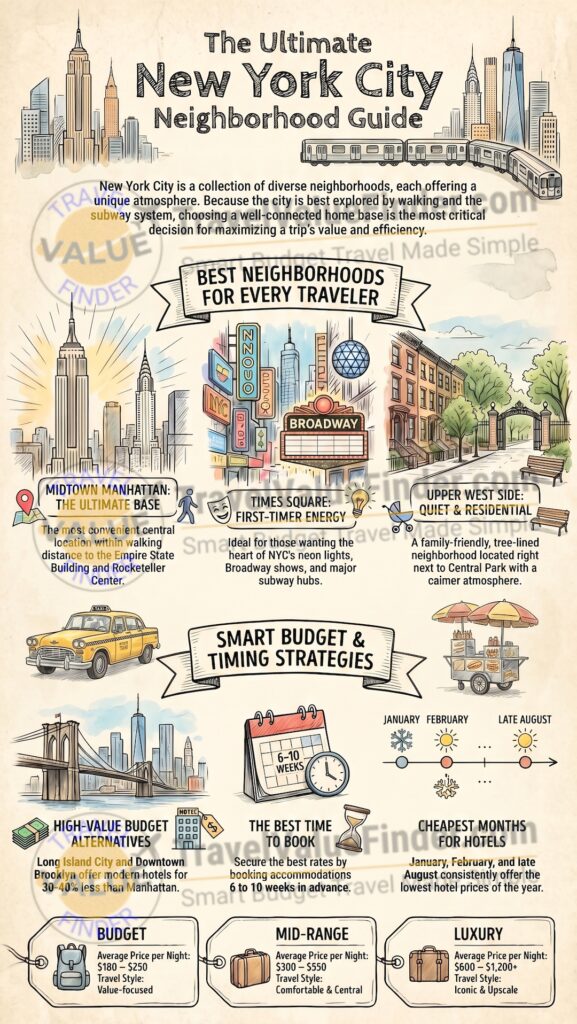
Unlike many cities, New York is best explored by subway and walking, meaning the right location can save both time and transportation costs.
Staying in a central, well-connected neighborhood allows visitors to experience Manhattan’s highlights efficiently while enjoying local character.
This guide explains where to stay in New York, the best areas to stay in New York, who each neighborhood suits best, and recommended hotels for different travel styles and budgets.
Midtown Manhattan is the best area for first-time visitors exploring NYC attractions.” Leslie Nics, TravelValueFinder.com
Where to Stay in New York, Neighborhood Overview
| Area | Best For | Atmosphere | Price Level |
| Midtown Manhattan | First-time visits | Busy & central | $$$$ |
| Times Square | Sightseeing | Energetic | $$$$ |
| Upper West Side | Relaxed stays | Residential | $$$ |
| Chelsea / Flatiron | Food & culture | Trendy | $$$$ |
| Lower Manhattan | Modern NYC | Business & historic | $$$ |
Honest destination guides, hotel comparisons, and car rentals to help you travel smarter at the best value. Hotel listings powered by Stay22 and Booking.com. We may earn a commission at no extra cost to you. Prices are subject to change. Verify prices while booking your stay.
1. Midtown Manhattan, Best Area to Stay in New York Overall
Midtown Manhattan is the most convenient base for visitors who want to be close to iconic landmarks.
Why Stay in Midtown
- Walking distance to major attractions
- Excellent subway connections
- Central location for exploring all boroughs
- Large selection of hotels
Nearby Attractions
- Empire State Building
- Bryant Park
- Rockefeller Center
- Fifth Avenue shopping
Best Hotels in Midtown
| Hotel | Category | Why Stay Here |
| Pod 39 Hotel | Budget | Smart compact rooms |
| Hyatt Place Midtown | Mid-range | Reliable comfort |
| Lotte New York Palace | Luxury | Iconic NYC stay |
2. Times Square, Best for First-Time Visitors
Times Square places visitors at the heart of New York’s energy and entertainment.
Best For
- First-time visitors
- Broadway shows
- Nightlife access
- Short stays
Highlights
- Broadway theaters
- Bright city atmosphere
- Late-night dining
- Major subway hub
Best Hotels in Times Square
| Hotel | Category | Why Stay Here |
| Row NYC (or similar value hotels) | Budget | Central location |
| Motto by Hilton Times Square | Mid-range | Modern design |
| The Times Square EDITION | Luxury | Stylish stay |
3. Upper West Side, Best Quiet Central Neighborhood
The Upper West Side offers a calmer New York experience while remaining centrally located.
Why Stay Here
- Residential atmosphere
- Close to Central Park
- Family-friendly environment
- Good subway access
Experience
Tree-lined streets, cafés, and classic New York charm make this area ideal for longer stays.
Best Hotels in Upper West Side
| Hotel | Category | Why Stay Here |
| Hotel Beacon | Mid-range | Spacious rooms |
| Arthouse Hotel | Boutique | Character stay |
| The Lucerne Hotel | Upscale | Excellent reviews |
4. Chelsea & Flatiron, Best for Food, Culture & Walkability
Chelsea and Flatiron combine trendy dining, art galleries, and walkable streets.
Why Stay Here
- Close to High Line Park
- Excellent restaurants
- Central downtown location
- Stylish atmosphere
Best Hotels in Chelsea & Flatiron
| Hotel | Category | Why Stay Here |
| Chelsea Savoy Hotel | Budget | Simple & central |
| INNSiDE by Meliá | Mid-range | Modern comfort |
| The New York EDITION | Luxury | Design hotel |
5. Lower Manhattan, Best Modern Downtown Experience
Lower Manhattan blends historic landmarks with modern development.
Best For
- Repeat visitors
- Quieter evenings
- Waterfront views
- Good hotel value
Highlights
- One World Observatory
- Wall Street
- Brooklyn Bridge access
- Battery Park
Best Hotels in Lower Manhattan
| Hotel | Category | Why Stay Here |
| Hampton Inn Financial District | Mid-range | Good value |
| Artezen Hotel | Boutique | Highly rated |
| Conrad New York Downtown | Luxury | Spacious suites |
Accommodation Price Guide
| Budget Level | Average Price/Night |
| Budget | $180 – $250 |
| Mid-range | $300 – $550 |
| Luxury | $600 – $1,200+ |
- Prices vary greatly depending on season and events.
New York Hotel Prices by Month (Best Time to Book Hotels)
Hotel prices in New York change dramatically throughout the year due to tourism seasons, holidays, fashion events, and business travel demand. Understanding New York hotel prices by month helps travelers choose the best time to visit while finding better value accommodations.
Unlike many destinations, New York remains busy year-round, but certain months consistently offer lower hotel rates – especially for flexible travelers willing to avoid peak holiday periods.
Average New York Hotel Prices by Month
| Month | Budget Hotels | Mid-Range Hotels | Luxury Hotels | Crowd Level |
| January | $180 – $260 | $320 – $480 | $650 – $1,000 | Low |
| February | $190 – $270 | $330 – $500 | $700 – $1,050 | Low |
| March | $210 – $300 | $360 – $550 | $750 – $1,150 | Medium |
| April | $240 – $340 | $420 – $620 | $850 – $1,300 | High |
| May | $280 – $420 | $500 – $750 | $1,000 – $1,600 | High |
| June | $300 – $450 | $520 – $780 | $1,100 – $1,700 | Very High |
| July | $260 – $380 | $460 – $700 | $950 – $1,500 | High |
| August | $240 – $360 | $420 – $650 | $900 – $1,400 | Medium |
| September | $320 – $480 | $580 – $850 | $1,200 – $1,900 | Peak |
| October | $340 – $500 | $600 – $900 | $1,300 – $2,000 | Peak |
| November | $220 – $320 | $380 – $580 | $800 – $1,250 | Medium |
| December | $350 – $600 | $700 – $1,100 | $1,500 – $2,500 | Peak Holidays |
Cheapest Months to Visit New York
Travelers looking for better hotel deals should consider:
- January and February – lowest tourism demand after holidays
- Late August – summer heat reduces visitor numbers
- Early November – strong value before Thanksgiving crowds
During these periods, even central Manhattan hotels occasionally fall into lower price ranges compared to peak seasons.
Most Expensive Time to Book New York Hotels
Hotel prices reach their highest levels during:
- Christmas and New Year holidays
- Fall travel season (September – October)
- Spring events and graduations
- Major conventions and Fashion Week
December is typically the most expensive month due to holiday tourism, festive decorations, and seasonal demand.
Quick Booking Strategy
- Cheapest hotel prices – January, February
- Best value months – August & early November
- Highest prices – September, October, December
- Book hotels 6 – 10 weeks in advance
- Flexible dates can reduce costs significantly
Pro Tip: New York hotel prices fluctuate frequently. Checking rates midweek and monitoring price changes over several days can often reveal better deals, especially for Manhattan stays.
Best Area in New York Based on Travel Style
| Travel Style | Best Area |
| First-time visit | Midtown Manhattan |
| Broadway & nightlife | Times Square |
| Quiet central stay | Upper West Side |
| Food & culture | Chelsea |
| Modern NYC | Lower Manhattan |
Transportation Tips When Choosing Where to Stay in New York
- Stay near a subway station.
- Manhattan locations reduce commute time.
- Avoid relying on taxis during rush hours.
- Walking and subway are fastest ways around NYC.
Long Island City, Harlem, and Downtown Brooklyn offer budget hotels with quick subway access.” Leslie Nics, TravelValueFinder.com
Where NOT to Stay in New York (Tourist Mistakes)
Tourists should avoid staying far outside Manhattan without subway access, as long travel times can reduce sightseeing efficiency and increase transportation costs.
Areas to Choose Carefully
| Area | Main Issue | Better Alternative |
| Far outer boroughs | Long commute | Midtown |
| Airport hotels | Too far from attractions | Chelsea |
| Industrial zones | Limited walkability | Upper West Side |
Where Should You Stay in New York?
Choosing where to stay in New York depends on your travel style, but most visitors benefit from staying in Manhattan for convenience and accessibility.
- Midtown offers the best overall location,
- Times Square delivers iconic energy,
- the Upper West Side provides quieter charm,
- Chelsea offers culture and dining, and
- Lower Manhattan combines history with modern comfort.
Selecting a well-connected neighborhood ensures you can experience New York efficiently while enjoying everything from world-famous landmarks to local neighborhoods.
Frequently Asked Questions – Where to Stay in New York
1. What is the best area to stay in New York for first-time visitors?
For first-time visitors, Midtown Manhattan or Times Square is ideal. These neighborhoods are centrally located near landmarks like the Empire State Building, Rockefeller Center, and Broadway theaters. Staying here saves commuting time, making sightseeing easier and more efficient.
2. Which neighborhoods are best for budget travelers in New York?
Budget travelers should consider Long Island City (Queens), Harlem, Downtown Brooklyn, or outer Chelsea. These areas offer lower hotel rates while providing excellent subway access to Manhattan attractions. Staying slightly outside the city center can save 30 – 40% on accommodation.
3. How much does a budget hotel cost in New York?
A typical budget hotel in NYC costs $150 – $250 per night, depending on the neighborhood and season. Rates are lower in January, February, and late August and spike during fall, major holidays, and events like Fashion Week.
4. When is the best time to book a hotel in New York?
The best time to book is 6 – 10 weeks in advance. For peak seasons like September – October, December holidays, and Fashion Week, book even earlier to secure budget-friendly options under $250.
5. Which months are the cheapest for hotels in New York?
Hotel prices are generally lowest in January, February, and late August. Early November can also offer good deals. Avoid peak periods such as fall foliage (Sept – Oct) and December holidays, when rates spike significantly.
6. Can I find affordable hotels in Manhattan?
Yes! Budget hotels can be found in Midtown edges, Times Square outskirts, Harlem, and Downtown Brooklyn. While prices are higher than Queens or outer boroughs, deals under $250 are available, especially if booked in advance.
7. Do I need a car to explore New York City?
No. New York is highly walkable, and the subway system connects all boroughs efficiently. Staying near a subway line is more important than staying in the most central Manhattan location for budget travelers.
8. Which area is safest for budget hotels in New York?
Long Island City, Downtown Brooklyn, Midtown edges, and Harlem are safe neighborhoods with good transit access. These areas are well-lit, residential, and frequently patrolled, making them ideal for solo travelers or families.
9. Can I find hotels near Times Square under $250?
Yes! Budget hotels near Times Square or Midtown edges occasionally fall under $250 per night, particularly in January, February, or early November. Booking early and monitoring rates is key to getting these deals.
10. What is the best neighborhood for families on a budget?
Downtown Brooklyn, Midtown edges, and Harlem offer family-friendly options with larger rooms and easy subway access. Staying slightly outside central Manhattan provides more space for the same budget while still being convenient for sightseeing.
11. Which areas are best for solo travelers in New York?
Solo travelers often choose Midtown Manhattan, Long Island City, or Downtown Brooklyn. These areas are safe, walkable, and well-connected to subway lines, making it easy to explore NYC independently.
12. How far in advance should I book New York hotels?
For budget hotels, booking 6 – 10 weeks ahead usually secures the best rates. During peak seasons – Christmas, New Year, Fashion Week, and September – October – consider booking even earlier to lock in budget-friendly rooms.
13. Can I find affordable hotels with amenities like breakfast or Wi-Fi?
Yes. Many budget hotels in New York include free Wi-Fi, complimentary breakfast, or basic amenities. Chains like Pod Hotels, Holiday Inn Express, and Hampton Inn offer good value under $250 per night.
14. Which neighborhoods are closest to major attractions?
Midtown Manhattan and Times Square are ideal for visiting landmarks like Rockefeller Center, Broadway, and the Empire State Building. Downtown Brooklyn and Harlem are slightly farther but still within 15 – 20 minutes by subway.