Travel Value Finder

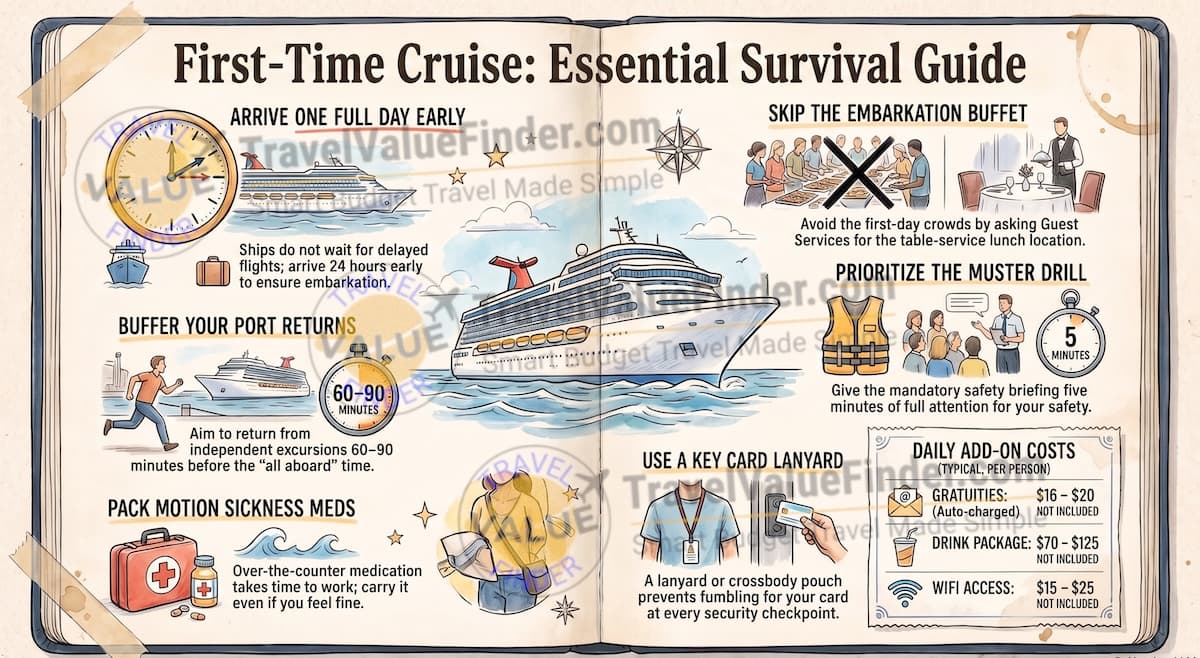
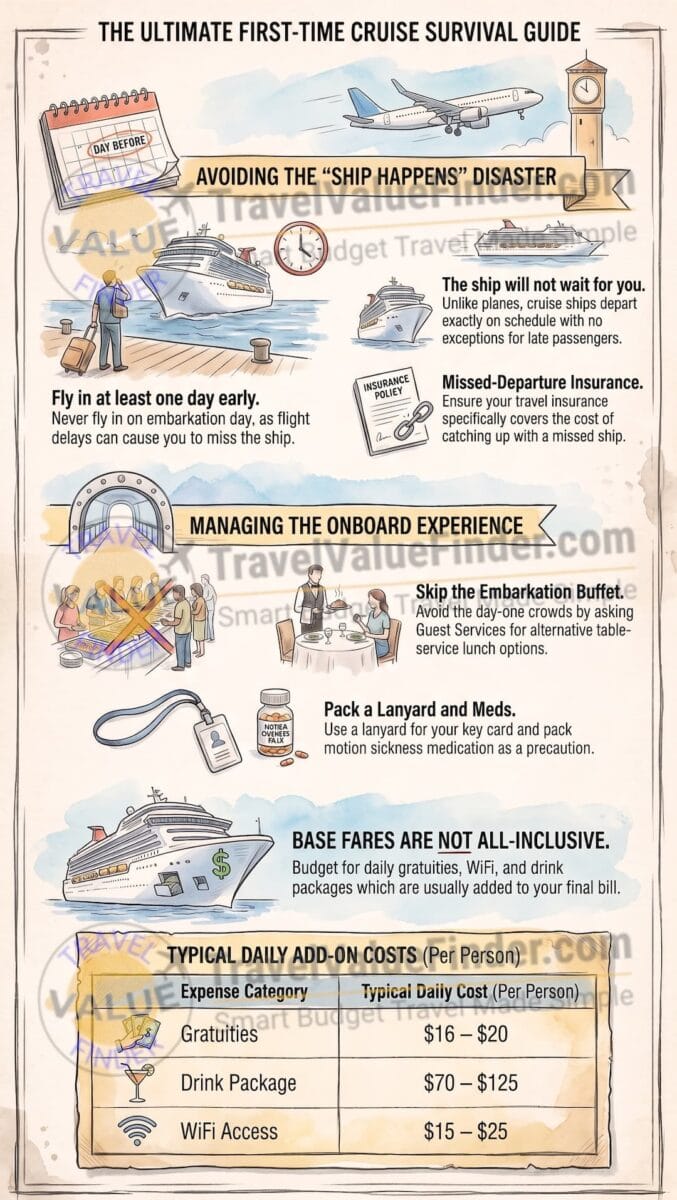
Book your flight to arrive at least one full day before your cruise departs. This is the single most important cruise tip for beginners.
This guide covers the cruise tips every first time cruiser needs before setting sail. It explains what to pack and what costs extra. It also covers the one mistake that can cost you the trip. Use it as a quick reference before you book, pack, or board.
Leslie Nics, TravelValueFinder.com. Last updated September 2026.
Most first time cruise guides give you a long checklist and hope something sticks. This guide is shorter. It focuses on the mistakes that actually matter. That starts with the one that almost cost me my first cruise.
Table of Contents
Cruise Tips for Choosing Your First Sailing
Shorter three or four night sailings are a good way to test cruising. They cost less. You get a feel for ship life before committing to a longer trip. Also, check out how much does a cruise cost for more information.
Pick a home port you can drive to or reach with a short, early flight. This lowers the risk of the exact mistake covered next.
Cruise Tips for Booking Your Flight
| Quick answer: Book your flight to arrive at least one full day before your cruise departs. This is the single most important cruise tip for beginners. |
Never book a flight that lands the same day your cruise departs. A delayed flight can mean missing the ship entirely.
Cruise ships leave on schedule no matter who is still traveling. There is no gate agent waiting and no way to board once it has sailed.
This nearly happened to me. A delayed connection on my first cruise left me eleven minutes to spare.
A couple in line behind me were not as lucky. Their flight landed about twenty minutes after the ship had already sailed.
I have since learned this is one of the most common first cruise mistakes. Nobody tells you the ship genuinely will not wait. Leslie Nics, Founder & Lead Travel Writer, TravelValueFinder.com
The Fix for This Cruise Tip
Fly in at least one full day early, every single time. The cost of one hotel night is far less than a missed departure.
Travel insurance with missed departure coverage adds real protection. See our travel insurance guide for what to look for before you book.
Cruise Tips for Embarkation Day
Boarding day sets the tone for the whole trip. These small habits make the first few hours much smoother.
- Skip the main buffet. Most ships offer a quieter table service lunch elsewhere on embarkation day.
- Take the muster drill seriously. It is five minutes for information you hope you never need.
- Ask about your cabin early. Rooms are often ready before the official announcement.
- Bring a lanyard or crossbody pouch. It keeps your key card out of a fumbling search at the scanner.
What a Cruise Fare Actually Includes
Base fares often look affordable, with short sailings advertised under one hundred dollars a night. The real budget conversation is everything added on top.
The table below shows where most first time cruisers get an unexpected bill.
| Add On | Typical Cost | Included in Base Fare |
| Gratuities | $16 to $20 per person, per day | No, usually charged daily |
| Drink package | $70 to $125 per person, per day | No, whole cabin must match |
| Wifi | $15 to $25 per day | No, sometimes bundled |
| Specialty dining | $25 to $60 per meal | No, buffet and main dining are included |
| Shore excursions | $50 to $200 or more per person | No, independent tours are often cheaper |
A cruise fare is the ticket price, not the trip price. Knowing that difference matters more than any packing list. Leslie Nics, Founder & Lead Travel Writer, TravelValueFinder.com

Cruise Tips for Port Days
The all aboard rule applies at every port, not just at the start. The ship leaves on time whether you are back or not.
Book independent excursions with a real buffer built in. Aim to be back at least sixty to ninety minutes before all aboard time.
Packing Cruise Tips for Beginners
- Motion sickness medicine. Modern ships are stable, but rough weather still happens sometimes.
- A small amount of local cash. Most spending goes on your key card, but some port vendors prefer cash.
- One nice outfit for formal night. Most mainstream lines still have at least one.
- A portable charger. Outlets near the pool deck and lounge areas fill up fast.
- A reusable water bottle. Many ships have free filtered water stations near the pool.
More Cruise Tips: People Also Ask
What is the biggest mistake first time cruisers make?
Flying in on embarkation day itself. Any delay can mean missing the ship, with no way to board after it leaves.
What should I know before going on my first cruise?
Arrive a day early and learn what costs extra. Take the muster drill seriously and build in buffer time at ports.
Does the cruise ship really leave without you?
Yes. It departs on schedule at every port, including embarkation day. There is no exception once the gangway closes.
What is included in a cruise fare?
Your cabin, main dining room, buffet meals, and most included entertainment. Drinks, wifi, specialty dining, and most excursions cost extra.
How many days should a first cruise be?
Three to five nights is a comfortable length for a first timer. It is enough time to enjoy the ship without a long commitment.
Frequently Asked Cruise Tips
How early should I arrive before a cruise departs?
At least one full day early, ideally with a hotel night at the port city.
Is travel insurance necessary for a first cruise?
Yes. Look for a policy with missed departure and trip interruption coverage, not just basic cancellation.
What happens if I miss the ship at a port of call?
You must reach the next port on your own, at your own cost. There is no guarantee you will arrive in time.
Do I need to bring cash on a cruise?
Most onboard spending runs through your key card. A small amount of cash helps at ports where vendors prefer it.
Is seasickness common on modern cruise ships?
It is less common than most people expect, thanks to stabilizer technology. Rough water can still affect some travelers.
Plan the Rest of Your Trip
- Travel Insurance Guide: what to look for, including missed departure coverage
- How to Find Cheap Flights: 12 Proven Strategies: book that early arrival flight for less
- Essential Travel Packing List: what to pack beyond the cruise basics above
- No Foreign Transaction Fee Credit Card Guide: useful for onboard charges and port day purchases
Sources
Disclaimer: Prices in this article are estimates based on research at time of publication in 2026 and can vary by cruise line, itinerary, and season. Confirm current pricing and policies directly with your cruise line before booking.