Best Hotels in Tokyo: Ultra-Luxury Towers, Zen Ryokan, and the City That Reinvented the Hotel Stay

Quick Answer: What are the best hotels in Tokyo in 2026? The best hotels in Tokyo in 2026 span sky-high ultra-luxury and intimate ryokan tradition. Top picks: Aman Tokyo (soaring 30m washi-paper atrium, Imperial Palace views, Otemachi), Bulgari Hotel Tokyo (floors 40-45 of Tokyo Midtown Yaesu, Italian ultra-luxury), Park Hyatt Tokyo (Lost in Translation’s Shinjuku icon, freshly renovated Dec 2025), Mandarin Oriental Tokyo (10 restaurants, 37th-floor spa, Nihonbashi), Janu Tokyo (Azabudai Hills, social-luxury concept, 8 dining venues), and HOSHINOYA Tokyo (urban ryokan, rooftop onsen, Otemachi). Rates start from ¥50,000/night for boutique options and exceed ¥150,000 at the ultra-luxury tier. Compare live rates here.

By Leslie, TravelValueFinder.com | Last updated: April 2026 | Based on first-hand travel experience across 40+ countries spanning North America, Europe, Southeast Asia, Latin America, and beyond.

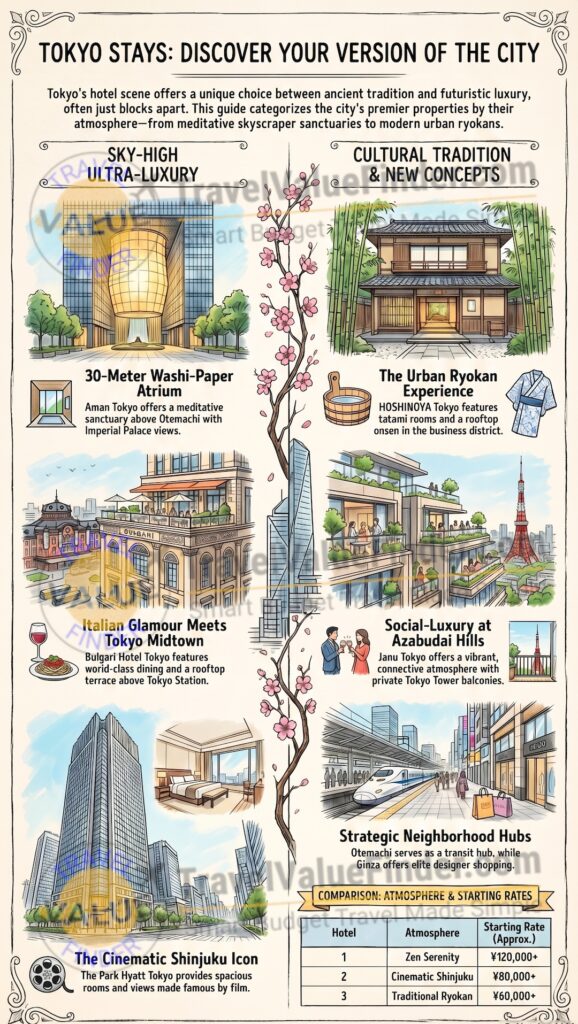
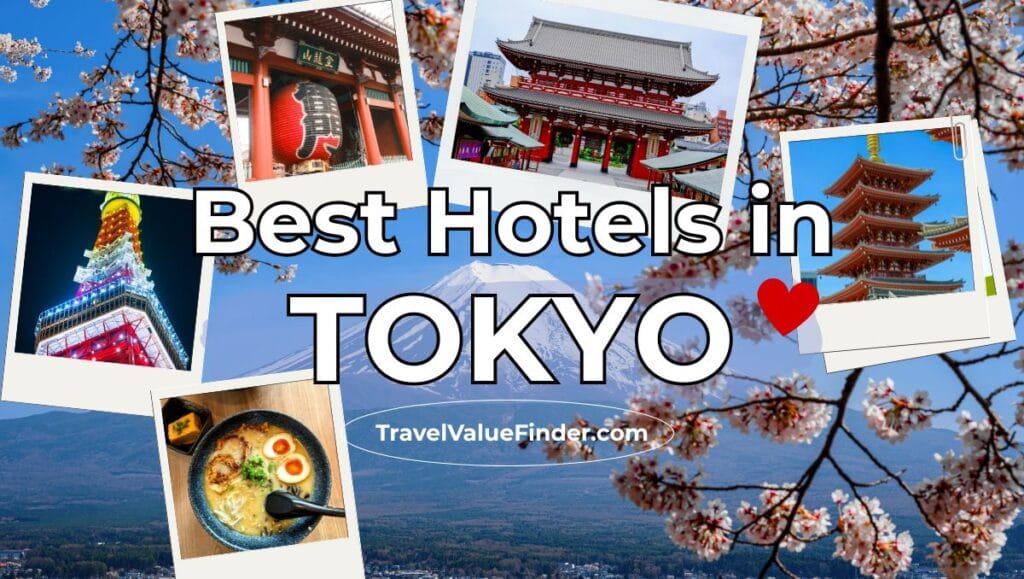
Explore the Best Hotels in Tokyo with this striking infographic, featuring ultra-luxury towers, tranquil ryokan-inspired stays, and cutting-edge accommodations across Tokyo. Perfect for travelers searching where to stay in Tokyo, this guide highlights a range of options from modern high-rise hotels to serene, Zen retreats—while the detailed section below dives deeper to help you find the ideal stay in this ever-evolving city.

Infographic - Best Hotels in Tokyo - Ultra-Luxury Towers, Zen Ryokan, and the City That Reinvented the Hotel Stay
Infographic – Best Hotels in Tokyo – Ultra-Luxury Towers, Zen Ryokan, and the City That Reinvented the Hotel Stay

Here is the most useful thing anyone can tell you about booking the best hotels in Tokyo: the city has not one hotel scene, but five. And they exist simultaneously, about three train stops apart from each other.

In Otemachi, you’re looking at imperial gardens from a 30-meter-high washi-paper atrium in one of the world’s most meditative hotels. Four stops away in Shinjuku, a neon-soaked megalopolis roars 52 floors below you through floor-to-ceiling windows where Bill Murray once sat nursing a whisky. In Azabudai Hills, a brand-new social-luxury hotel sits next to an immersive digital art installation that changes every time you visit. And if you take the right back street in Ginza and push open an unmarked door, you might find yourself in a modern urban ryokan where the night’s kaiseki dinner is being prepared on a hearth in the next room.

Tokyo doesn’t make you choose between ancient and futuristic. It makes you choose which juxtaposition you want to live in. That’s what makes finding your right hotel here so interesting — and this guide is designed to make that decision genuinely easy.

Browse all Tokyo hotels and compare current rates through our partner booking link here.

No city I’ve covered makes the hotel decision feel more personal than Tokyo. Your hotel here isn’t just a place to sleep — it’s a statement about which version of this extraordinary city you came to experience. The ultra-luxury traveler who books Aman Tokyo and the traveler who books HOSHINOYA are both having the best stay of their lives. They’re just having entirely different ones. — Leslie, Founder & Lead Travel Writer, TravelValueFinder.com

Best Luxury Hotels in Tokyo: Sky-High Ultra-Luxury

Tokyo’s ultra-luxury hotels have reset the global benchmark in the past three years. The combination of Aman, Bulgari, Janu, and the refurbished Park Hyatt makes this the most exciting concentrated luxury hotel landscape in Asia right now.

Aman Tokyo — A 30-Metre Washi-Paper Atrium Above the Imperial Palace

When Aman opened its first urban property in Tokyo in 2014, the question was whether the brand’s sanctuary philosophy could translate to a city of 14 million people. The answer — immediately, and still — is yes. Aman Tokyo occupies the upper six floors of the Otemachi Tower, with a lobby that rises 30 meters and deploys traditional Japanese materials — washi paper, weathered wood, concrete and river stone — to create something that genuinely feels like a dry landscape garden suspended in the clouds above one of the world’s most intense cities.

Every room faces either the Imperial Palace Gardens or the Tokyo skyline, and on clear winter days — particularly December through February — guests report being able to see Mount Fuji from their beds. The Aman Spa’s complimentary wellness classes and the breakfast served in-room with no time limit are the kind of details that make you understand why Aman has the loyalty following it does. This is, for many serious Tokyo travelers, the only hotel on the list.

Best for: Ultra-luxury seekers, wellness travelers, Aman loyalists, anyone who wants Tokyo’s most meditative five-star experience

Rate: From ¥120,000/night (~$800) | Book Aman Tokyo here

Bulgari Hotel Tokyo — Italian Ultra-Luxury on Floors 40-45 of Tokyo Midtown Yaesu

When Bulgari Hotel Tokyo opened in April 2023 on floors 40 through 45 of the gleaming Tokyo Midtown Yaesu tower — directly above Tokyo Station — it became, almost overnight, the most talked-about hotel opening in the city’s recent history. The Il Ristorante-Niko Romito on the 45th floor is widely considered the finest hotel restaurant in Tokyo. The spa, the pool, the mosaic-column design that fuses Italian craft with Japanese minimalism, the rooftop terrace with its Imperial Palace and Tokyo Tower sightlines — Bulgari Tokyo delivers something genuinely different from Aman’s meditative calm: it’s theatrical, glamorous, and unmistakably Italian in a city where that contrast feels electric.

The location above Tokyo Station gives it a practical advantage over many rivals: Shinkansen to Kyoto, airport express to Narita, any metro line in the city — all accessible within five minutes of stepping out of the lift.

Best for: Fashion and design lovers, Italian luxury enthusiasts, foodies pursuing Tokyo’s finest hotel dining, travelers who want the most dramatic possible arrival story

Rate: From ¥110,000/night (~$730) | Book Bulgari Hotel Tokyo here

Bulgari Tokyo has been called ‘better than Aman’ by some reviewers. I don’t entirely agree — they’re different things. Aman is tranquil, Japanese, introspective. Bulgari is Italian, theatrical, exhilarating. If I’m going for serenity I book Aman. If I’m going for a great dinner followed by cocktails on a Tokyo rooftop with friends, I book Bulgari. Both are extraordinary. — Leslie, Founder & Lead Travel Writer, TravelValueFinder.com

Park Hyatt Tokyo — Lost in Translation’s Shinjuku Icon, Freshly Restored for 2026

Some hotels earn their place in travel culture through sustained excellence. Others become legends overnight through a single film. Park Hyatt Tokyo — occupying floors 39 through 52 of the Park Tower in Nishi-Shinjuku — is both. Sofia Coppola filmed Lost in Translation here in 2003, and the New York Bar scene on the 52nd floor has been one of travel’s most referenced cinematic settings ever since. But the hotel’s appeal runs far deeper than its film credits.

After a 19-month comprehensive restoration, the Park Hyatt Tokyo reopened in December 2025 and sits in better condition than it has in years. Rooms are spacious by any Tokyo standard. The views of Shinjuku — an area many travelers find overwhelming at street level — become genuinely beautiful from 40 floors up. The Pool on the 47th floor and the New York Bar are both essential even for non-guests. Book a table at the bar for a sunset slot if you can — the skyline view alone justifies it.

Best for: Film and pop-culture enthusiasts, travelers who want spacious rooms in an exciting neighborhood, Shinjuku explorers, anyone for whom the New York Bar experience is a bucket-list item

Rate: From ¥80,000/night (~$530) | Book Park Hyatt Tokyo here

Mandarin Oriental Tokyo — 10 Restaurants, a 37th-Floor Spa, and Tokyo’s Most Complete Luxury Package

If the definition of the best luxury hotel in Tokyo is the property that comes closest to having everything, Mandarin Oriental Tokyo makes the strongest case. Perched atop the Nihonbashi Mitsui Tower in the city’s most culturally significant commercial district, the hotel offers 10 world-class restaurants and bars — including the Michelin-starred Tapas Molecular Bar — an award-winning spa that occupies the entire 37th floor, and a service standard that is consistently cited as the finest in the city. Floor-to-ceiling windows give every room a panoramic Tokyo skyline perspective that is genuinely breathtaking.

Best for: Food travelers wanting access to multiple Michelin-level dining experiences under one roof, spa-focused guests, business travelers, anyone who wants the most complete single-property luxury offering in Tokyo

Rate: From ¥80,000/night (~$530) | Book Mandarin Oriental Tokyo here

Best Hotels in Tokyo for Japanese Culture: Ryokan, Onsen, and Wabi-Sabi

Tokyo’s most memorable stays aren’t always in five-star skyscrapers. The city has a quietly extraordinary tradition of boutique hotels in Tokyo rooted in Japanese hospitality philosophy — ryokan, urban onsen hotels, and intimate properties where the tea ceremony, the kaiseki dinner, and the tatami room are the entire point. These are the best hotels in Tokyo if experiencing Japan matters more than experiencing luxury-brand design.

HOSHINOYA Tokyo — Urban Ryokan with a Rooftop Onsen in Otemachi

Steps from Aman Tokyo in the gleaming Otemachi business district, HOSHINOYA Tokyo is the most surprising hotel in the city — and possibly the most Japanese experience available outside of a traditional inn in Kyoto. Across 84 rooms (only six per floor, creating a genuine ryokan intimacy), guests sleep on futon laid out in tatami rooms, eat kaiseki multi-course dinners prepared with seasonal Japanese ingredients, and access a rooftop onsen (hot spring bath) accessible by special elevator. You enter in yukata, leave your shoes at the entrance, and the staff bows when you leave for the day.

It is the single most direct answer to the question ‘I want a Japanese cultural experience in Tokyo’ that doesn’t require going to rural Japan. The 14-storey building by architect Rie Azuma is also genuinely beautiful — bamboo-clad exterior, traditional wooden interior elements, and the kind of quiet that the surrounding Otemachi towers make seem impossible.

Best for: Cultural immersion seekers, anyone wanting an authentic ryokan experience in the city, Japan first-timers who want to understand traditional hospitality, romantic couples

Rate: From ¥60,000/night (~$400) | Book HOSHINOYA Tokyo here

Should you choose a ryokan or a Western-style hotel in Tokyo? If your trip is primarily about experiencing Japanese culture — tea ceremonies, kaiseki cuisine, traditional bathing rituals — a ryokan like HOSHINOYA Tokyo delivers something that no Western luxury hotel can replicate. If you prioritize spacious international-standard rooms, multiple restaurant choices, and world-class gym and spa facilities in the Western mold, go for Aman, Mandarin Oriental, or the Park Hyatt. Both choices lead to extraordinary experiences. They’re just profoundly different ones.

The Peninsula Tokyo — Ginza’s Most Elegant Hotel, Steps from the Imperial Palace Moat

In Yurakucho, where the Ginza shopping district meets the Imperial Palace moat gardens, The Peninsula Tokyo stands as one of the city’s most consistently excellent classic luxury properties. The 314 rooms are among the most technologically sophisticated in Tokyo — bedside control panels manage every aspect of the room environment — while the combination of Peter restaurant (French-European), The Bar, and the Peninsula Boutique & Café gives guests genuinely compelling in-house dining options without leaving the building. The signature green Peninsula fleet of cars whisking guests through Ginza is one of the more charming hotel traditions in the city.

Best for: Classic luxury travelers, business guests, shoppers using Ginza’s designer boutiques, anyone who values Peninsula-standard service consistency above all else

Rate: From ¥80,000/night (~$530) | Book The Peninsula Tokyo here

Tokyo’s Exciting New Hotel Openings: 2025 and 2026

Tokyo’s hotel landscape has never moved faster. The past 18 months have delivered some of the most compelling new properties the city has seen in decades.

Janu Tokyo — Aman’s Social-Luxury Sister Brand at Azabudai Hills

In the newly developed Azabudai Hills complex — arguably Tokyo’s most ambitious urban regeneration project in a generation — Janu Tokyo opened in 2024 as the first property of Aman Group’s younger, more social sister brand. Where Aman is contemplative and quiet, Janu is energetic and connective. The eight dining venues, the city’s largest hotel gym, a 25-meter pool, and a programming schedule that weaves together design events, cultural experiences, and social gatherings all reflect a different philosophy: luxury as conversation rather than solitude.

Every room has a private balcony facing Tokyo Tower — a view that has immediately made Janu one of the most Instagrammed hotels in the city. The proximity to TeamLab Borderless in the same complex (the world’s most popular digital art installation) gives it a cultural anchor no other luxury Tokyo hotel can claim.

Best for: Social travelers, design and art enthusiasts, anyone who wants Aman-adjacent service levels with more vibrant energy, couples who want the Tokyo Tower balcony experience

Rate: From ¥100,000/night (~$660) | Book Janu Tokyo here

2025-2026 Tokyo openings worth knowing about: JW Marriott Hotel Tokyo opened October 2025 in Takanawa Gateway City with views of Mount Fuji, Tokyo Tower, and the Rainbow Bridge. Fairmont Tokyo launched July 2025 in Shibaura near Hamamatsucho. Park Hyatt Tokyo completed its 19-month comprehensive renovation and reopened December 2025 in significantly improved condition. 1 Hotel Tokyo opened March 2026 in Akasaka — the brand’s first Japan property, with an indoor pool and biophilic design. Tokyo EDITION Ginza continues to be one of the city’s most design-celebrated recent openings.

Best Hotels in Tokyo — Full Comparison

Rates are shown in Japanese Yen and approximate USD. Tokyo hotel prices fluctuate significantly with season — cherry blossom (late March–April) and Golden Week (late April–early May) cause substantial rate spikes.

HotelNeighborhood / VibeBest ForFrom/NightBook
Aman TokyoOtemachi — Zen ultra-luxurySerenity, Imperial Palace views¥120K (~$800)Book here
Bulgari Hotel TokyoYaesu — Italian glamour towerFinest hotel dining, designers¥110K (~$730)Book here
Janu TokyoAzabudai Hills — Social luxuryTokyo Tower view, TeamLab nearby¥100K (~$660)Book here
Park Hyatt TokyoShinjuku — Film icon, viewsLost in Translation fans, city views¥80K (~$530)Book here
Mandarin Oriental TokyoNihonbashi — Complete luxuryMulti-Michelin dining, 37F spa¥80K (~$530)Book here
The Peninsula TokyoYurakucho / Ginza — ClassicService consistency, business¥80K (~$530)Book here
HOSHINOYA TokyoOtemachi — Urban ryokanRyokan tradition, rooftop onsen¥60K (~$400)Book here
Four Seasons Tokyo OtemachiOtemachi — Elegant towerFamilies, balanced luxury¥60K (~$400)Book here
JW Marriott TokyoTakanawa — Mt Fuji viewsFuji views, Rainbow Bridge¥50K (~$330)Book here
Tokyo EDITION, GinzaGinza — Design boutiqueDesign travelers, Kengo Kuma bldg¥60K (~$400)Book here

For our full Asia hotel coverage, visit TravelValueFinder.com’s Asia travel guides.

Tokyo Hotel Realities: What to Know Before You Book

Cherry blossom season (late March–April) is Tokyo’s most beautiful — and most expensive — hotel moment. Sakura typically peaks in the last week of March through early April. The best hotels in Tokyo can double in price during peak bloom, and availability disappears months in advance. If cherry blossom is your reason for going, book six months ahead minimum. If you’re flexible on timing, late April after peak bloom is beautiful, less crowded, and significantly cheaper.

The Golden Week trap: Golden Week (late April through early May) is Japan’s most popular domestic travel period — and Tokyo hotel prices spike sharply, train stations are packed, and many locals leave the city. First-time international visitors often pick this time without realizing the conditions. If Golden Week is your only option, book very early. If you have flexibility, the weeks immediately before or after are dramatically better.

The yen advantage is real — use it. The yen has been at historically favorable exchange rates for dollar, euro, and pound travelers in recent years. At today’s rates, a ¥80,000/night room that might seem expensive in JPY translates to roughly $530/night — competitive with comparable luxury properties in Paris, London, or New York. This makes Tokyo’s luxury hotel scene meaningfully better value in real purchasing-power terms than it was five years ago.

Tokyo’s train system makes neighborhood choice less critical than you’d think. Unlike Bangkok or Los Angeles, Tokyo’s metro and JR rail network is so comprehensive and punctual that almost any central hotel puts you 20-30 minutes from anywhere you want to be. That said, staying near Tokyo Station (Bulgari, Mandarin Oriental, HOSHINOYA) gives you the best hub-and-spoke access to the city and easy Shinkansen departures to Kyoto or Osaka.

Typhoon season matters if you’re traveling July through September. Japan’s summer is hot (30-35°C), humid, and occasionally disrupted by typhoons. Hotels are fully air-conditioned and typhoons rarely cause significant disruption for tourists, but worth knowing if outdoor activities or day trips are planned. October through December and March through May are Tokyo’s most comfortable hotel seasons for foreign visitors.

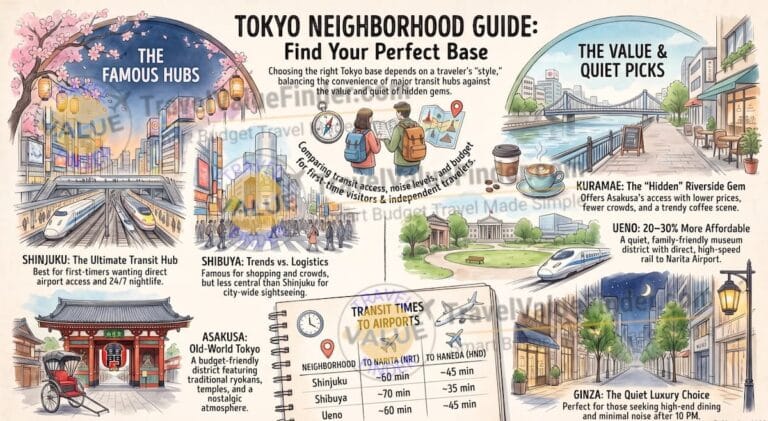
Flights to Tokyo: Narita (NRT) vs Haneda (HND). Haneda is closer to central Tokyo (30-45 minutes) and increasingly serves international routes. Narita is further (60-90 minutes) but serves more airlines and budget carriers. For Otemachi and Marunouchi hotels, Haneda is significantly more convenient. Compare Tokyo flight prices here.

More Hotel Guides from TravelValueFinder.com

Extending your Asia trip beyond Tokyo? These guides have you covered:

Best Hotels in Tokyo: Frequently Asked Questions

What is the absolute best hotel in Tokyo?

For pure luxury and the most universally acclaimed experience, Aman Tokyo and Bulgari Hotel Tokyo trade the top position in 2026. Aman wins on serenity, Japanese design authenticity, and that extraordinary Imperial Palace garden view. Bulgari wins on dining, Italian glamour, and the Tokyo Station location. For the single most complete hotel package — dining, spa, rooms, service — Mandarin Oriental Tokyo is the answer most luxury travel professionals give when asked for their personal favorite. Browse all three here.

Is it worth staying at the Park Hyatt Tokyo because of Lost in Translation?

Yes — and not only because of the film. The recently completed 19-month restoration has Park Hyatt Tokyo in better condition than it’s been in a decade. The New York Bar at sunset remains one of the genuinely great hotel experiences in Asia, and the combination of Shinjuku’s energy from 40 floors up and the spacious rooms (large by any Tokyo standard) justifies the rates. Just be clear-eyed: at today’s prices, Aman Tokyo and Bulgari offer more impressive rooms for similar or slightly higher rates. Park Hyatt is the choice if the cultural reference and the neighborhood experience matter to you.

What’s the difference between a ryokan and a regular hotel in Tokyo?

A ryokan is a traditional Japanese inn where you sleep on futon laid out on tatami floors, wear yukata (cotton robes) throughout the property, bathe in communal or private hot spring (onsen) facilities, and eat kaiseki multi-course Japanese dinners. HOSHINOYA Tokyo is the finest urban ryokan in the city, delivering this experience within a modern building in central Otemachi. Regular luxury hotels offer Western-style beds, international dining, and fitness centers. Neither is superior — they offer entirely different experiences, and choosing between them is the most interesting Tokyo hotel decision to make.

Which area of Tokyo is best for hotels?

It depends entirely on your trip’s purpose. Otemachi (Aman, HOSHINOYA, Four Seasons, Bulgari via Tokyo Station): best for business and cultural sightseeing, easiest transit connections. Shinjuku (Park Hyatt): most dynamic neighborhood, best nightlife and shopping access. Ginza/Yurakucho (The Peninsula, Tokyo EDITION): luxury shopping, nearest to Imperial Palace, elegant atmosphere. Azabudai Hills/Roppongi (Janu): creative arts district, Mori Art Museum, TeamLab. For first-time visitors, Otemachi or Ginza provides the most efficient access to all of Tokyo’s key experiences.

How much do the best hotels in Tokyo cost per night?

The best hotels in Tokyo range from approximately ¥50,000–60,000/night (~$330–400) for Four Seasons Otemachi, JW Marriott, and HOSHINOYA, to ¥80,000/night (~$530) for Park Hyatt, Mandarin Oriental, and The Peninsula, up to ¥110,000–120,000/night (~$730–800) for Bulgari and Aman. The favorable USD/JPY exchange rate makes these numbers meaningfully more competitive than comparable properties in Paris or New York. Check current rates here.

What is the best hotel in Tokyo for couples?

For the most romantic experience: Aman Tokyo (Imperial Palace views, rooftop hot spring, supremely quiet) or HOSHINOYA Tokyo (ryokan tradition, tatami room, kaiseki dinner, rooftop onsen). For the most dramatic date night: Bulgari Hotel Tokyo (Il Ristorante by Niko Romito on the 45th floor) or the Park Hyatt New York Bar at sunset. All four rank among the most memorable couple experiences in Asia.

Do I need to book Tokyo hotels far in advance?

Yes — particularly for cherry blossom season (March–April) and Golden Week (late April–May). The best hotels in Tokyo at peak periods sell out three to six months ahead. At Aman, Bulgari, and HOSHINOYA specifically, popular room types can be waitlisted even further out. For travel in June–September or November–December, a month’s advance booking is usually sufficient, though HOSHINOYA and Aman rooms sell quickly year-round.

Finding Your Version of Tokyo in a Hotel Room

I’ve described Tokyo as having five hotel scenes, and I’ve only covered a fraction of them here. The truth is that the best hotels in Tokyo are genuinely whatever hotel best matches your version of this city — and Tokyo is generous enough to have a best hotel for every version.

The traveler who wants the most serene possible counterpoint to Tokyo’s intensity should book Aman. The traveler who wants to understand what Japanese hospitality means in its fullest traditional expression should book HOSHINOYA. The traveler who wants to step into a movie should book the Park Hyatt. The traveler who wants the finest hotel dinner in Asia should book Bulgari. And the traveler who wants all of those things at different times across a week-long stay should simply book more nights than planned — because that’s what Tokyo does to you.

Tokyo is the only city where I consistently advise travelers to book more nights than they think they need. Not because there are too many sights — though there are — but because the city rewards the traveler who slows down enough to actually feel it. A great hotel helps enormously with that. It becomes the anchor that makes the chaos feel navigable and the beauty feel personal. — Leslie, Founder & Lead Travel Writer, TravelValueFinder.com

Find your Tokyo hotel and compare live pricing through TravelValueFinder’s booking partner here.

Affiliate disclosure: TravelValueFinder.com earns a small commission when you book through our partner links. All hotel recommendations reflect genuine editorial judgment — no property pays for placement.

Share this post