Travel Value Finder

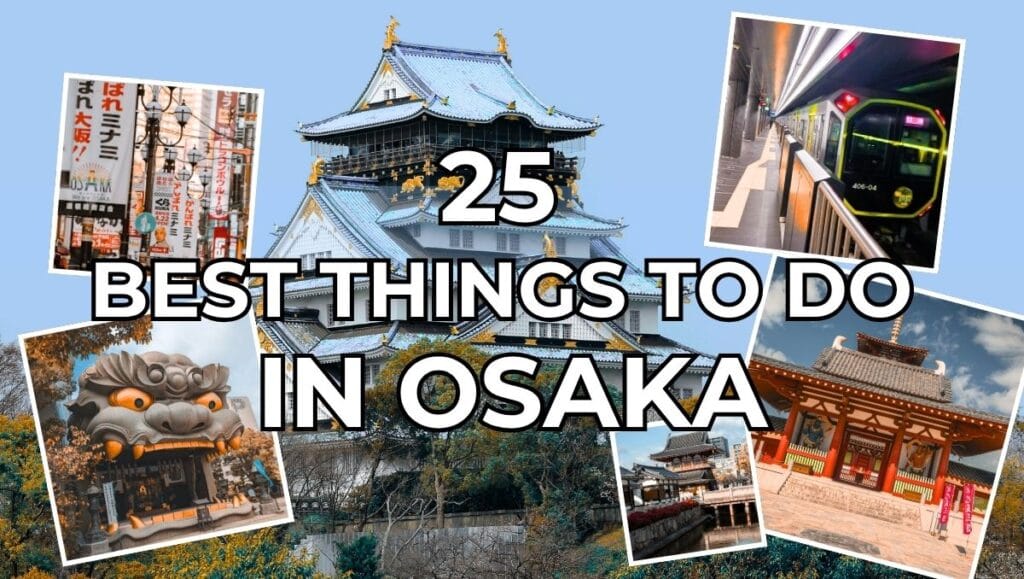
Best Things to Do in Osaka: The 25 best things to do in Osaka include: walking Dotonbori at night, exploring Osaka Castle, spending a full day at Universal Studios Japan, tasting fresh seafood at Kuromon Ichiba Market, eating kushikatsu in Shinsekai, taking in panoramic city views from Umeda Sky Building and Abeno Harukas, visiting the world-class Kaiyukan Aquarium, shopping along Shinsaibashi arcade, and taking day trips to Kyoto and Nara. Osaka is Japan’s food capital, known for takoyaki, okonomiyaki, and some of the most vibrant street food culture in Asia.
Hi, I’m Leslie Nics, founder of TravelValueFinder.com. I’ve spent years researching and writing about travel in Asia, including multiple trips across Japan’s Kansai region. Osaka is one of my favourite cities in the world – I’ve eaten my way through Dotonbori at midnight, soaked in Spa World after a long day of sightseeing, and spent entire afternoons lost in the backstreets of Shinsekai. Everything in this guide is drawn from first-hand experience and verified against trusted sources including the Japan National Tourism Organization (JNTO) and japan-guide.com. My goal is simple: help you experience Osaka the right way – with local knowledge, honest tips, and a full stomach. Updated April 2026
This infographic showcases the very best of Osaka, highlighting must-see attractions, iconic food experiences, vibrant nightlife spots, and lesser-known hidden gems. It gives travelers a quick, inspiring look at how to experience the city’s unique energy, from street food adventures to cultural landmarks. For a complete guide with detailed recommendations, insider tips, and planning advice, be sure to read the full article.
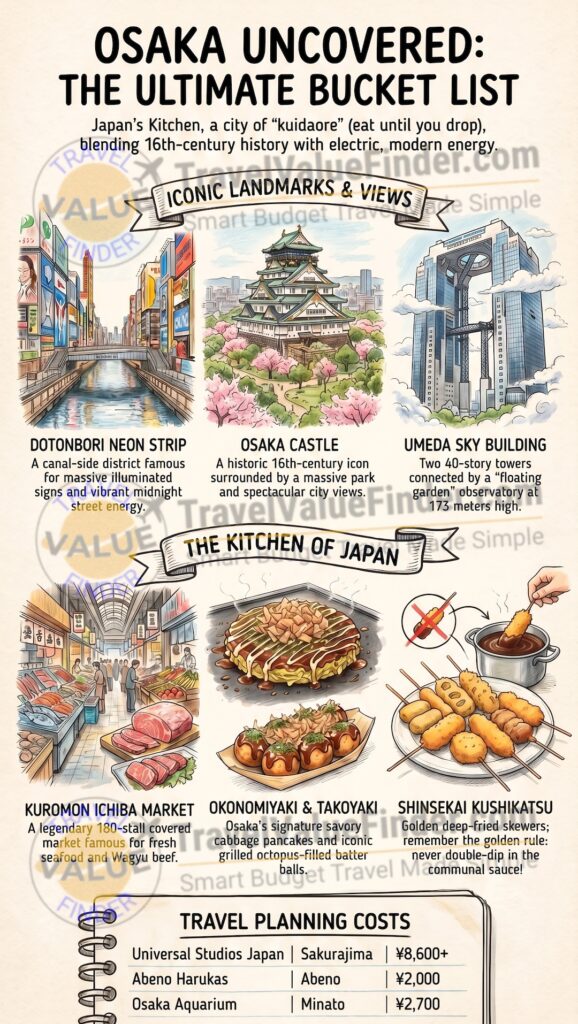
Table of Contents
Why Osaka Belongs at the Top of Your Japan Itinerary
Osaka doesn’t try to impress you with ancient temples or pristine mountain views. It impresses you with the sheer quality of its food, the warmth of its people, and an electric street energy that feels completely its own. It’s the city that coined the phrase kuidaore – eat until you drop – and it takes that philosophy extremely seriously.
As Japan’s third-largest city and economic powerhouse of the Kansai region, Osaka punches well above its weight when it comes to things to do. From the neon spectacle of Dotonbori to a 16th-century hilltop castle, from the world’s greatest theme park to one of Japan’s oldest shrines – Osaka covers the full spectrum.
This guide covers the 25 best things to do in Osaka in 2026, organized by theme, packed with practical tips, and written to help you make the most of every hour in this remarkable city. And when you’re ready to book your Osaka hotel, compare hundreds of options in one search: Find the best Osaka hotel deals here.
Osaka is the city that finally made me understand what Japanese people mean when they talk about omotenashi – genuine, wholehearted hospitality. You feel it in every ramen shop, every convenience store, every chance encounter with a local who insists on walking you to where you need to go. Leslie Nics, TravelValueFinder.com | On arriving in Osaka for the first time
Osaka’s 25 Best Activities – Quick Reference Table
Use this table to plan your days at a glance before diving into the full descriptions below:
| # | Activity | Area | Approx. Cost |
| 1 | Dotonbori – Osaka’s Iconic Neon Strip | Namba | Free |
| 2 | Osaka Castle & Park | Chuo | ¥600 |
| 3 | Universal Studios Japan (USJ) | Sakurajima | ¥8,600+ |
| 4 | Osaka Aquarium Kaiyukan | Minato | ¥2,700 |
| 5 | Kuromon Ichiba Market | Namba | Free/cost of food |
| 6 | Shinsekai & Tsutenkaku Tower | Naniwa | ¥1,000 tower |
| 7 | Shinsaibashi & Namba Shopping | Chuo/Namba | Free to explore |
| 8 | Umeda Sky Building | Kita | ¥1,500 |
| 9 | Abeno Harukas Observatory | Abeno | ¥2,000 |
| 10 | Den Den Town (Anime/Electronics) | Namba | Free to browse |
| 11 | Sumiyoshi Taisha Grand Shrine | Sumiyoshi | Free |
| 12 | Spa World Onsen | Naniwa | ¥1,000 – ¥2,800 |
| 13 | Namba Parks & Roof Garden | Namba | Free |
| 14 | Tempozan Ferris Wheel & Harbour | Minato | ¥1,000 wheel |
| 15 | Amerika-Mura (Ame-Mura) | Chuo | Free to explore |
| 16 | Hozenji Yokocho Alley | Namba | Free |
| 17 | Nakanoshima Museum of Art | Nakanoshima | ¥1,500+ |
| 18 | Expo ’70 Commemorative Park | Suita | ¥250 |
| 19 | Tenjinbashi-suji Shopping Arcade | Kita | Free |
| 20 | National Museum of Ethnology | Suita | ¥580 |
| 21 | Osaka Museum of Housing & Living | Tenjinbashisuji | ¥600 |
| 22 | Doguyasuji Kitchen Street | Namba | Free |
| 23 | Day Trip to Nara | Nara (45 min) | ¥500+ |
| 24 | Day Trip to Kyoto | Kyoto (15 min) | Varies |
| 25 | Osaka Food Tour – Eat Like a Local | City-wide | ¥3,000 – ¥8,000 |
Part 1: Osaka’s Iconic Must-See Attractions
1. Dotonbori – The Most Famous Street in Osaka
No list of things to do in Osaka is complete without Dotonbori. This canal-side strip in Namba is Osaka in a single frame: enormous illuminated signs, the world-famous Glico Running Man billboard, street vendors cooking takoyaki and okonomiyaki to order, restaurant touts calling from every doorway, and an energy that peaks at midnight and barely sleeps. Walking the length of Dotonbori – from Ebisu-bashi Bridge all the way to the Hozenji Yokocho alley – is one of the great urban experiences in Asia.
Best time to visit: After 7pm when the neon lights fully ignite. Visit both day and night for a completely different experience.
Insider tip: Cross Ebisu-bashi Bridge and look back down the canal for the iconic Dotonbori panorama – that’s your money shot.
Dotonbori at 10pm on a Saturday is one of those travel experiences that physically overwhelms you – smell of frying octopus, neon reflecting off the canal, ten thousand people having the time of their lives. I stood on Ebisu-bashi Bridge for 30 minutes and just watched. It’s that good. Leslie Nics, TravelValueFinder.com | On Dotonbori at night, Namba
2. Osaka Castle – A 16th-Century Icon in the Heart of the City
Built by the legendary warlord Toyotomi Hideyoshi in 1583, Osaka Castle is the most recognizable landmark in the city. The castle itself functions as an excellent museum covering Osaka’s feudal history, and the views from the top floor are spectacular – especially during cherry blossom season when the surrounding park erupts in pink. The castle grounds also contain the Nishinomaru Garden, one of Osaka’s best hanami (flower-viewing) spots.
Cost: ¥600 adults for the castle museum. The surrounding park is free. Pre-book online to skip the queues in peak season.
Getting there: Osaka Castle Park Station (Osaka Loop Line) or Tanimachi 4-chome Station. Accessible and well-signposted.
3. Universal Studios Japan (USJ) – Japan’s Greatest Theme Park
Universal Studios Japan is, by most measures, the best theme park in Japan – and it’s absolutely one of the best things to do in Osaka for families, pop-culture fans, and anyone who loves world-class rides. The Wizarding World of Harry Potter alone is worth the trip, but Super Nintendo World (a fully immersive Mario universe) takes things to another level entirely. The park is less than 30 minutes from central Osaka by direct train.
Tip: Buy tickets in advance – USJ regularly sells out, especially during weekends, school holidays, and cherry blossom season. Book via the official USJ website or through Klook.
Budget note: Entry from ¥8,600 for adults. Express passes (¥4,000 – ¥14,000 extra) are worth it for busy days to skip queues on the top rides.
Super Nintendo World at USJ genuinely made me feel like I’d stepped inside a video game. The attention to detail is unlike anything I’ve seen at any theme park anywhere in the world. Even if you haven’t played Mario since the 90s, you’ll be completely swept up in it. Leslie Nics, TravelValueFinder.com | On Universal Studios Japan’s Super Nintendo World
4. Osaka Aquarium Kaiyukan – One of the World’s Best Aquariums
Kaiyukan is regularly ranked among the top aquariums on earth – and for good reason. Built around a central Pacific Ocean tank containing whale sharks (one of only a few aquariums in the world where you can see them), the experience is genuinely breathtaking. The aquarium follows the ‘Ring of Fire’ concept, circling the Pacific from the Aleutian Islands to Antarctica with 15 themed zones. Easily a half-day experience.
Cost: ¥2,700 adults. Located in the Tempozan Harbour area – combine with the Tempozan Ferris Wheel for a full day out.
5. Kuromon Ichiba Market – Osaka’s Kitchen
Kuromon Ichiba (literally ‘Black Gate Market’) is a 180-stall covered market that has been feeding Osaka since 1902. It’s loud, fragrant, and packed with vendors selling fresh seafood, grilled skewers, Wagyu beef, sashimi, and Osaka street food specialties – most of which you can eat standing right at the stall. Arrive before 11am for the best selection and fewest crowds.
Don’t miss: Freshly grilled scallops, sea urchin on rice, and the takoyaki stands at the southern end of the market. Bring cash – many vendors are still cash only.
6. Shinsekai & Tsutenkaku Tower – Osaka’s Retro District
Shinsekai (‘New World’) was built in 1912 as Osaka’s entertainment quarter, modelled partly on Paris and partly on New York’s Coney Island. It fell into decline over the decades but has been experiencing a renaissance – its retro charm, low-key atmosphere, and excellent kushikatsu (deep-fried skewers) restaurants now make it one of the most characterful areas in the city. The Tsutenkaku Tower at its centre is Osaka’s older answer to Tokyo Tower, with a viewing deck offering great city panoramas.
Kushikatsu rule: Never double-dip your skewer into the shared communal sauce. This is the cardinal sin of Shinsekai dining.
Part 2: Eating Your Way Through Osaka – The Food Capital of Japan
Osaka takes ‘food city’ to a completely different level. In Tokyo, great food is something you seek out. In Osaka, it finds you – it’s on every corner, in every alley, spilling out of every market. The city genuinely lives and breathes through what it eats. Leslie Nics, TravelValueFinder.com | On Osaka’s food culture, comparing it to Tokyo and Kyoto
7. Osaka’s Essential Street Foods – What You Must Try
Osaka’s claim to being the kitchen of Japan is no exaggeration. The city gave the world some of Japan’s most beloved street foods – and eating them here, fresh and hot from the source, is one of the best things to do in Osaka full stop. Here’s your essential food guide:
| Dish | What It Is | Where to Try |
| Takoyaki | Octopus-filled grilled batter balls, topped with bonito flakes | Dotonbori, Kuromon Market |
| Okonomiyaki | Savoury pancake with cabbage, meat/seafood, sauces | Fukushima, Namba |
| Kushikatsu | Deep-fried skewers dipped in communal sauce (no double-dipping!) | Shinsekai |
| Negiyaki | Osaka’s green-onion pancake – thinner and more delicate than okonomiyaki | Fukushima |
| Fugu | Pufferfish – a delicacy requiring a licensed chef; try once | Dotonbori restaurants |
| Osaka Ramen | Rich, pork-bone broth with thick noodles – distinct from Tokyo style | Namba, Umeda |
| Kitsune Udon | Udon noodles with sweet fried tofu – said to have been invented in Osaka | Traditional restaurants |
| Konnyaku | Konjac jelly – a popular, unusual Osaka street snack | Kuromon Market |
8. Kushikatsu in Shinsekai – A Cultural Experience, Not Just a Meal
Kushikatsu – deep-fried skewers of meat, seafood, and vegetables served with a shared dipping sauce – was invented in Osaka’s working-class Shinsekai district. Eating it here, in a standing bar surrounded by old men watching baseball and arguing about football, is as authentic as Osaka gets. The variety is enormous: from chicken and pork to lotus root, cheese, quail egg, and even chocolate banana.
Rule of the house: The communal sauce is shared by all. Double-dipping is a serious social offence. Use the sauce once, then put the skewer down.
9. Izakaya Crawl – Osaka’s Nighttime Food Culture
Osaka’s izakaya (Japanese gastropub) scene is arguably the best in Japan. The city’s friendly, boisterous culture translates perfectly into the izakaya setting – expect generous portions, cold Sapporo beer, and staff who treat you like a regular from the moment you sit down. The best izakaya areas are Fukushima (known for negiyaki and the city’s most passionate local crowd), Tenma (cheap, cheerful, packed with salarymen), and the alleys behind Namba.
10. Hozenji Yokocho Alley – Atmospheric Dining in the Heart of Namba
Just steps from the chaos of Dotonbori, Hozenji Yokocho is a narrow stone-paved alley lined with intimate traditional restaurants, soft lantern light, and a small moss-covered shrine (Hozenji Temple) that locals come to splash with water for good luck. It’s one of the most romantic, atmospheric spots in all of Osaka – and several of the restaurants here have been run by the same families for generations.
Best for: A quiet dinner of kappo cuisine (traditional Osaka cooking) or a sake tasting away from the Dotonbori crowds.
Part 3: Osaka From Above – The Best City Views
11. Umeda Sky Building – Osaka’s Most Dramatic Viewpoint
The Umeda Sky Building is one of the most architecturally daring buildings in Japan – two 40-story towers connected at the top by a ‘floating garden’ observation deck accessed via an escalator that passes through open air. The panoramic views at 173m are spectacular day and night, and the experience of the escalator alone is unlike anything else in Japan.
Cost: ¥1,500 adults. Open until 10:30pm – the night view over Osaka’s illuminated grid is one of the best in the country.
12. Abeno Harukas – Views from Japan’s Tallest Building
At 300 meters, Abeno Harukas is the tallest building in Japan, and its Harukas 300 observation deck on the 58th, 59th, and 60th floors gives the most comprehensive panoramic view of Osaka available anywhere. On a clear day you can see Kyoto, Nara, Kobe, and even the coast of Wakayama. The complex also contains a major department store, an art museum, and a hotel.
Cost: ¥2,000 adults. Located above Tennoji Station – easy to combine with Tennoji Park, Shitennoji Temple, and the Shinsekai district nearby.
13. Tempozan Ferris Wheel & Harbour Village
The Tempozan Giant Ferris Wheel, at 112.5m, was the world’s largest when it opened in 1997 (it’s since been surpassed). Ride it for sweeping views over Osaka Bay and the harbour. The surrounding area includes the Kaiyukan Aquarium, the Legoland Discovery Centre, and a Sunday market – making the whole Tempozan area a solid full-day itinerary for families.
Part 4: Culture, History & Only-in-Osaka Experiences
What I love about Osaka’s cultural scene is that it doesn’t take itself too seriously. Even the history comes with a side of humour – this is the home of manzai comedy, after all. Osaka teaches you that joy and culture aren’t opposites. Leslie Nics, TravelValueFinder.com | On Osaka’s cultural personality versus Kyoto and Tokyo
14. Sumiyoshi Taisha Grand Shrine – Osaka’s Most Sacred Site
Founded in the 3rd century, Sumiyoshi Taisha is one of the oldest and most important Shinto shrines in Japan – the head shrine of over 2,300 Sumiyoshi shrines across the country. Its most striking feature is the dramatic arched Sorihashi Bridge, whose steep curve is said to represent the connection between the human and divine worlds. Visit on a weekday for a remarkably peaceful, authentic experience far from the tourist trail.
Getting there: Sumiyoshi Taisha Station on the Nankai Line, about 20 minutes from Namba. Free to enter.
15. Osaka Museum of Housing & Living – Step Inside Edo-Period Osaka
This extraordinary museum recreates an entire 19th-century Osaka townscape at life-size scale, including shops, homes, streets, and even a working pharmacy. Visitors put on period clothing to wander the reconstruction under a painted sky that cycles through day and night. It’s one of the most immersive, family-friendly museums in Japan – and surprisingly little-known among international visitors.
Cost: ¥600. Located in Tenjinbashi – combine with a walk along the Tenjinbashi-suji shopping arcade nearby.
16. Nakanoshima Museum of Art – World-Class Contemporary Art
Opened in 2022 on Nakanoshima island between two rivers in central Osaka, this striking black building houses one of the finest collections of modern and contemporary art in Japan, including major works by Modigliani and Oskar Schlemmer. The island itself is a pleasant respite from the urban energy of the city, lined with riverside paths, civic buildings, and a rose garden.
Cost: Permanent collection from ¥1,500. Check the website for current exhibitions, which are frequently world-class.
17. Expo ’70 Commemorative Park – History, Nature & the Tower of the Sun
The 1970 World Expo in Osaka was one of the most attended in history, and its legacy lives on in this sprawling park in Suita. The centrepiece is Taro Okamoto’s iconic Tower of the Sun – a bizarre, totemic sculpture that has become one of the most famous artworks in Japan. The park also contains the National Museum of Ethnology, Japan’s largest ethnological museum, and beautiful cherry blossom and autumn leaf viewing spots.
Cost: ¥250 park entry. National Museum of Ethnology: ¥580 extra. About 30 minutes from Osaka Station by train.
18. Spa World Onsen – The Most Extraordinary Bathing Experience in Japan
Spa World is an extraordinary urban onsen complex spread across multiple floors of a building in Shinsekai, with 17 themed bath zones representing cultures from ancient Rome to Finland to Atlantis. It’s quirky, vast, and genuinely relaxing – and it’s open 24 hours, making it a popular option after a late night in Dotonbori. The Japanese domestic onsen floors use actual natural hot spring water.
Cost: ¥1,000 – ¥2,800 depending on time of day and day of week. Note that visible tattoos may be restricted in some bath areas – check the website before visiting.
Part 5: Shopping, Streets & Osaka’s Best Neighbourhoods
19. Shinsaibashi & Namba Shopping – Osaka’s Retail Heart
The Shinsaibashi-suji shopping arcade – a 600-metre covered street running between Shinsaibashi and Namba – is one of the most popular shopping destinations in western Japan. It’s packed with fashion, cosmetics, electronics, souvenir shops, and street food. America-Mura (Ame-Mura), just to the west, adds a younger, more alternative flavour with vintage clothing, independent boutiques, and a thriving café scene.
Nearby: Namba Parks shopping complex has a rooftop garden with great city views – free to enter and a peaceful retreat from the shopping crowds.
20. Tenjinbashi-suji Shotengai – Japan’s Longest Shopping Arcade
At 2.6 kilometres, Tenjinbashi-suji is the longest covered shopping arcade in Japan – a narrow street lined with over 600 shops selling everything from fresh tofu and local vegetables to electronics and second-hand books. It’s far less touristy than Shinsaibashi and gives a far more authentic glimpse into how Osaka’s local residents actually shop. Walk the full length for a genuine local experience.
21. Amerika-Mura (Ame-Mura) – Vintage, Art & Youth Culture
Amerika-Mura grew up in the 1970s around second-hand American goods brought back from US military bases, and it has evolved into Osaka’s most creative neighbourhood – a compact grid of vintage shops, independent art galleries, graffiti walls, and excellent cafés. Triangle Park at its centre hosts weekend events and is a great spot to people-watch. It’s one of the best things to do in Osaka for culture vultures and fashion enthusiasts.
22. Den Den Town – Osaka’s Answer to Akihabara
Den Den Town is Osaka’s version of Tokyo’s Akihabara – a dense cluster of electronics stores, anime merchandise shops, gaming arcades, and retro collectibles. It’s smaller and less overwhelming than Akihabara, with a more relaxed, nostalgic energy and a particularly strong selection of vintage gaming hardware. Explore the side streets for specialist shops dedicated to specific franchises or eras.
23. Doguyasuji – The Street of Kitchen Knives & Cookware
Osaka is a city obsessed with food, so it follows that it would have an entire street dedicated to professional kitchen equipment. Doguyasuji Shotengai is 150 metres of restaurant supply shops selling Japanese knives, chopsticks, lacquerware, cookware, and the plastic food models you see outside Japanese restaurants. The knife shops in particular stock some of the finest handcrafted Japanese blades in the world – exceptional gifts for serious cooks.
Osaka Neighbourhood Guide – At a Glance
Not sure which part of Osaka to base yourself or spend an afternoon? Here’s a quick breakdown:
| Area | Best For | Watch Out For |
| Namba | Nightlife, street food, Dotonbori, shopping | Crowded evenings; noisy |
| Shinsaibashi | Trendy shopping, cafes, accessible | Busy on weekends |
| Umeda/Kita | Transport hub, upscale shops, sky views | Sprawling; can disorient |
| Shinsekai | Retro atmosphere, kushikatsu, cheap eats | Rough edges; go at dusk |
| Amerika-Mura | Youth culture, vintage, independent art | Small area; weekend crowds |
| Nakanoshima | Art museums, riverside walks, quiet | Fewer food options |
| Tennoji | Zoo, gardens, Harukas tower, local vibe | Spread out; needs transport |
See also: Best Hotels in Osaka: Top Picks for Every Budget
Part 6: The Best Day Trips from Osaka
One of Osaka’s best-kept secrets is how perfectly it’s positioned for day trips. You can be walking among Nara’s sacred deer in 45 minutes, wandering Kyoto’s geisha district in under an hour, and back in Dotonbori for dinner. No other city in Japan gives you that kind of range. Leslie Nics, TravelValueFinder.com | On using Osaka as a base for exploring Kansai
24. Day Trip to Nara – Deer, Giant Buddha & Ancient History
Nara is one of Japan’s most charming day trips from Osaka – just 45 minutes by express train. The city is famous for its hundreds of freely roaming sacred deer (who will bow when you bow back), the magnificent Todai-ji Temple housing Japan’s largest bronze Buddha, and the atmospheric Kasuga Taisha Shrine with its thousands of stone lanterns. It’s genuinely magical and deeply relaxing after the intensity of Osaka’s streets.
Getting there: Kintetsu Osaka-Namba Station to Kintetsu Nara Station (about 40 minutes, ¥680). The deer park and Todai-ji are a short walk from the station.
25. Day Trip to Kyoto – Ancient Capital, 30 Minutes Away
Kyoto is so close to Osaka that it barely qualifies as a day trip – the Shinkansen takes just 15 minutes, and the regular Hankyu or Keihan trains take around 40 – 50 minutes for under ¥600. Kyoto’s temples, shrines, geisha districts, bamboo groves, and traditional cuisine make it the perfect contrast to Osaka’s modern energy. If you’re spending more than 2 nights in Osaka, an overnight in Kyoto is highly recommended – but even a day gives you enough for Fushimi Inari, Arashiyama, or the Gion district.
Getting there: Hankyu Kyoto Line from Osaka-Umeda to Kyoto-Kawaramachi (about 43 minutes, ¥410). Or JR Shinkansen for ¥1,420 if speed matters.
Practical Tips for Visiting Osaka
Leslie Nics’s Top Osaka Practical Tips
- Get an ICOCA card: Osaka’s IC card is called ICOCA, but any Japanese IC card works across the whole transport network. Buy one at Kansai Airport or any major station for ¥2,000 (including ¥500 deposit).
- The Osaka Amazing Pass: Offers unlimited city transport plus free entry to 40+ attractions including Osaka Castle, Tempozan Ferris Wheel, and Tsutenkaku Tower. Worth it for busy sightseeing days – check the official website for current pricing.
- Eat at lunch, not dinner: Osaka’s best restaurants offer set lunch menus (teishoku) at a fraction of dinner prices. A ¥1,500 lunch at a restaurant that charges ¥8,000 for dinner is one of Japan’s great budget travel secrets.
- Cash at markets: Kuromon Market and Shinsekai kushikatsu bars are largely cash-only. Always have yen on hand – withdraw from 7-Eleven or Japan Post ATMs for guaranteed foreign card acceptance.
- No double-dipping: Seriously. In kushikatsu restaurants, double-dipping into the communal sauce is the social equivalent of putting your fork in someone else’s food. It’s not done.
- Book USJ early: Universal Studios Japan sells out far in advance during peak season. Book tickets and express passes as soon as your travel dates are confirmed.
- Osaka vs Kyoto base: Osaka is cheaper for hotels, livelier at night, and better for food. Kyoto is more beautiful and tranquil. If you can only pick one, Osaka as a base with day trips to Kyoto gives better overall value.
How Much Does a Day in Osaka Cost?
Osaka is one of the most affordable major cities in Japan for food – which significantly reduces your daily budget compared to Tokyo. Here’s a realistic breakdown:
- Budget day (¥5,000 – ¥8,000): Convenience store breakfast, ramen or takoyaki lunch, kushikatsu dinner in Shinsekai, free attractions like Dotonbori and Sumiyoshi Taisha
- Mid-range day (¥12,000 – ¥18,000): Sit-down breakfast, Kuromon Market food crawl, museum entry (Harukas or Kaiyukan), proper dinner in Namba
- Splurge day (¥25,000+): USJ express passes, kaiseki dinner, Umeda Sky Building, sake tasting, cocktails in a Namba bar
The biggest variable is accommodation. Compare and book the best Osaka hotels here – our search covers everything from capsule hotels to luxury city-view rooms in one place.
I’ve spent money in a lot of cities, but Osaka is the only place where I consistently felt like I was getting more than I paid for. A ¥600 bowl of kitsune udon that takes 20 minutes to make. A ¥300 convenience store onigiri that’s genuinely delicious. The city’s relationship with quality and value is extraordinary. Leslie Nics, TravelValueFinder.com | On Osaka’s exceptional food-to-cost ratio
Related Guides from TravelValueFinder
Planning your wider Japan or Kansai trip? These guides will help:
- Japan Travel Guide 2026: Everything You Need to Plan Your Trip
- How Much Does It Cost to Visit Japan? What to Budget Per Day
- 25 Best Things to Do in Tokyo: The Ultimate Guide
- Best Hotels in Osaka: Top Picks for Every Budget
- Best Hotels in Tokyo: Where to Stay for Every Traveler
- Find out Travel to Tokyo 4 Days Budget Guide
Trusted External Resources
For official, up-to-date Osaka and Japan travel information:
- Japan National Tourism Organization (JNTO) – Official travel planning resource
- japan-guide.com – Comprehensive Osaka travel and attraction guide
- Osaka Official Tourism Site (Osaka Info) – City visitor guide
- Universal Studios Japan – Official tickets and park information
- Osaka Aquarium Kaiyukan – Official entry and booking
- Lonely Planet Osaka Guide – Expert travel recommendations
Frequently Asked Questions – Things to Do in Osaka
How many days do I need in Osaka?
Most first-time visitors spend 2 – 3 days in Osaka, which covers the main highlights including Dotonbori, Osaka Castle, Shinsekai, and the key food experiences. If you add day trips to Nara and Kyoto, plan for 4 – 5 nights. Osaka is also an excellent base for exploring the wider Kansai region including Nara, Kyoto, Kobe, and Himeji.
What is Osaka most famous for?
Osaka is most famous for its food culture – it’s often called the ‘kitchen of Japan’ (tenka no daidokoro). The city gave the world takoyaki, okonomiyaki, and kushikatsu, and has a higher concentration of Michelin-starred restaurants per capita than almost anywhere else. Beyond food, Osaka is known for Dotonbori’s neon nightlife, Osaka Castle, Universal Studios Japan, and the warmth and humour of its people.
Is Osaka or Tokyo better to visit?
Both are extraordinary and serve different travel personalities. Osaka is warmer, louder, cheaper for food, more food-focused, and more approachable for travellers who want to mix with locals. Tokyo is larger, more cosmopolitan, and offers a broader range of world-class cultural experiences. Most visitors to Japan benefit from spending time in both – Osaka as a base for Kansai, Tokyo for the east. Use Osaka’s excellent transport links to cover both in a single trip.
What is the best area to stay in Osaka?
Namba is the top choice for most visitors – it puts you walking distance from Dotonbori, Shinsaibashi, Kuromon Market, and the main entertainment areas, with excellent transport links. Umeda/Kita is better if you prefer a quieter, more business-oriented neighbourhood close to Osaka Station. See our full guide: Best Hotels in Osaka.
Is Osaka safe for solo travellers?
Osaka is one of the safest cities in the world for solo travellers, including women travelling alone. Crime rates are extremely low, the transport system is reliable and well-lit, and even navigating the city with minimal Japanese is straightforward. The Dotonbori and Namba areas are busy and well-populated even late at night.
When is the best time to visit Osaka?
Spring (late March to early May) for cherry blossoms and autumn (October to November) for fall foliage are the two most spectacular seasons. Summer (June to August) is hot and humid but alive with festivals including the massive Tenjin Matsuri in July – one of Japan’s three great festivals. Winter is the quietest and most affordable season with excellent onsen weather.
What should I not miss eating in Osaka?
The non-negotiables: takoyaki (octopus balls) from a street stall in Dotonbori, okonomiyaki (savoury pancake) in Fukushima, kushikatsu (deep-fried skewers) in Shinsekai, fresh seafood at Kuromon Market, and a bowl of kitsune udon at any traditional restaurant. For a splurge, a multi-course kaiseki dinner in the Namba or Nakanoshima area showcases the very best of Osaka’s culinary tradition.
Do I need a JR Pass for Osaka?
If you’re travelling between Osaka, Kyoto, Nara, and Kobe, a regional Kansai Area Pass (from ¥2,800 for 1 day) is usually better value than the national JR Pass. If your Japan itinerary includes a bullet train journey to Tokyo or Hiroshima, the national JR Pass becomes worth considering. For getting around Osaka itself, the ICOCA IC card handles everything.
Ready to Book Your Osaka Stay?
Compare hundreds of Osaka hotels – from capsule hotels to luxury city-view suites – and book the best available rate.
Disclaimer: This article contains affiliate links. When you book through our hotel search, TravelValueFinder may earn a small commission at no extra cost to you. This helps keep the site free to use. We only recommend products and services we genuinely believe add value to your trip.