Travel Value Finder

Leslie Nics, TravelValueFinder.com. Last updated September 2026. Based on firsthand budget travel across Europe, Asia, and the Americas.
Learning how to travel cheap does not mean skipping comfort or fun. It means spending on what matters and cutting what does not. This guide covers real ways to save on flights, stays, food, and daily costs.
This article is for general informational purposes only. It does not replace financial, legal, or professional advice. Prices change often, so confirm current rates before booking.
Table of Contents
How to Travel Cheap
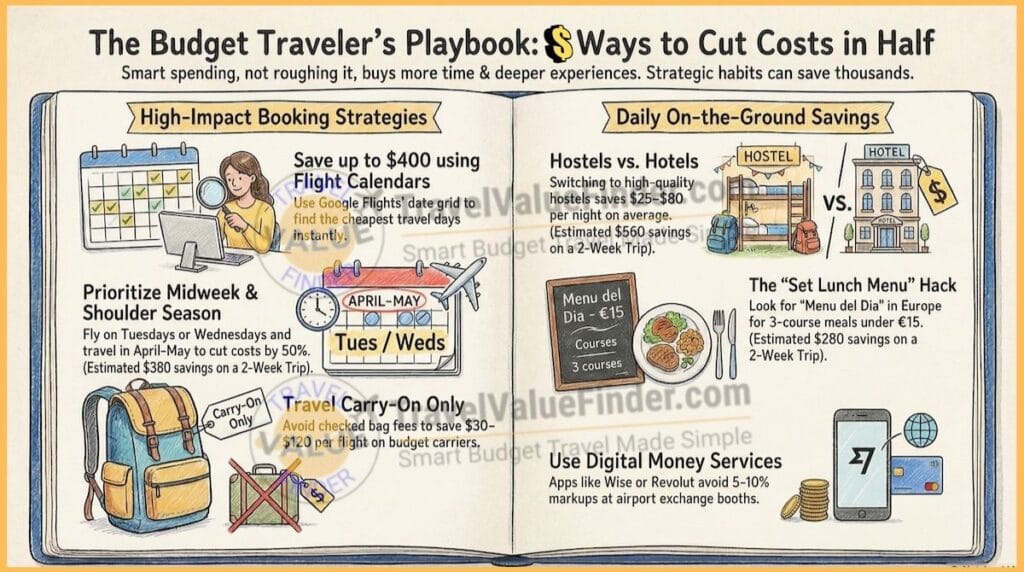
To travel cheap, combine several habits at once. Fly midweek in shoulder season and sleep in hostels or shared rentals. Eat where locals eat, use public transport, and track spending daily.
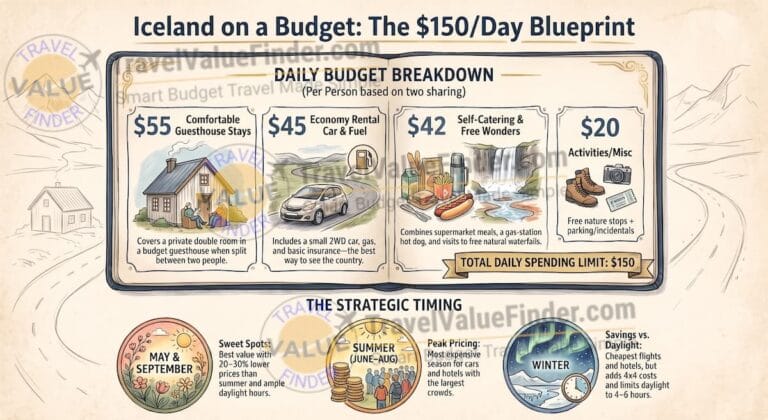
What a Realistic Cheap Travel Budget Looks Like
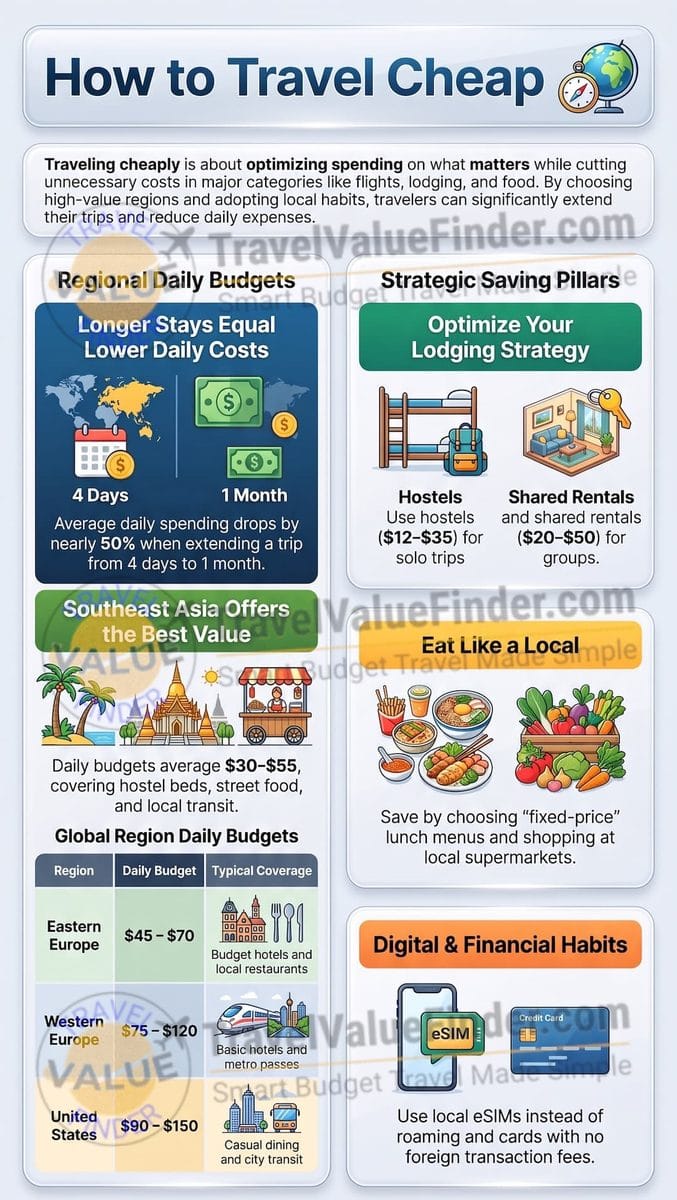
Costs vary widely by region and travel style. A useful starting point is what budget travelers typically spend each day. The table below shows rough daily costs for lodging, food, transport, and activities.
| Region | Daily Budget | What It Typically Covers |
| Southeast Asia | $30 to $55 | Hostel bed, street food, local buses |
| Central America | $35 to $60 | Guesthouse room, casual meals, shared shuttles |
| Eastern Europe | $45 to $70 | Hostel or budget hotel, local restaurants |
| Mexico | $45 to $70 | Budget hotel, markets, city transit |
| Western Europe | $75 to $120 | Hostel or basic hotel, cafes, metro passes |
| United States | $90 to $150 | Budget hotel or hostel, casual dining, transit |
These figures exclude flights, which get their own section below. Use them as a starting point, then adjust for your habits. Someone who cooks most meals will usually spend less than these ranges suggest.
To build your own number, add nightly lodging cost to a daily food estimate. Then add a small daily amount for local transport and one activity. Multiply by trip length for a rough total before flights.
For a full country by country breakdown, see our guide to Cheap Countries to Visit.
Choosing a Destination Where It Is Easier to Travel Cheap
Not every destination costs the same for a similar experience. Some countries simply offer more value for each dollar spent. Picking the right destination is one of the biggest levers in your travel budget.
- Southeast Asia offers strong value on food, lodging, and local transport.
- Eastern Europe gives Western style cities at a fraction of Western prices.
- Central America mixes beaches, culture, and low daily costs.
- Portugal and Spain remain the best value in Western Europe.
If your dates are flexible, let the destination follow your budget. This approach opens up far more affordable options.
See full pricing across dozens of countries in our Cheap Countries to Visit guide.
Pairing two nearby budget regions in one trip stretches your money further.
Finding Cheap Flights to Help You Travel Cheap
Flights are often the single largest cost in any trip. A full breakdown of flight strategies lives in a separate guide. This section stays brief and covers three key habits.
- Use a flexible date calendar on Google Flights or Skyscanner to spot the cheapest days.
- Fly Tuesday or Wednesday whenever your schedule allows it.
- Book international flights sixty to one hundred twenty days ahead for the best fares.
For airlines, alerts, and airport tricks, read our guide: How to Find Cheap Flights: 12 Proven Strategies.
Where to Sleep When You Travel Cheap
Lodging is usually the second largest expense on any trip. The right choice depends on your style and group size. It also depends on how social you want to be.
| Accommodation Type | Typical Cost per Night | Best For |
| Hostel dorm | $12 to $35 | Solo travelers, meeting people |
| Shared rental | $20 to $50 per person | Groups of three or more |
| Guesthouse or budget hotel | $30 to $60 | Couples, quieter travel |
| House sitting | Free | Longer stays, pet lovers |
| Home stay exchange | Free | Cultural immersion, flexible schedules |
Book peak season stays early, since rooms fill fast and prices climb. In shoulder or off season, waiting closer to your trip often finds a better deal. Always check a property’s own website after finding it on a booking platform.
Eating Well While You Travel Cheap
Food adds up fast if every meal happens at a restaurant built for tourists. Eating like a local costs less and usually tastes better. A mix of self catering and smart restaurant choices keeps this cost down.
| A cheap set lunch beside local office workers is one of travel’s best bargains. Leslie Nics, TravelValueFinder.com |
- Shop at local supermarkets and cook one meal a day when a kitchen is available.
- Order the fixed price lunch menu common across Spain, France, Portugal, and Italy.
- Eat where market vendors and office workers eat, not where the menus have photos.
- Treat street food in Southeast Asia as a full meal, not a snack.
For more ways to stretch a food budget, read Travel For Food.
Getting Around Once You Land
Local transport is easy to overspend on without noticing. Taxis and private transfers cost far more than public transit in most cities. A multi day transit pass almost always beats paying per ride.
- Buy a multi day transit pass in cities where you plan to stay.
- Use an app like Citymapper to find the fastest and cheapest route.
- Take overnight trains or buses for long distances to save a night of lodging.
- Walk when the distance is short. It costs nothing and you see more.
Rental cars make sense for rural regions with little public transport. In walkable cities, a car usually adds cost without adding convenience.
Free Things to Do That Make It Easy to Travel Cheap
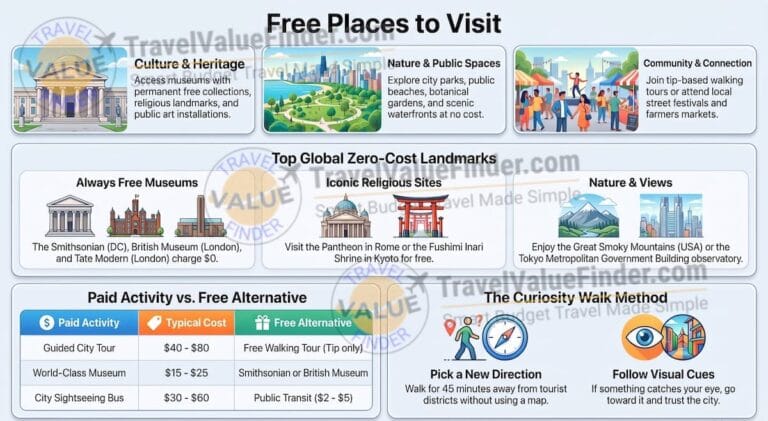
Sightseeing does not have to cost much. Many cities offer free walking tours, museum days, and parks. Building these in keeps activity spending low.
- Join a free walking tour on your first day to get oriented. Tip what you can afterward.
- Check museum websites ahead of time for free entry days.
- Visit national parks or public gardens, which are often free or very low cost.
See our full list in Free Places to Visit: The Complete Guide.
Money Habits That Help You Travel Cheap
How you manage money abroad affects your total cost as much as what you buy. Fees and weak exchange rates quietly drain a travel budget. A few habits fix most of this before you even leave home.
| Habit | Why It Helps |
| Use a card with no foreign transaction fee | Avoids the typical two to three percent charge on every purchase |
| Use Wise or Revolut for currency exchange | Gives a rate close to the real market rate |
| Skip airport currency exchange counters | Airport rates often run eight to twelve percent above market |
| Earn travel points on a rewards card | Can cover a future flight or hotel stay |
Compare two or three cards before choosing one. Look at fees, points value, and signup bonus together.
Learn more in our guide to the best card with no foreign transaction fee.
Staying Connected Without Overpaying
Roaming charges from a home carrier are one of the quietest ways to overspend abroad. A local eSIM usually costs far less for the same data. Setup takes minutes and needs no trip to a phone shop.
Airalo and Holafly both sell eSIM data plans for most countries. Plans often start around five dollars per gigabyte. Activating before landing means data works immediately, saving up to one hundred dollars versus roaming.
Traveling Cheap With a Group or a Family
Group size changes the math on almost every cost in this guide. Splitting a rental often beats separate hostel beds for groups of three or more. Families can apply the same lodging and food habits with a little extra planning.
| Group Size | Smartest Lodging Choice | Why It Works |
| Solo traveler | Hostel dorm | Lowest cost, easy to meet people |
| Couple | Guesthouse or private hostel room | Balance of privacy and price |
| Group of three or more | Shared rental | Splits nightly cost per person |
| Family with kids | Apartment with a kitchen | Cuts food costs, more space |
Cooking half a family’s meals in a rental kitchen can save real money. Expect well over one hundred dollars a week. Ask about family rooms at hostels, which are more common than expected.
Timing Your Trip to Travel Cheap
When you travel changes the price of nearly everything. Shoulder season falls just before or after peak months. It offers lower prices and good weather.
- Shift your trip to shoulder season for savings of twenty to fifty percent.
- Stay a week or more in one place to unlock weekly rates on rooms.
- Avoid moving cities every day or two, since each move adds transport and lodging costs.
Trip Length and Your Cost to Travel Cheap
Longer trips often cost less per day than short ones. Weekly discounts on rooms and slower pacing cut daily spending fast. The table below shows how average daily cost can drop as a trip gets longer.
| Trip Length | Typical Daily Average | Why It Drops |
| 3 to 4 days | $90 to $130 | First and last day costs spread over few days |
| 1 week | $70 to $100 | Weekly lodging rates start to apply |
| 2 to 3 weeks | $55 to $80 | Slower pace, fewer city changes |
| 1 month or more | $40 to $65 | Monthly rates and local routines |
This is one reason slow travel saves money beyond the obvious. A longer trip is not just more days, it is a cheaper average day.
People Also Ask: How to Travel Cheap
What is the number one rule for traveling cheap?
Combine several small savings instead of one big cut. Small changes across flights, food, and lodging add up faster than any single trick.
How do people afford to travel so cheap?
They plan ahead and cut costs across every category at once. Consistency matters more than any single shortcut.
Is it cheaper to travel alone or with others?
Traveling with others usually costs less per person for lodging and transport. Solo travel gives more control but fewer ways to split costs.
What is a realistic daily budget to travel cheap?
A realistic daily budget runs from thirty dollars to one hundred twenty dollars. Southeast Asia sits at the low end, Western Europe at the high end.
A Sample Week of Traveling Cheap
Here is what these habits look like over one week. This example uses a mid cost destination.
| Category | Typical Spending | Cheap Travel Approach | Weekly Saving |
| Lodging | $70 a night hotel | $25 a night hostel | $315 |
| Food | $50 a day restaurants | $22 a day mixed | $196 |
| Local transport | $15 a day taxis | $5 a day transit pass | $70 |
| Activities | $30 a day paid tours | $10 a day mostly free | $140 |
| Total savings for the week | $721 |
This is one example, not a guarantee. Actual savings depend on destination, group size, and how many habits you apply together.
Get your Day-to-Day Itinerary with our Free Trip Planner. No account needed and no sign-in required.
What to avoid to Travel Cheap
A few common habits raise trip costs without travelers noticing. Avoiding them is often worth more than any single saving tip.
- Booking the first hotel you see instead of comparing a few options. A quick search often turns up a better rate nearby.
- Paying for data roaming instead of a local eSIM. The price gap is usually significant.
- Skipping travel insurance and risking a costly medical bill abroad. One emergency can undo months of careful saving.
- Overpacking and paying checked bag fees that exceed the value of the items. Pack lighter and check the airline’s baggage rules first.
- Exchanging currency at the airport instead of using a fee free card. Airport counters rarely offer a fair rate.
Review the International Travel Checklist from the U.S. Department of State first.
A Simple Cheap Trip Checklist
Use this short sequence to plan your next trip around these habits.
- Pick a destination using the daily budget table above as a guide.
- Search flights with a flexible date calendar and book within the ideal window.
- Choose lodging based on your group size and how long you plan to stay.
- Set a rough daily spending target for food, transport, and activities before you go.
FAQ: How to Travel Cheap
What is the cheapest way to travel?
Combine several habits at once. Fly midweek in shoulder season and stay in hostels or shared rentals. Eat where locals eat and use public transport instead of taxis.
How much does it cost to travel cheap for a week?
A one week trip typically costs $300 to $700 in lower cost regions. Western Europe or the United States usually runs $500 to $900, excluding flights.
Can I travel cheap without staying in hostels?
Yes. Shared rentals, guesthouses, house sitting, and home stay exchanges all offer strong value. None require a shared dorm room.
Is it possible to travel cheap in expensive countries?
Yes, though it takes more planning. Cook most meals, use public transport, and focus on free outdoor attractions.
Does travel insurance still make sense on a cheap trip?
Yes. A policy usually costs thirty to eighty dollars a month. It protects against costs that could wipe out a travel budget.
What is the biggest single expense when trying to travel cheap?
Flights are usually the largest single cost. Lodging is typically second, followed by food and local transport.
How do I stick to a cheap travel budget once I am there?
Track spending daily using a simple app or notebook. Set a daily limit before you go and check it each evening.
Start Small and Travel Cheap More Often
You do not need every habit on this list for your next trip. Pick two or three that fit your style and apply them fully. Once they become automatic, add another and watch your budget stretch further.
More Ways to Plan a Cheaper Trip
- How to Find Cheap Flights: 12 Proven Strategies
- Cheap Countries to Visit: Best Value Destinations Ranked
- Free Places to Visit: The Complete Guide
- Travel For Food
- Travel Budget Calculator
Sources
- U.S. Department of State, International Travel Checklist
- Consumer Financial Protection Bureau, foreign transaction fee guidance
- U.S. General Services Administration, per diem rates
- National Park Service, entrance passes and fee free days
- World Tourism Organization, tourism data