Travel Value Finder


If you’re planning a trip to France’s culinary and cultural capital, this Lyon travel guide covers the best time to visit Lyon, top attractions, where to stay, local food experiences, and practical travel tips for first-time visitors.
Leslie Nics, TravelValueFinder.com | Last updated: April 2026 | Based on first-hand research and on-the-ground travel across Paris, Nice, and Lyon
Table of Contents
Lyon at a Glance
- Country: France
- Region: Auvergne-Rhône-Alpes
- Population: ~520,000
- Known for: Food, history, rivers, Renaissance architecture
- UNESCO Site: Vieux Lyon
- Best for: Food lovers, culture seekers, slow travelers
Top Tips and Attractions: Complete Guide to Visiting Lyon, France
Visiting Lyon, France offers a mix of historic landmarks, world-class cuisine, and vibrant neighborhoods.
Located between the Rhône and Saône rivers, Lyon is known for its UNESCO-listed Old Town, Roman ruins, and reputation as France’s gastronomic capital.
Quick Facts About Lyon
Where is Lyon located?
Lyon is located in eastern France, at the meeting point of the Rhône and Saône rivers, between Paris and the French Alps.
Why is Lyon famous?
Lyon is famous for its cuisine, UNESCO-listed Old Town, Roman history, silk heritage, and being the gastronomic capital of France.
How many days do you need in Lyon?
Most travelers need 2 to 4 days to see Lyon comfortably without rushing.
Essential things to know before visiting Lyon, France:
- Best time to visit: spring (April – June) and fall (September – October)
- Top areas to stay: Presqu’île, Vieux Lyon, Croix-Rousse
- Must-see attractions: Vieux Lyon, Fourvière, Presqu’île
- Local food to try: bouchons, quenelles, praline tart
- Getting around: metro, trams, and walkable city center
Travel Tips to Visiting Lyon
Lyon is best visited in spring or fall, offers excellent public transport, and is ideal for food lovers and history enthusiasts.
First-time visitors should stay in central neighborhoods and plan at least two to three days to explore Lyon’s main attractions and food scene.
Why Visit Lyon?
Lyon sits at the crossroads of French history, culture, and cuisine. It’s France’s third-largest city, but it feels more relaxed and livable than Paris.
What I love most is how Lyon balances old and new – Roman ruins on one hill, Renaissance streets by the river, and modern neighborhoods just across the bridge.
Many people rush straight from Paris to the south of France, but Lyon deserves its own spotlight.
In fact, A Complete Guide to Visiting Lyon, France wouldn’t be complete without saying this: Lyon is one of the most underrated cities in Europe.
Lyon feels like a city where history and everyday life share the same streets.” Leslie Nics, TravelValueFinder.com
Best Time to Visit Lyon
The best time to visit Lyon depends on what kind of experience you want.
- Spring (April – June): Mild weather, fewer crowds, and beautiful river walks
- Summer (July – August): Warm and lively, but can be hot and busy
- Autumn (September – October): My personal favorite – great food season and comfortable temperatures
- Winter (December): Cold, but magical during the Festival of Lights (Fête des Lumières)
If it’s your first visit, spring or early autumn is ideal. That’s when Lyon feels most local and relaxed.
Where to Stay in Lyon
Where you stay in Lyon influences whether your days feel smooth or scattered. For first-time visitors, I usually recommend:
- Presqu’île: Central and convenient
- Vieux Lyon: Atmospheric and historic
- Croix-Rousse: Local, quieter, and charming
Hotels, serviced apartments, and short-term rentals are widely available and often better value than Paris. In Lyon, the right neighborhood can make a big difference to your daily rhythm.
Understanding Lyon’s Neighborhoods
To truly appreciate Lyon, it helps to understand the city’s unique layout and neighborhoods. Lyon is beautifully structured around two rivers; the Rhône and the Saône, with historic districts, modern streets, and scenic hills on either side.
Each area has its own distinct character;
- Vieux Lyon on the west bank of the Saône is the city’s Renaissance heart, filled with cobblestone streets, hidden traboules, and vibrant cafés.
- On the east bank of the Rhône, the Presqu’île district is the bustling commercial and cultural center, home to elegant squares, boutiques, and museums.
- Further north, Croix-Rousse sits on a hill and was historically the center of the silk-weaving industry, giving it a bohemian charm with lively markets and street art.
Understanding these neighborhoods not only helps you navigate the city efficiently but also lets you experience the diverse atmospheres.
Vieux Lyon (Old Town)
For first-time visitors, Vieux Lyon is the perfect place to begin exploring the city.
This historic district, located on the west bank of the Saône River, feels like stepping back in time. Its narrow cobblestone streets wind past beautifully preserved Renaissance buildings, colorful façades, and quaint courtyards.
One of the district’s most fascinating features is its network of traboules, hidden passageways that weave through buildings and connect streets-once used by silk workers to transport goods in secret.
Vieux Lyon is also home to charming cafés, traditional bouchons serving authentic Lyonnaise cuisine, and artisan shops, making it a lively area to wander.
Whether you’re photographing its architecture, exploring the traboules, or simply soaking in the historic atmosphere, Vieux Lyon offers a rich and immersive introduction to the city’s culture and history.
Presqu’île
Presqu’île, the peninsula situated between the Rhône and Saône rivers. It is the vibrant heart of Lyon.
This bustling district perfectly combines shopping, dining, cultural attractions, and nightlife, making it a hub for both locals and visitors.
Stroll along Rue de la République for upscale shops and charming boutiques, or pause at one of the many cafés and pâtisseries to enjoy Lyon’s culinary delights.
Presqu’île is also home to iconic squares like Place Bellecour-one of the largest city squares in Europe-and Place des Terreaux, surrounded by beautiful architecture and lively fountains.
Despite its energy, the area never feels overwhelming, allowing visitors to wander comfortably while soaking in the atmosphere. From theaters and museums to bars and restaurants, Presqu’île offers a perfect mix of history, culture, and modern city life in one walkable district.
Croix-Rousse
Perched on a hill north of the Presqu’île, Croix-Rousse is a unique Lyon neighborhood with a rich history and a distinctive village-like charm.
Once the heart of the city’s silk-weaving industry, the area is filled with narrow streets, artisan workshops, and remnants of the traboules used by silk workers to transport their goods.
Today, Croix-Rousse exudes a creative, bohemian energy, with vibrant street art, independent cafés, quirky boutiques, and lively markets, including the famous Marché de la Croix-Rousse.
The neighborhood also offers some of the best panoramic views of Lyon, making it ideal for photography or a leisurely afternoon stroll. While it’s a bit hillier than Presqu’île or Vieux Lyon, the walkable streets and unique atmosphere make it well worth exploring.
For first-time visitors, staying near Presqu’île or Vieux Lyon is often more convenient, as these areas provide easy access to shops, restaurants, and public transport, while Croix-Rousse is perfect for daytime exploration or a relaxed evening wander.
Top Things to Do in Lyon
There’s no shortage of best things to do in Lyon, France, but here are the highlights I wouldn’t skip.
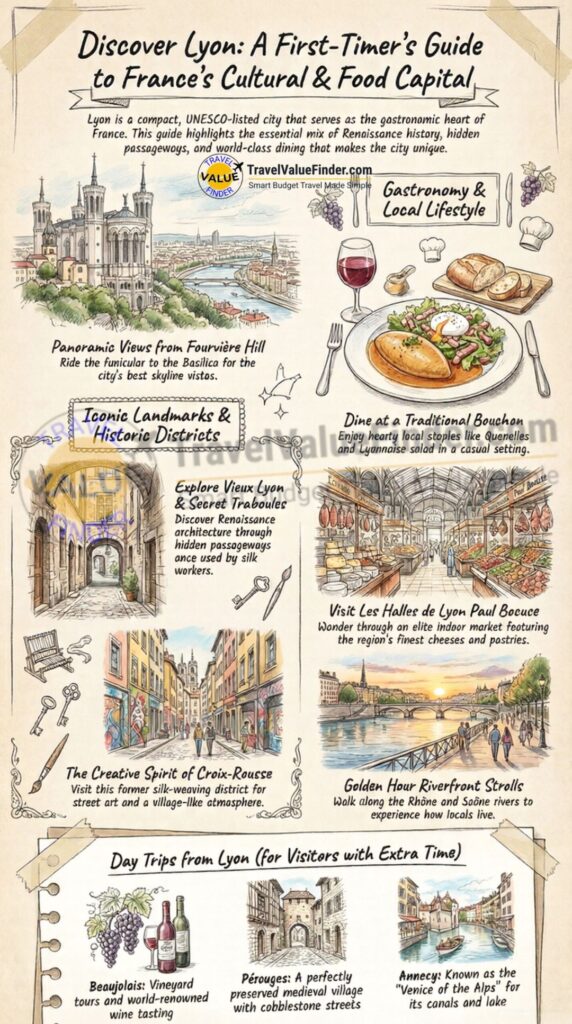
Explore Vieux Lyon and Traboules
Wandering through Vieux Lyon, the city’s historic Renaissance district, is an experience best enjoyed without a strict plan.
Stroll along its narrow cobblestone streets, admire the colorful façades, and step into hidden courtyards that transport you back in time. Keep an eye out for the famous traboules-secret passageways that connect buildings and alleyways, once used by silk workers to transport goods.
Exploring these tucked-away corridors offers a fascinating glimpse into Lyon’s rich history, giving you the sense of what life was like here 500 years ago. Each corner and passageway tells a story, making a simple walk through Vieux Lyon feel like a journey into the past.
Visit Fourvière Hill
TNo trip to Lyon is complete without a visit to Fourvière Hill, a historic and scenic landmark overlooking the city.
Take the funicular from Vieux Lyon up to the Basilica of Notre-Dame de Fourvière, an architectural masterpiece with intricate mosaics, stained glass, and ornate details that reflect Lyon’s rich religious and cultural history.
Once at the top, step outside to enjoy one of the most breathtaking panoramic views in the city-spanning the Rhône and Saône rivers, the old town, and the surrounding hills.
Beyond the basilica, the hill itself is perfect for a leisurely stroll, with peaceful gardens, small chapels, and walking paths that allow you to soak in the serene atmosphere while learning about Lyon’s past.
Walk Along the Rivers
One of the simplest yet most enjoyable ways to experience Lyon is to walk along its rivers-the Rhône and the Saône.
The riverbanks are beautifully maintained, offering wide promenades perfect for leisurely strolls, jogging, or cycling while taking in the city’s vibrant energy.
Stop at a riverside café to enjoy a coffee or a glass of local wine while people-watching, or simply relax on a bench and watch the sunlight reflect off the water.
Along the way, you’ll pass historic bridges, colorful façades, and occasional street performances, making every step a scenic experience.
Whether you’re looking for a peaceful retreat or a lively afternoon by the water, Lyon’s rivers provide a refreshing perspective on the city’s culture and charm.
Museum of Fine Arts
The Museum of Fine Arts in Lyon, often nicknamed the “mini Louvre,” is a must-visit for art lovers and first-time visitors alike.
Housed in a stunning 17th-century former Benedictine abbey, the museum boasts an impressive collection of paintings, sculptures, and decorative arts spanning from antiquity to modern times.
Highlights include works by Rubens, Monet, and Rembrandt, as well as exquisite Egyptian artifacts and Renaissance masterpieces.
One of the best things about visiting is how uncrowded it usually is, allowing you to enjoy the art at a relaxed pace without the stress of large tourist crowds.
Beyond the permanent collection, the museum also hosts temporary exhibitions, making each visit a fresh and inspiring experience. Whether you’re a seasoned art enthusiast or a casual visitor, the Musée des Beaux-Arts offers a quiet, enriching escape in the heart of Lyon.
Lyon: The Food Capital of France
If food matters to you, A Complete Guide to Visiting Lyon, France becomes a must-read. Lyon is officially known as the gastronomic capital of France, and it earns that title.
Try a Bouchon
Bouchons are traditional Lyonnais restaurants serving hearty local dishes like:
- Quenelles
- Lyonnaise salad
- Sausage with lentils
They’re cozy, casual, and full of character.
Markets and Bakeries
Visit Les Halles de Lyon Paul Bocuse if you love food markets. Even if you don’t cook, it’s a feast for the senses.
Getting Around Lyon
One of the things I appreciated most about Lyon is how easy it is to get around.
- Public transport: Metro, trams, and buses are reliable and affordable
- Walking: Many major sights are close together
- Bikes: Lyon has a great bike-sharing system
You really don’t need a car unless you’re heading out to nearby wine regions.
Day Trips from Lyon
Lyon makes a fantastic base for exploring eastern France.
- Beaujolais wine region – perfect for a half or full day
- Pérouges – a medieval village straight out of a fairytale
- Annecy – crystal-clear lake and mountain scenery
Including nearby destinations is what turns this into a complete guide to visiting Lyon, France, not just a city overview.
What I Wish I Knew Before My First Trip
Before your first visit to Lyon, it helps to know a few local customs and practical details that can make your trip smoother and more enjoyable. Small things like opening hours, language, and local habits can really impact your experience.
Here are some key tips to keep in mind:
- Shops Close on Sundays: Many boutiques, specialty stores, and even some larger shops are closed on Sundays, so plan your shopping accordingly.
- Restaurant Hours: Unlike some cities, many restaurants in Lyon stop serving between lunch and dinner, typically from 2 PM to 7 PM. Plan your meals to avoid being hungry at an inconvenient time.
- Learn a Few French Phrases: Simple phrases like bonjour, merci, and s’il vous plaît go a long way and are appreciated by locals.
- Tap Water is Safe: Lyon’s tap water is clean, safe, and good-tasting, so there’s no need to buy bottled water constantly.
- Plan for Small Details: Things like knowing which side of the street the tram stops are on, checking local market days, or understanding Lyon’s pedestrian zones can make your visit smoother.
By keeping these tips in mind, you’ll feel more confident navigating the city, enjoy a more authentic experience, and avoid common first-time visitor frustrations. Small details like these can transform a good trip into an unforgettable one.
Is Lyon Worth Visiting?
Without hesitation, yes. Lyon offers culture, history, food, and authenticity without the stress and crowds of bigger tourist cities. It’s walkable, welcoming, and deeply French in the best possible way.
If you’re looking for a destination that feels real, rewarding, and memorable, A Complete Guide to Visiting Lyon, France leads to one clear conclusion: Lyon deserves a place on your itinerary.
Suggested Lyon Itineraries
2 Days in Lyon
- Day 1: Vieux Lyon, Fourvière Hill, riverside walk
- Day 2: Presqu’île, food market, museum visit
3 Days in Lyon
- Add Croix-Rousse neighborhood
- Enjoy a traditional bouchon dinner
- Explore hidden traboules
4 Days in Lyon
- Day trip to Beaujolais or Pérouges
- Slow travel pace with cafés and riverbanks
Get the best practical 2 to 4 days Lyon itinerary perfect for first-time visitors.
What to Eat in Lyon
Wondering what to eat in Lyon is an understatement; the city is a destination for food lovers. If you only try a few things in Lyon, make it these:
- Quenelles, light dumplings in creamy sauce
- Lyonnaise salad, bacon, egg, and frisée
- Saucisson, local cured sausage
- Pralines roses, pink sugar almonds used in desserts
How I Feel About Lyon
Lyon isn’t a city that shouts for attention. It invites you in quietly and rewards you if you slow down and explore. From hidden passageways to unforgettable meals, it’s a place that stays with you long after you leave. Lyon rewards travelers who explore beyond the main squares.
I hope this complete guide to visiting Lyon, France helps you plan a trip you’ll truly enjoy, not just see, but experience. Discover more on my France Travel Guide for more French destinations.
Frequently Asked Questions About Visiting Lyon, France
What Is Lyon Best Known For?
Lyon is best known for its food, historic Old Town, and riverside setting. It is considered the gastronomic capital of France, home to traditional bouchon restaurants, UNESCO-listed Vieux Lyon, Roman ruins, and a strong local culture that feels less touristy than Paris.
Where Is Lyon Located in France?
Lyon is located in eastern France, at the meeting point of the Rhône and Saône rivers. It sits between Paris and the French Alps, making it a strategic travel hub for exploring wine regions, alpine towns, and southern France.
How Many Days Do You Need in Lyon?
Most travelers should spend 2 to 4 days in Lyon.
2 days is enough for the main highlights
3 days allows time for neighborhoods and food experiences
4 days is ideal if you want a day trip or slower pace
What Is the Best Time to Visit Lyon?
The best time to visit Lyon is April to June and September to October. These months offer mild weather, fewer tourists, and a more local feel. December is also popular due to Lyon’s Festival of Lights, though prices and crowds increase.
What Are the Best Areas to Stay in Lyon?
The best areas to stay in Lyon are Presqu’île, Vieux Lyon, and Croix-Rousse. Presqu’île is central and convenient, Vieux Lyon offers historic charm, and Croix-Rousse feels more local and residential with great city views.
Is Lyon Easy to Get Around?
Yes, Lyon is very easy to get around. The city has an efficient metro, tram, and bus system, and many attractions are walkable. Most visitors do not need a car unless they plan to explore nearby wine regions or rural areas.
What Are the Top Things to Do in Lyon?
Top things to do in Lyon include exploring Vieux Lyon, visiting Fourvière Hill for city views, walking along the Rhône and Saône rivers, discovering hidden traboules, and enjoying local food at traditional bouchon restaurants.
Why Is Lyon Considered the Food Capital of France?
Lyon is considered the food capital of France because of its strong culinary traditions, local ingredients, and influence on French cuisine. The city is famous for bouchons, classic Lyonnais dishes, food markets, and renowned chefs like Paul Bocuse.
What Food Should You Try in Lyon?
When visiting Lyon, you should try quenelles, Lyonnaise salad, saucisson, and praline desserts. These dishes represent the city’s traditional, hearty cuisine and are commonly found in local bouchon restaurants.
Is Lyon Expensive to Visit?
Lyon is more affordable than Paris while still offering high-quality experiences. Accommodation, transport, and food are reasonably priced, and travelers can enjoy excellent meals and attractions without the premium costs of France’s largest tourist cities.
Is Lyon good for solo travelers?
Yes, Lyon is great for solo travelers. It’s safe, easy to navigate, and has plenty of cafés, museums, and walking routes that make solo exploration enjoyable and comfortable.